








Can remanufactured gear pumps perform like new on excavators?
- 1. Can a remanufactured gear pump achieve the original volumetric efficiency and steady flow needed for high-pressure excavator circuits?
- 2. What specific test reports and acceptance limits should I demand to verify a remanufactured gear pump meets OEM pressure and leakage specs?
- 3. Which internal wear tolerances and dimensions are critical to remanufacture on an excavator main gear pump, and how should they be verified?
- 4. How does contamination introduced during remanufacturing affect pump life, and what cleanliness levels should be verified before installation?
- 5. Are remanufactured gear pumps compatible with modern high-pressure hydraulic fluids and biodegradable oils used in excavators?
- 6. What warranty, traceability, and documentation should a remanufacturer provide to ensure remanufactured gear pumps will perform like new?
As excavator parts specialists with decades of hydraulic pump remanufacturing and field experience, we answer six long-tail, buyer-focused questions that are often unanswered or poorly addressed online. Each section explains what to demand from a remanufacturer, what pass/fail metrics to expect, and how to interpret test reports and warranty terms. Embedded here are industry-relevant terms—hydraulic gear pump, volumetric efficiency, flow rate, pressure rating, OEM tolerances, bench tested, leakage, end clearance, ISO 4406 cleanliness—that will help you evaluate remanufactured pumps for excavator main circuits.
1. Can a remanufactured gear pump achieve the original volumetric efficiency and steady flow needed for high-pressure excavator circuits?
Short answer: Yes—but only if the pump is rebuilt to OEM tolerances, fitted with new wear components, and validated on a calibrated test bench under representative pressure and suction conditions.
Why this matters: Excavator hydraulic systems demand stable flow and high volumetric efficiency to maintain predictable actuator speeds and control responsiveness, especially under load. A worn gear pump shows reduced volumetric efficiency (higher internal leakage), unstable flow (pressure spikes), and heat generation—manifesting as poor boom/crowd control, hunting, and higher operating temperatures.
What to require from the remanufacturer:
- Bench test flow vs. pressure curves at the pump’s rated RPM and at the machine’s typical operating pressures (many excavators run between 200–350 bar depending on make/model).
- Volumetric efficiency measurement or reported displacement at target RPM and pressure—acceptance criteria: match OEM published flow within ±5% for a pump to be considered functionally equivalent on flow output.
- Leakage/return flow (cc/min) at rated pressure—this should meet the OEM specified leakage or be demonstrably comparable to a new-unit report.
- Temperature rise and noise figures during the endurance run (bench tested under load for a minimum agreed duration, e.g., 2–4 hours) to detect borderline tolerances or dynamic instability.
Practical indicator: a remanufactured hydraulic gear pump that returns a flow-pressure curve within ±5% of a new pump and shows stable volumetric efficiency under load will perform like new in flow-dependent control tasks. If your remanufacturer cannot supply calibrated test curves, treat the unit as higher risk.
2. What specific test reports and acceptance limits should I demand to verify a remanufactured gear pump meets OEM pressure and leakage specs?
Demand documented, dated test reports from a calibrated bench. Key test items and recommended documentation:
- Flow vs. Pressure curve: measured flow (L/min or cc/rev) across a pressure sweep to rated maximum. Acceptance: within ±5% of OEM published data at benchmark RPM.
- Volumetric efficiency: presented as % or displacement under specified test conditions.
- Internal leakage (cc/min): measured at rated pressure into the case/return port. Should meet OEM allowable leakage or be explicitly stated and compared to new-unit baseline.
- Pressure hold test: the pump held at maximum system pressure for a set time (e.g., 10 minutes) to confirm no catastrophic leakage or seal failure.
- End-play and axial/radial runout: measured before and after test—ensures rotating parts are within spec and not causing pulsation or uneven wear.
- Endurance/run-in report: continuous run under load for a specified period (typically 2–4 hours) with data logging of temperature, pressure, and flow stability.
- Calibration certificate for the test bench and traceability: test rig calibration date and standards used (traceable to national or accredited calibration lab).
Interpretation rule-of-thumb: If the remanufacturer provides full bench charts, leakage numbers, and calibration certificates, you have objective proof. If only pass/fail statements are given without raw data, insist on the charts or consider buying new/OEM.
3. Which internal wear tolerances and dimensions are critical to remanufacture on an excavator main gear pump, and how should they be verified?
Critical internal features to restore and verify:
- Gear tooth profile and backlash: wear on teeth increases leakage and reduces volumetric efficiency. Remanufacturing steps include gear regrinding or replacement and tooth contact pattern inspection.
- End clearance (axial clearance): controls leakage between gear faces and housing. Typical orders of magnitude are in hundredths of millimeters; the exact value is model-dependent—always reference OEM spec. Verification: precision feeler gauges, dial indicators, or laser measurement.
- Radial clearance and bearing fits: worn bearings or bore wear cause eccentricity and pulsation. Replace bearings and re-bore housings or fit new bushings where necessary, then check radial runout with a dial indicator.
- Surface roughness and seating planes: housings and cover faces must be machined or lapped to appropriate surface finish to prevent micro-leakage. Verify with profilometer when critical.
- Shaft straightness and keyways: ensure shafts are straight within OEM runout tolerances; verify by spin-test and runout gauges.
Verification protocol to request:
- Dimensional inspection report with measured values versus OEM tolerances (or documented replacement of worn parts like gears and shafts).
- Non-destructive testing (NDT) records for critical components (mag-particle or dye-penetrant) if cracking is possible.
- Replacement parts traceability (part numbers and serials) and material certificates if gears/shafts are new or reprocessed.
Bottom line: specific dimensional tolerances vary by pump model; insist on measured values and OEM tolerance references rather than general statements like “repaired to spec.”
4. How does contamination introduced during remanufacturing affect pump life, and what cleanliness levels should be verified before installation?
Particle contamination is one of the most common causes of premature hydraulic pump failure. Even microscopic particles embedded in gear clearances, bearings, or seals accelerate wear, increase leakage, and can cause catastrophic seizure under high pressure.
What to demand:
- Post-assembly flushing and filtration records, including the filtration grade used (target micron rating) and flushing protocol.
- Oil cleanliness certification per ISO 4406 (the industry standard for particulate contamination). For excavator hydraulic systems, common target cleanliness levels are ≤ ISO 18/16/13 at installation, but confirm your OEM’s requirement—some fine-control systems require better.
- Proof of controlled bench fluid: the hydraulic fluid used in final bench testing should be documented and match your intended fluid or be compatible in viscosity and cleanliness.
Why ISO 4406 levels matter: A remanufactured pump installed with poor cleanliness will ingest particles into tight gear clearances and bearings, causing accelerated wear often within hundreds of operating hours. Verify that the remanufacturer either provides an ISO 4406 certificate for the filled unit or ships the unit drained with a strict flushing checklist and recommended contamination control procedures for installation.
5. Are remanufactured gear pumps compatible with modern high-pressure hydraulic fluids and biodegradable oils used in excavators?
Compatibility depends on material choices during remanufacturing. Critical items to check:
- Seal materials: many biodegradable or arylate/PAO fluids require seals rated for those chemistries (e.g., FKM/Viton, HNBR, or PTFE-based materials depending on fluid). Ensure seals are replaced with materials compatible with your chosen fluid type and operating temperature range.
- Coatings and plating: shaft coatings and bearing materials must tolerate the fluid to avoid corrosion or accelerated wear.
- Viscosity and cavitation: modern high-pressure fluids have differing viscosity indexes and air release characteristics. Confirm the remanufacturer tested the pump with a similar fluid viscosity (cSt) and measured suction performance to avoid cavitation in the field.
Action items for buyers: specify the exact hydraulic fluid to be used for the machine (brand/type/ISO VG viscosity), and require the remanufacturer to confirm material compatibility and to test on the bench with the same or equivalent fluid viscosity and additive chemistry.
6. What warranty, traceability, and documentation should a remanufacturer provide to ensure remanufactured gear pumps will perform like new?
Remanufacturers that stand behind their work provide transparent traceability and multi-layered documentation. Minimum items to require:
- Detailed work order listing all replaced or re-machined components (gears, shafts, bearings, seals) with part numbers and serials.
- Material and heat-treatment certificates for any newly fabricated gears or shafts (when applicable).
- Calibration certificates and raw bench-test data (flow-pressure charts, leakage numbers, run-in logs) traceable to the test rig’s calibration standard.
- A clear warranty: define coverage (time/hours), what is covered (materials and workmanship), and exclusion clauses (contamination, improper installation, compatibility issues). Industry-acceptable reman warranties typically range from 6–12 months or a specified hours interval; higher-quality remanufacturers sometimes match OEM short-term warranties with options to purchase extended coverage.
- Serial-numbered labeling and a remanufacturing report that your maintenance team can retain in machine records for lifecycle tracking.
Red flags: verbal guarantees without paperwork, missing bench data, no material traceability, or limited/no warranty. These indicate a higher risk of the unit not meeting new-like performance.
Concluding summary of advantages of remanufactured gear pumps: When remanufactured to OEM tolerances with full replacement of wear items, CNC rework, NDT where required, dynamic balancing, bench testing with calibrated test rigs, and documented ISO 4406 cleanliness control, remanufactured hydraulic gear pumps can deliver near-new volumetric efficiency, predictable flow stability, and a reliable service life—often at 30–60% lower cost and with shorter lead times than new OEM units. They also reduce raw-material demand and environmental impact through parts reuse. To minimize risk, buyers should insist on full test reports, material traceability, fluid compatibility confirmation, and a clear warranty.
If you’d like validated bench reports, model-specific acceptance criteria, or a quote for remanufactured or rebuilt excavator gear pumps, contact us at www.jbpartsgz.com or email jbparts@aliyun.com for a formal quotation and certificate package.
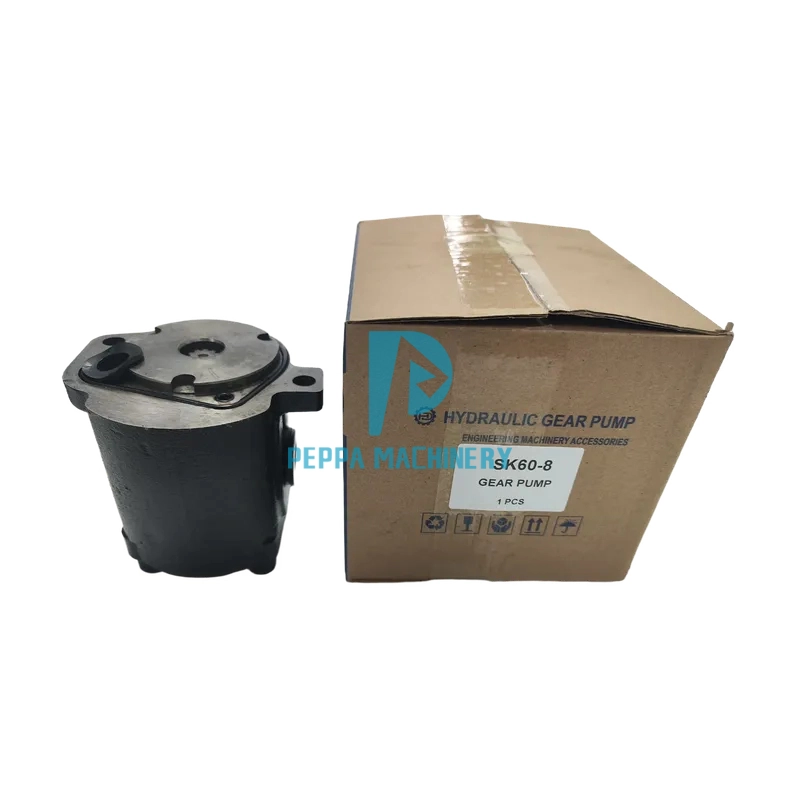
Excavator parts Gear pump SK60-8
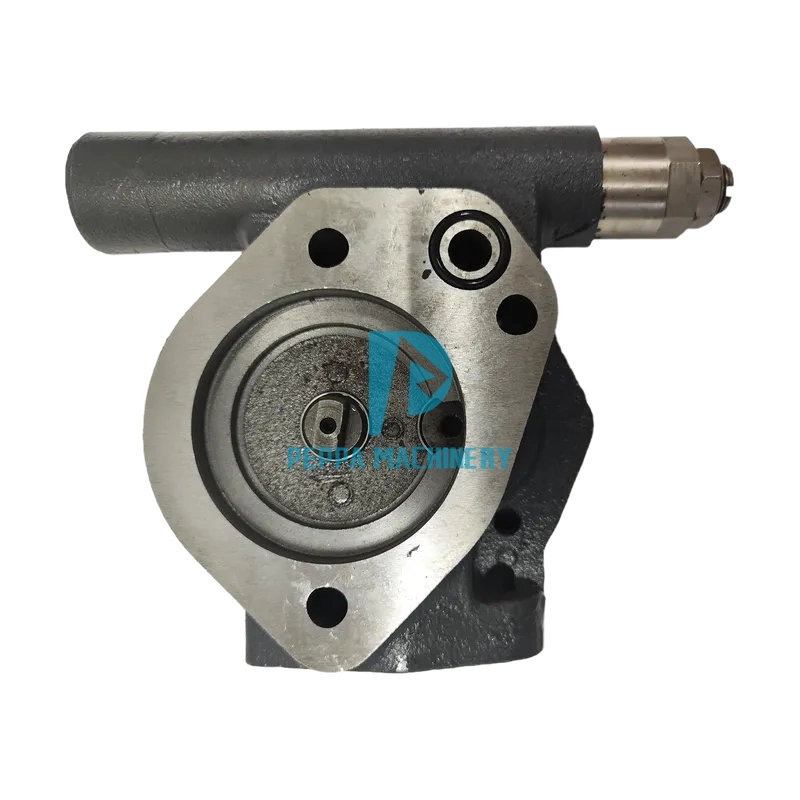
Excavator parts Gear pump PC120-5
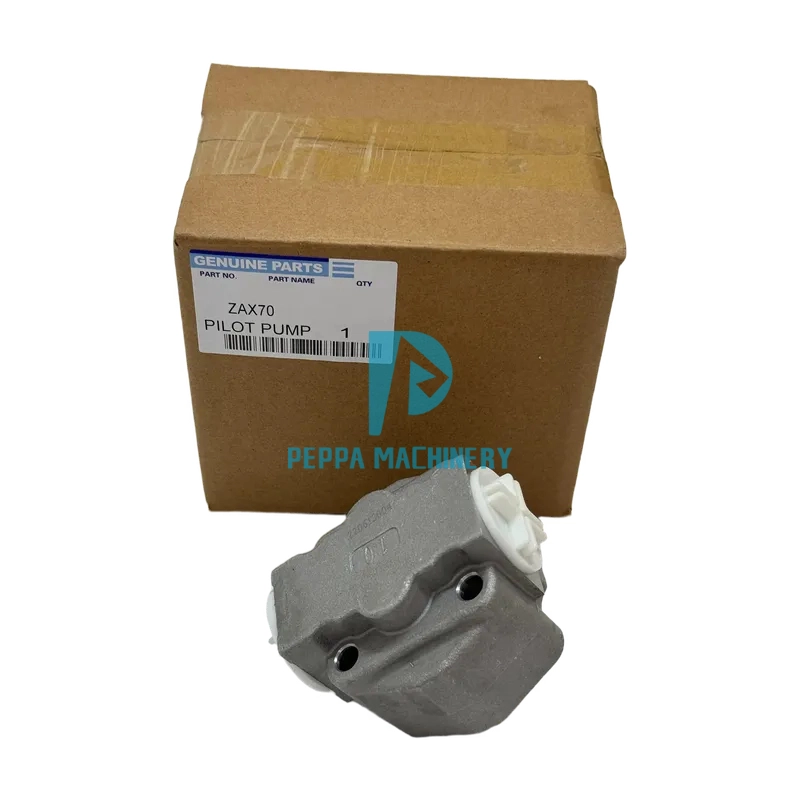
ZAX70 PILOT PUMP GEAR PUMP
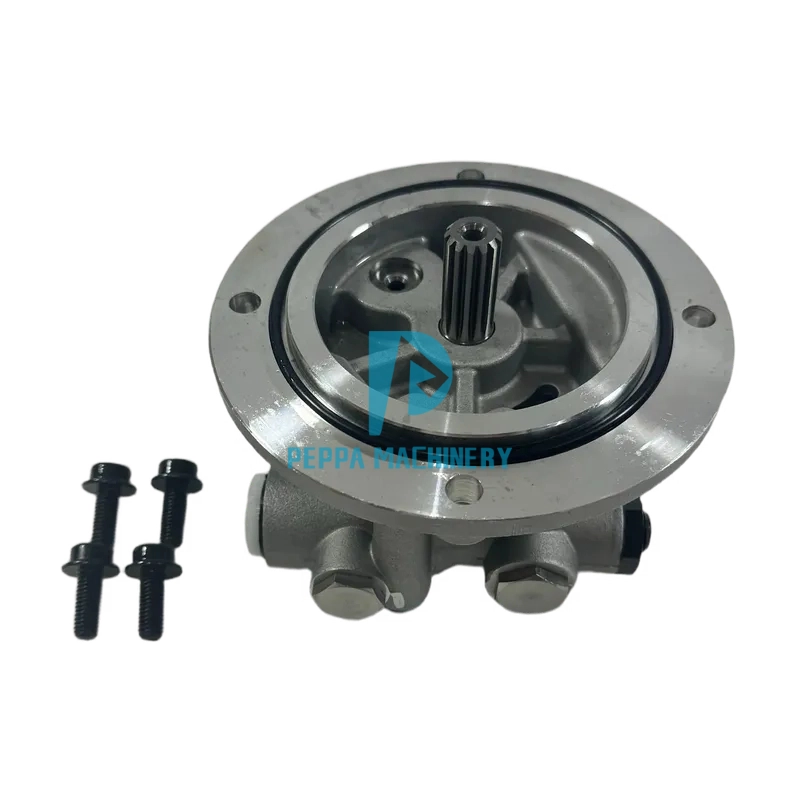
High Quality BRAND NEW 333-k5495 K7V125 PILOT PUMP GEAR PUMP for Excavator
Excavator Parts
Are your parts genuine or OEM?
We offer both genuine parts and high-quality OEM alternatives. You can choose according to your budget and application needs. All OEM products are tested to meet or exceed original specifications.
What types of parts do you mainly offer?
Our main product categories include:
• Engine parts (liner kits, crankshafts, water/oil pumps, etc.)
• Electrical parts (sensors, monitors, throttle motors, wiring harnesses)
• Hydraulic parts (pumps, valves, cylinders)
• Sealing kits (NOK, SKF, PQ brands, floating seals, O-rings)
What brands of excavator parts do you supply?
We supply a full range of parts compatible with major international and Chinese brands, including Caterpillar, Komatsu, Hitachi, Volvo, Doosan, Hyundai, Sany, Liugong, XCMG, Zoomlion, and more.
Do you provide technical support or installation guidance?
While we do not offer on-site installation, we can provide basic technical advice, diagrams, or documentation to assist your technicians with installation and troubleshooting.
Can I get help choosing the right parts for my machine?
Yes. Our experienced sales team is here to provide professional recommendations and solutions based on your excavator model, part number, or specific requirements.
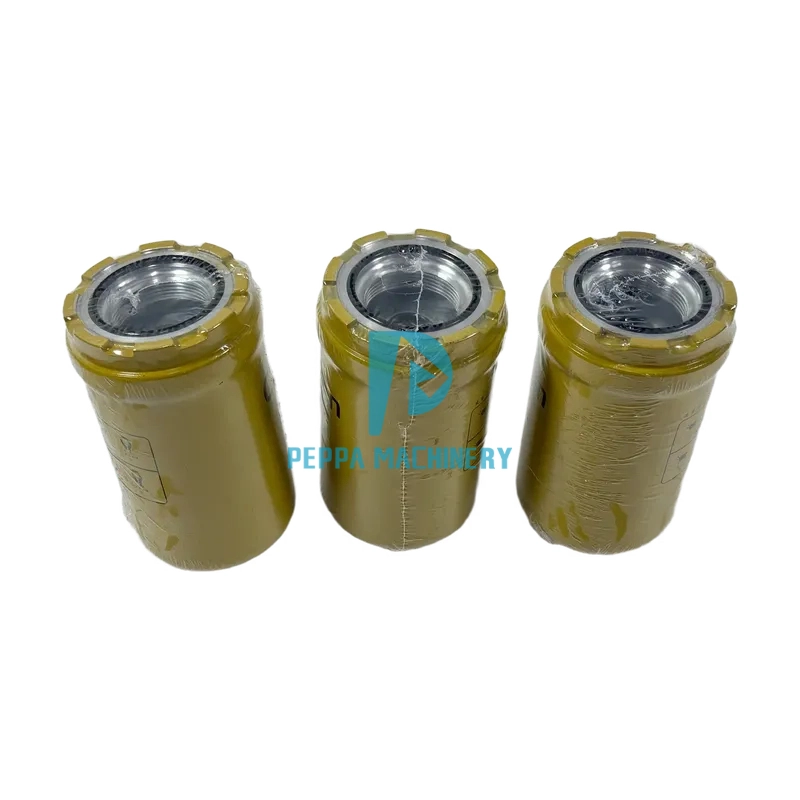
51-8670 Hydraulic Filter Applicable to HF35519 518670 2897836 518670X 1588987 Compatible with Caterpillar 352FVG 325CL
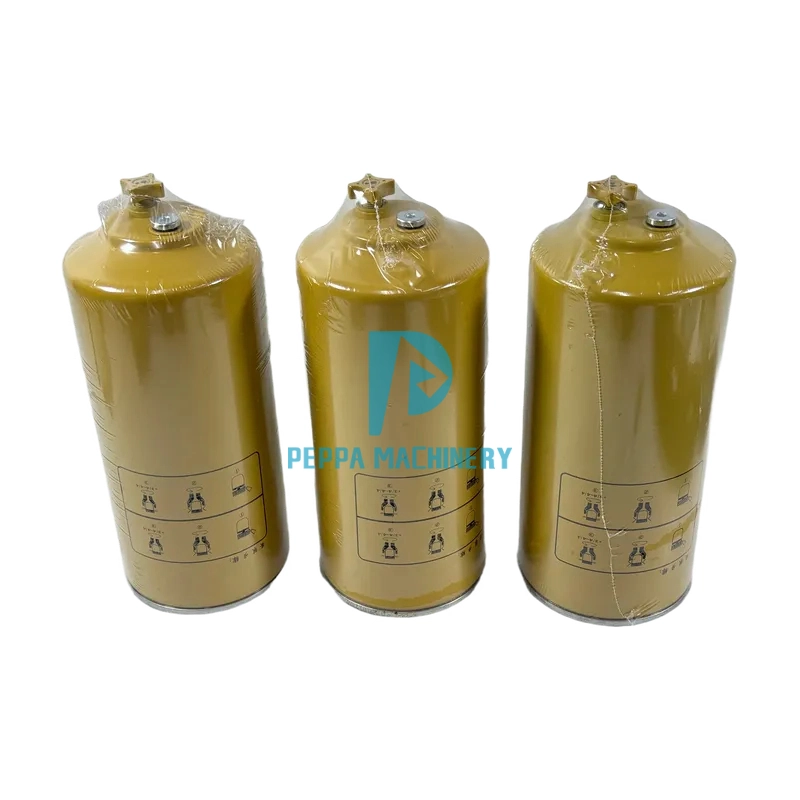
4385386 Fuel Water Separator Fuel Filter 382-0664 Oil-water Separator Hydraulic Oil Filter for CAT 312D2 320D2
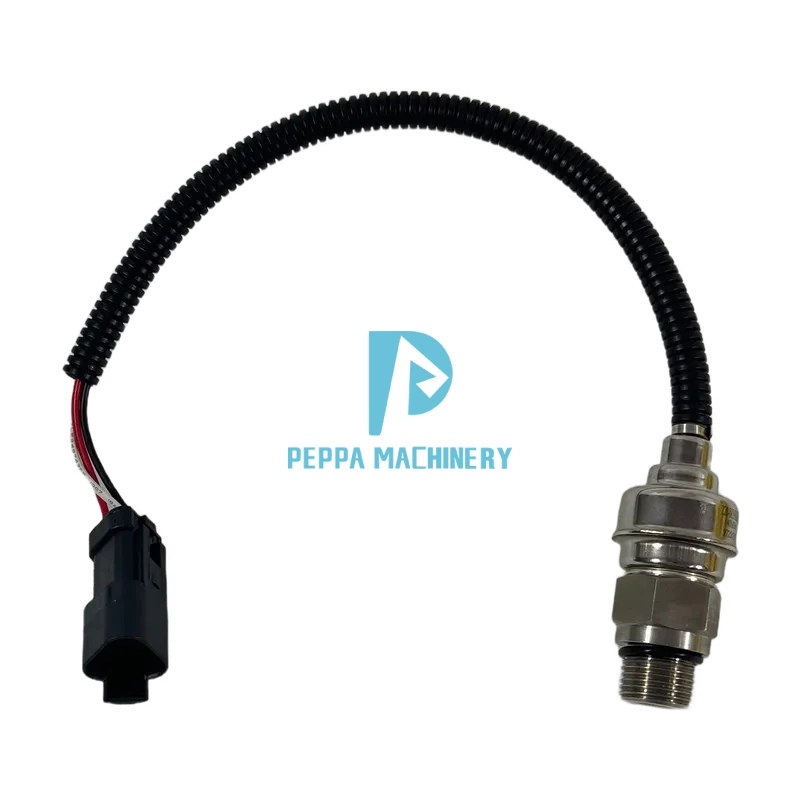
Pressure Sensor 221-8859 106-0178 for Caterpillar CAT 311B 311C 312C 314D 315B 320C 323D 324D 330C 336D 345B 385C
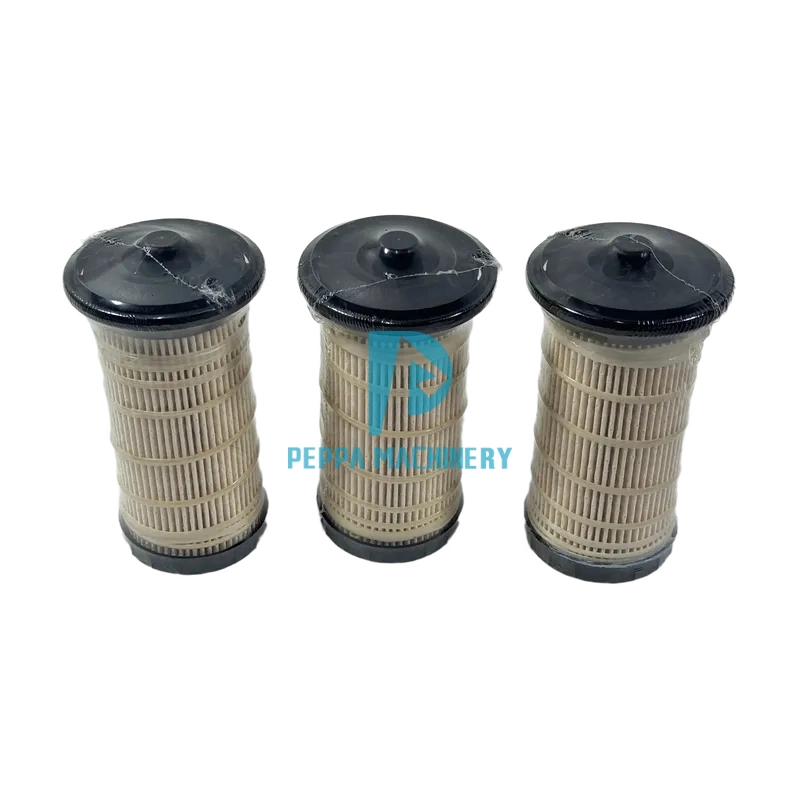
360-8960 Fuel Filter Element for Caterpillar C4.4 & C7.1 Engines | Fits 312D, 320D, 312E, 320E, 326D2, 336D2 Excavators
Get more information
Want to know more? Contact us today to get detailed product specifications, customized solutions, and a free consultation tailored to your needs.
Rest assured that your privacy is important to us, and all information provided will be handled with the utmost confidentiality.

Reliable Source for Quality Excavator Components.
Follow Us
Our Partners


Our Payment Methods


 High Quality
 7/24 Service
 Guaranteed Warranty
 Scan QR Code
Facebook
TikTok
YouTube
Pinterest
Twitter