








OEM vs aftermarket gear pumps: which is best for excavators?
- 1. How do I calculate the required gear pump displacement to maintain boom and swing speed under load on my excavator?
- 2. Can I install an aftermarket gear pump with a different displacement or inlet size without reprogramming the machine? What are the consequences?
- 3. What measurable inspection tolerances (clearance, backlash, runout) should I check on a used or remanufactured excavator gear pump to estimate remaining life?
- 4. When evaluating aftermarket gear pumps, which internal materials and hardening specs predict longer life under contaminated or abrasive hydraulic fluids?
- 5. Are remanufactured gear pumps reliable for high-pressure functions (swing, travel) on 20-ton excavators, and what reman standards should I verify?
- 6. How do I quantify total cost of ownership (TCO) when choosing between OEM and aftermarket gear pumps for an excavator fleet over 5 years?
- Conclusion: Advantages of OEM and Aftermarket Gear Pumps and How to Choose
Gear Pump: OEM vs Aftermarket Gear Pumps for Excavators
This article answers six high-value, frequently asked long-tail questions about hydraulic gear pumps for excavators, focusing on practical inspection steps, measurable criteria, and purchase decisions. Recommendations reflect common industry standards, excavator hydraulic system behavior, and remanufacturing best practices. Contact www.jbpartsgz.com or jbparts@aliyun.com for a quote.
1. How do I calculate the required gear pump displacement to maintain boom and swing speed under load on my excavator?
Why this matters: Incorrect pump displacement causes slow cycle times, overheating, or excessive fuel use. Many online answers are too generic; here is a step-by-step, measurable method you can use in the field or with service data.
Steps:
- Obtain hydraulic actuator sizes and desired actuator speeds. For a boom cylinder, know rod and bore areas and the required extension speed (m/s or mm/s).
- Calculate required flow for each circuit using Q = A * v. Example: a 90 mm bore cylinder has area A = pi*(0.09^2)/4 = 0.00636 m2. For 0.05 m/s speed, Q = 0.00636 * 0.05 = 0.000318 m3/s or 19.1 L/min.
- Sum simultaneous demands. Excavators often have load-sensing or priority circuits; identify which functions are likely to run concurrently (boom + swing, arm + bucket, travel + implement).
- Include volumetric inefficiency and relief margin. Use an initial safety factor: volumetric efficiency for new gear pumps is typically 85–95%. For selection, assume 90% efficiency and add 10–20% margin for peak demand and relief losses.
- Convert to displacement at desired engine RPM: Displacement (cc/rev) = (Q L/min * 1000) / (RPM * 60). For example, 150 L/min at 1800 rpm -> (150*1000)/(1800*60) ≈ 1.39 cc/rev? Note: convert units carefully. Better to compute desired pump flow at working rpm then match pump spec sheet.
Practical notes:
- Measure actual flow with a calibrated flow meter on the circuit during an operating cycle if possible. Lab values beat theoretical calculations.
- For fixed-displacement gear pumps, choose displacement so that nominal flow meets average combined demand; use a pressure compensator or secondary circuits to manage peaks. For high-performance excavators, axial-piston pumps are often used for primary functions; gear pumps remain common for auxiliary circuits (pilot pumps, swing motors on older designs).
- Match pump displacement and pump RPM so the pump does not run at maximum RPM for long durations; sustained overspeeding accelerates wear and reduces volumetric efficiency.
2. Can I install an aftermarket gear pump with a different displacement or inlet size without reprogramming the machine? What are the consequences?
Short answer: You can physically install many aftermarket pumps, but electrical controls, pressure compensation, and hydraulic balance may be affected. This is a common cause of poor performance after a parts swap.
Consequences to watch for:
- Flow mismatch. A different displacement changes system flow at a given engine RPM, altering speed and hydraulic power. If the machine uses electronic controls calibrated to OEM flow, actuator timing and priority logic may be disrupted.
- Suction compatibility. Inlet port size or suction capabilities different from the OEM pump can cause cavitation and early failure if suction piping and strainers are not adapted.
- Pressure and relief behavior. Relief valves and compensators are set to system design pressures. A pump with different volumetric leakage under pressure will change energy losses and temperature rise.
- Mounting and shaft fit. Flange, bolt pattern, and spline differences can cause misalignment and seal failure—even if you adapt mechanically, dynamic misalignment shortens bearing and seal life.
Recommendations:
- Always compare nominal displacement and maximum continuous pressure on the spec sheet. Ensure the aftermarket unit matches within ±10% for flow and has equal or higher continuous pressure rating (excavator systems typically work up to 250–350 bar in modern machines).
- Verify inlet port diameter, suction lift capability, and required NPSH. If the aftermarket pump needs better suction conditions, upgrade piping, suction strainer area, or pre-charge the tank return to reduce cavitation risk.
- If the machine is electronically controlled, consult the OEM control calibration: changing pump displacement may require ECU recalibration to maintain proper boom/swing response and safety features.
3. What measurable inspection tolerances (clearance, backlash, runout) should I check on a used or remanufactured excavator gear pump to estimate remaining life?
Many field guides say 'check for wear', but professionals need numbers. Exact tolerances come from OEM manuals. When those are unavailable, use these practical ranges and methods as diagnostic thresholds.
Key dimensions and test methods:
- Gear-to-case radial clearance: Measure with a feeler gauge or by disassembling. Typical new clearance for external gear pumps is in the order of 0.05–0.15 mm. Wear beyond about 0.20–0.30 mm usually indicates significant internal leakage and reduced volumetric efficiency.
- End float / axial clearance: Excessive axial play allows internal leakage across gear faces. New axial clearances are small—typically under 0.1–0.2 mm depending on design. Over 0.3 mm is a concern.
- Runout of shaft: Use a dial indicator; radial shaft runout should be <0.05–0.1 mm on high-quality pumps. Excess runout accelerates seal wear and bearing failure.
- Backlash between gears: Too much backlash increases pulsation and leakage. Target small backlash consistent with OEM spec; if unknown, low noise and smooth operation imply acceptable backlash.
- Flow test: Measure actual L/min at a set rpm on a test bench and compare to published displacement. A drop of 10% or more from rating at low pressure is indicative of volumetric loss; if efficiency is below ~80–85%, consider replacement or rebuild.
- Leakdown test: Pressurize the pump and measure leakage past internal clearances. High leak rates under normal working pressure signal worn surfaces or poor sealing.
Field signs to correlate with measurements: metal particles in the oil, scoring on gears, burnt or discolored surfaces (overheating), unusual noise or vibration, and rapid oil temperature rise are all red flags even before dimensional checks.
4. When evaluating aftermarket gear pumps, which internal materials and hardening specs predict longer life under contaminated or abrasive hydraulic fluids?
Material and surface treatments significantly influence wear rates when contamination control is imperfect. Online suppliers often omit heat-treatment specs; ask for them.
Material and treatment indicators to request from a supplier:
- Gear material: Case-hardened alloy steels such as 20CrMnTi or similar carburized steels are common for gears. Surface case hardness in the 55–62 HRC range on the tooth surface indicates good wear resistance for abrasive conditions.
- Surface treatment: Carburizing followed by quenching and tempering or induction hardening on gear teeth is standard. Nitriding or surface coatings (e.g., thermal spray, DLC) can help but must be compatible with pump tolerances.
- Housing material and internal finishing: A high-quality housing finish and hard-chromed or honed bore reduce abrasive wear. Look for precise machining notes and surface roughness (Ra) where available.
- Seals and elastomers: For contaminated environments, select seals and O-rings resistant to oil additives and temperature—e.g., nitrile for general use, Viton for higher-temperature or synthetic fluids, and polyurethane for high abrasion resistance in some designs.
- Bearings and shaft: Use NSK/NTN or equivalent bearings with proper lubrication channels. Shafts should be ground and nitrided or induction hardened at wear surfaces.
Verification steps:
- Ask the vendor for material certificates and hardening depth. Good reman or aftermarket suppliers will provide chemical and hardness test data for critical components.
- If possible, request an exploded parts list with part numbers and OEM cross-references to confirm interchangeability and material equivalence.
5. Are remanufactured gear pumps reliable for high-pressure functions (swing, travel) on 20-ton excavators, and what reman standards should I verify?
Remanufactured pumps can be reliable if rebuilt to strict standards. The decisive factors are process control, replacement of wear-limited components, tolerance restoration, and final testing.
Standards and checks to require:
- Complete teardown and cleaning followed by nondestructive inspection for cracks. Reuse only components within acceptable tolerances.
- Replacement of wear items: gears, shafts, bearings, seals, and thrust washers should be replaced unless measurable life remains and OEM-approved methods permit reuse.
- Tolerance restoration: Reboring, sleeving, or replacement of housings to restore original gear-to-case clearances where needed. Simply replacing seals but leaving worn housings or gears yields short life.
- Hardness and metallurgical checks on re-used gears. If gears are reused, ensure hardness and microstructure tests to confirm no tempering or fatigue damage occurred during prior operation.
- Final test: Flow and pressure tests at rated RPM and temperature, noise/vibration profile, and leakdown tests. Request a test report with measured displacement, volumetric efficiency, and maximum pressure test result.
For swing and travel circuits which carry high loads and high pressures (modern excavators often see peak pressures in the 250–350 bar range), make sure the reman supplier certifies continuous pressure rating equal to or above the OEM spec and provides a warranty period similar to OEM or clearly defined. Proven remanufacturing programs (dealer reman or OEM-authorized shops) are preferable for safety-critical circuits.
6. How do I quantify total cost of ownership (TCO) when choosing between OEM and aftermarket gear pumps for an excavator fleet over 5 years?
Simple purchase-price comparisons are misleading. A TCO approach accounts for purchase cost, downtime, PM intervals, fuel/efficiency differences, and warranty/repair costs. Use this packaged method tailored to fleet use.
Stepwise TCO model:
- Initial cost: list OEM and aftermarket unit prices, including shipping and installation labor.
- Estimated mean time between failures (MTBF): base on vendor history. If unavailable, use field data: OEM: MTBFx (often higher due to tighter tolerances and materials), aftermarket: variable. Where data is absent, be conservative: assume aftermarket MTBF 0.6–0.9 of OEM for lower-cost units unless reman/quality-certified.
- Downtime cost: quantify lost revenue per hour or cost per hour for idle machine and crew. Multiply by expected failure hours over 5 years from step 2.
- Repair and replacement cost: include parts, labor, and secondary damage risk (contamination causing gearbox or valve damage). Reman or aftermarket failures can create cascading repair costs if not filtered quickly.
- Fuel and efficiency: a degraded gear pump with poor volumetric efficiency increases fuel usage by making the engine work harder. Estimate percent efficiency loss and convert to annual fuel cost increase.
- Warranty and support: OEM typically offers consistent warranty terms and dealer network support. Aftermarket warranties vary; factor in administrative and logistics costs for cross-border shipments if the vendor is international.
- Residual value and reuse: remanable cores or trade-in credits reduce net cost. Consider whether the supplier accepts cores and provides credit toward future purchases.
Example calculation approach (abbreviated):
- OEM unit cost $X, aftermarket $0.6X. If aftermarket MTBF is 60% of OEM and downtime cost per failure is $Y, compute expected downtime cost over 5 yrs and add repair costs to each scenario. The option with lower net present cost including downtime is the true winner.
Decision rule of thumb:
- For critical high-pressure functions on primary machines where downtime is very costly, OEM or OEM-authorized remanufactured pumps usually give lower TCO despite higher upfront cost.
- For noncritical auxiliary circuits or well-managed fleets with strong onsite hydraulic diagnostics and fast spare logistics, high-quality aftermarket or reman units can be competitive if they meet tolerance, material, and test requirements.
Conclusion: Advantages of OEM and Aftermarket Gear Pumps and How to Choose
OEM gear pumps: advantages include exact dimensional and material matching to the machine, predictable MTBF, consistent warranty and dealer support, and service manuals with tolerances for accurate maintenance. This typically lowers risk for primary, high-pressure circuits and critical fleet assets.
Aftermarket/remanufactured pumps: advantages include lower upfront cost, faster availability in some markets, and potential for OEM-equivalent performance when rebuilt to high standards. Best used when reman suppliers provide full test reports, materials certification, and tolerance restoration, or for secondary circuits where downtime risk is acceptable.
Final selection checklist:
- Match displacement and pressure rating to system requirements (allow 10–20% margin).
- Verify internal tolerances, hardness, and materials from the supplier or measure on-site when possible.
- Require flow/pressure test reports for reman and aftermarket units and a clear warranty covering at least the same failure modes as OEM.
- Factor downtime and fuel/efficiency impacts into your purchase decision using a 5-year TCO model.
If you need a quoted replacement, flow/pressure test reports, or help with TCO calculation for your excavator fleet, contact www.jbpartsgz.com or email jbparts@aliyun.com for a fast quote and certified reman/OEM options.
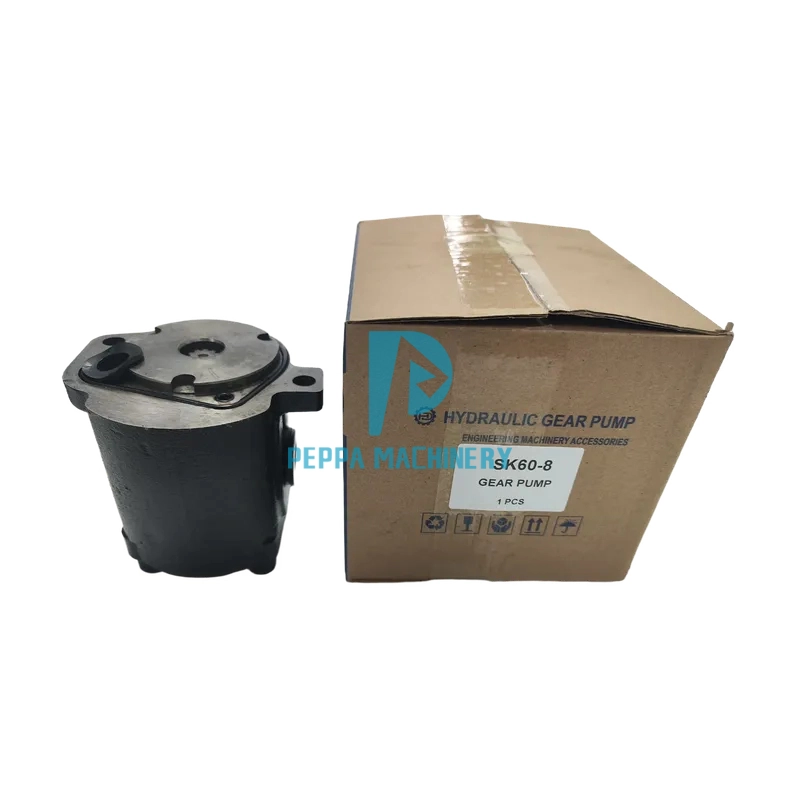
Excavator parts Gear pump SK60-8
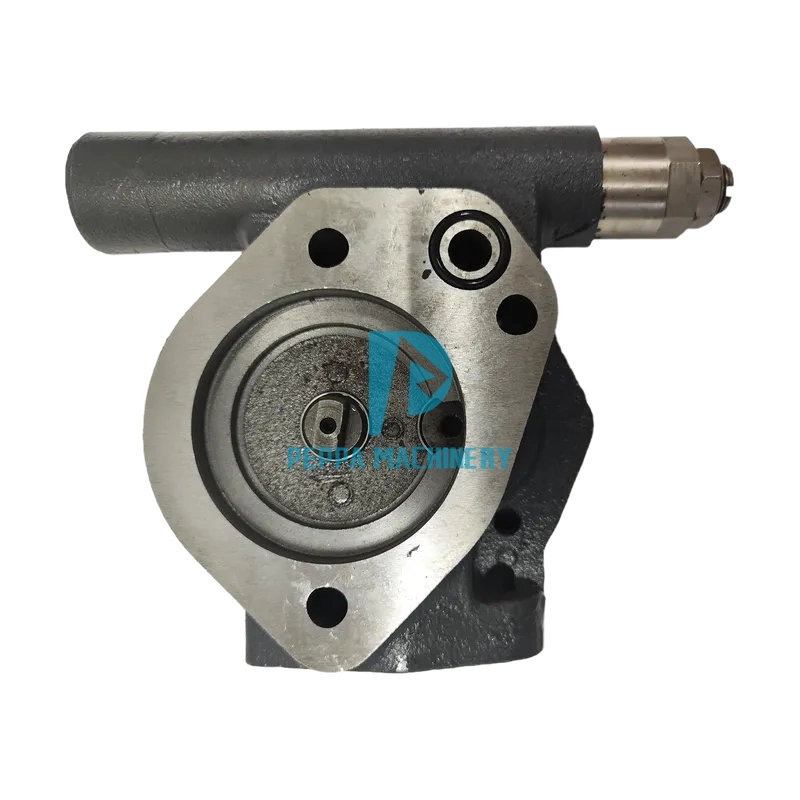
Excavator parts Gear pump PC120-5
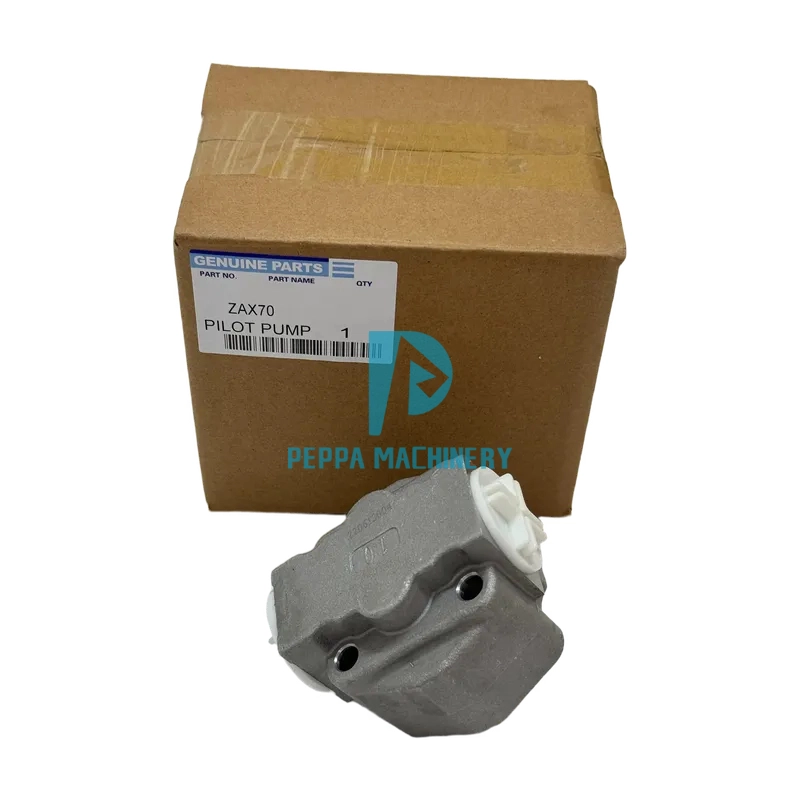
ZAX70 PILOT PUMP GEAR PUMP
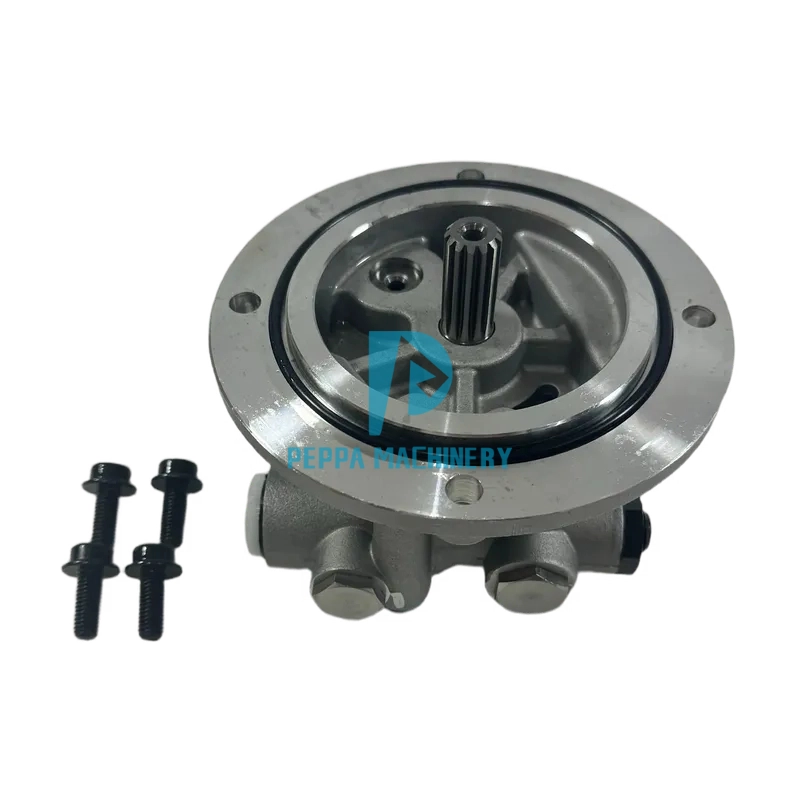
High Quality BRAND NEW 333-k5495 K7V125 PILOT PUMP GEAR PUMP for Excavator
Excavator Parts
What brands of excavator parts do you supply?
We supply a full range of parts compatible with major international and Chinese brands, including Caterpillar, Komatsu, Hitachi, Volvo, Doosan, Hyundai, Sany, Liugong, XCMG, Zoomlion, and more.
What types of parts do you mainly offer?
Our main product categories include:
• Engine parts (liner kits, crankshafts, water/oil pumps, etc.)
• Electrical parts (sensors, monitors, throttle motors, wiring harnesses)
• Hydraulic parts (pumps, valves, cylinders)
• Sealing kits (NOK, SKF, PQ brands, floating seals, O-rings)
Are your parts genuine or OEM?
We offer both genuine parts and high-quality OEM alternatives. You can choose according to your budget and application needs. All OEM products are tested to meet or exceed original specifications.
Do you provide technical support or installation guidance?
While we do not offer on-site installation, we can provide basic technical advice, diagrams, or documentation to assist your technicians with installation and troubleshooting.
Can I get help choosing the right parts for my machine?
Yes. Our experienced sales team is here to provide professional recommendations and solutions based on your excavator model, part number, or specific requirements.
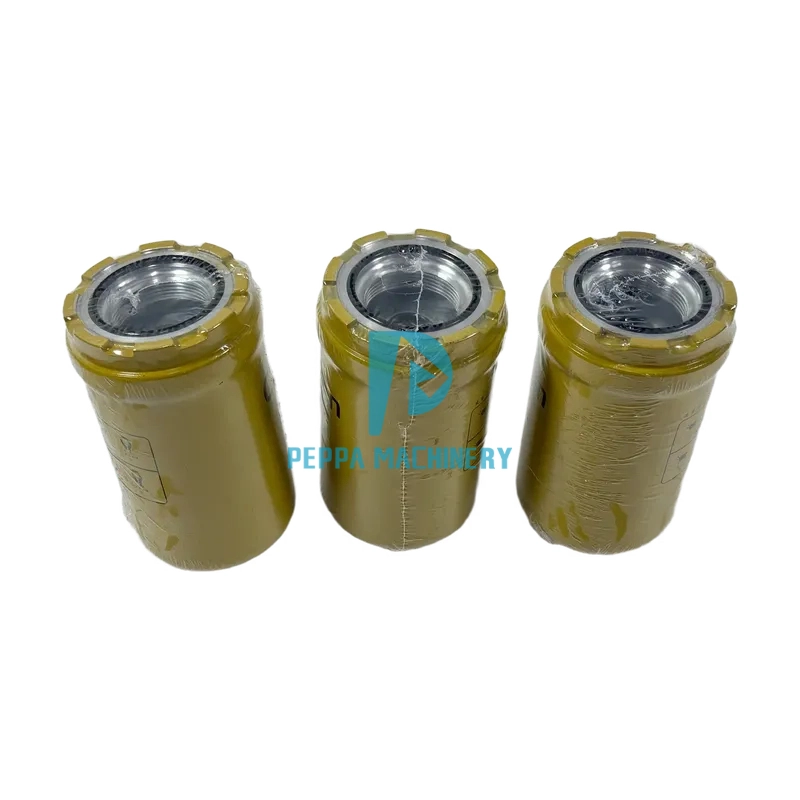
51-8670 Hydraulic Filter Applicable to HF35519 518670 2897836 518670X 1588987 Compatible with Caterpillar 352FVG 325CL
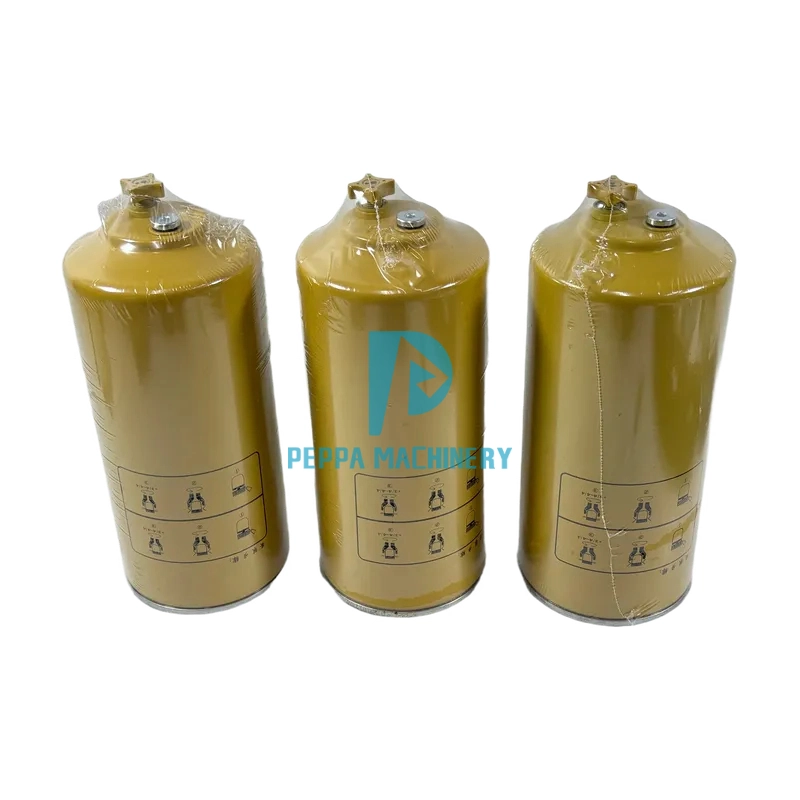
4385386 Fuel Water Separator Fuel Filter 382-0664 Oil-water Separator Hydraulic Oil Filter for CAT 312D2 320D2
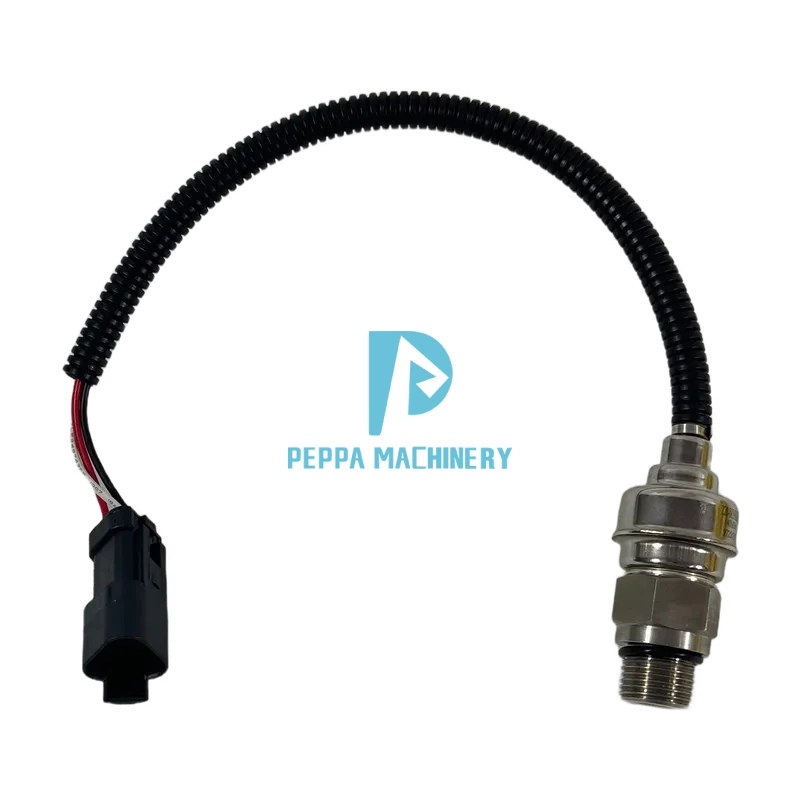
Pressure Sensor 221-8859 106-0178 for Caterpillar CAT 311B 311C 312C 314D 315B 320C 323D 324D 330C 336D 345B 385C
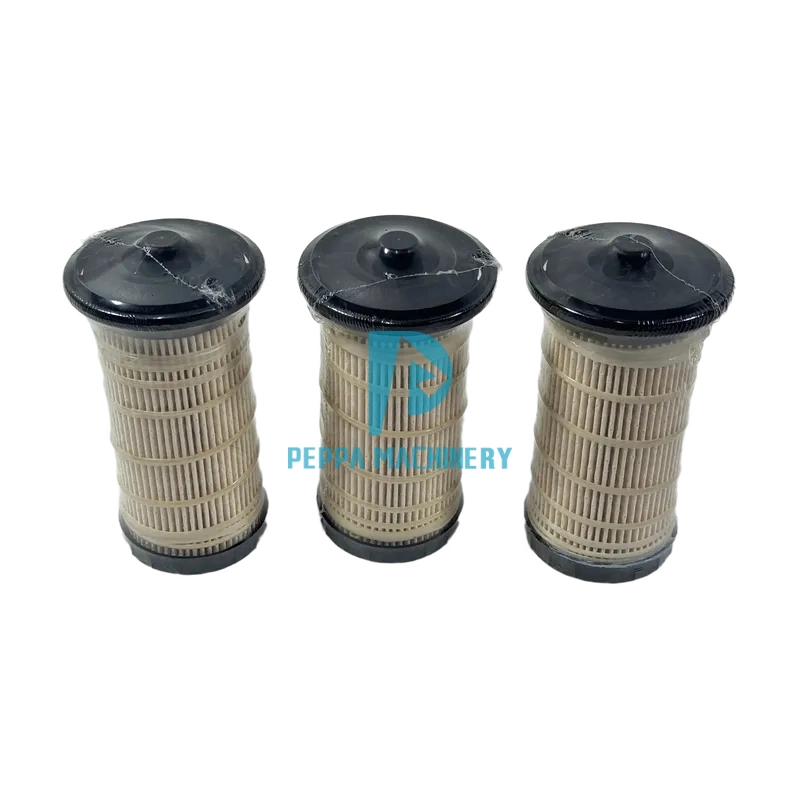
360-8960 Fuel Filter Element for Caterpillar C4.4 & C7.1 Engines | Fits 312D, 320D, 312E, 320E, 326D2, 336D2 Excavators
Get more information
Want to know more? Contact us today to get detailed product specifications, customized solutions, and a free consultation tailored to your needs.
Rest assured that your privacy is important to us, and all information provided will be handled with the utmost confidentiality.

Reliable Source for Quality Excavator Components.
Follow Us
Our Partners


Our Payment Methods


 High Quality
 7/24 Service
 Guaranteed Warranty
 Scan QR Code
Facebook
TikTok
YouTube
Pinterest
Twitter