








How to match hydraulic pump motor flow and pressure to attachments?
- 1. How do I calculate the exact pump flow and system pressure an impact breaker needs, including start-up spikes and duty cycle?
- 2. How do I select hydraulic pump motor displacement and gear ratio to achieve target torque and speed for a rotary attachment (e.g., a rotating grapple) on a mid-size excavator?
- 3. What exact onsite measurements and instruments are required to verify an excavator’s auxiliary flow and pressure before buying an attachment?
- 4. How should I set relief valves and configure pressure-compensated pumps so attachments don’t over-pressurize or cause the excavator hydraulics to stall?
- 5. How can I prevent cavitation and overheating when running high-flow attachments on an older hydraulic pump motor?
- 6. How do I ensure mechanical compatibility—mounting flange, shaft spline, and couplers—between an aftermarket hydraulic pump motor and my excavator’s auxiliary circuit?
- Concluding summary: Advantages of correctly matching hydraulic pump motor flow and pressure to attachments
1. How do I calculate the exact pump flow and system pressure an impact breaker needs, including start-up spikes and duty cycle?
Start with the breaker’s manufacturer spec sheet: note its recommended operating pressure (P_work) and required nominal flow (Q_nom). If the datasheet lists only maximum pressure or a power rating, convert using the hydraulic power formula: hydraulic power (kW) = Q(L/min) × P(bar) / 600. Example: a breaker requiring 120 L/min at 200 bar demands 40 kW hydraulic power (120×200/600).
Account for start-up spikes and duty cycle: many hydraulic hammers see momentary pressure peaks during impact. Protect the breaker and pump by ensuring:
- Relief valve setting ≤ breaker’s maximum rated pressure. Do not exceed the attachment’s max pressure rating. If the breaker’s working pressure is 200 bar and max 220 bar, set the system relief so normal operation sits near 200 bar and the relief is at or slightly above 220 bar only if the breaker manufacturer allows it.
- Pump and drive source can deliver Q_nom continuously for the breaker’s duty cycle. For intermittent or heavy-duty cycle tools, add a margin of 10–25% to flow and cooling capacity to avoid thermal overload.
Practically, verify with measurement: use an inline flow meter and a high-pressure gauge at the auxiliary/test port while running the breaker under a typical load. Observe peak pressures and continuous flow. If measured Q is below spec during operation, the pump may stall or the breaker will underperform.
Key takeaways: calculate hydraulic power, verify pump/generator margins for duty cycle, and set system relief according to the attachment’s max rating. Always consult the breaker OEM for permitted relief settings and spike handling guidance.
2. How do I select hydraulic pump motor displacement and gear ratio to achieve target torque and speed for a rotary attachment (e.g., a rotating grapple) on a mid-size excavator?
For rotary attachments driven by hydraulic motors, you must match motor displacement to desired output speed and torque. Steps:
- Determine required output: required RPM and torque (or force) from the attachment spec. If torque (Nm) is not provided but hydraulic power and target speed are, calculate torque: Torque(Nm) = (Power(kW) × 60 × 1000) / (2π × RPM).
- Convert desired shaft speed into motor flow requirement using motor displacement (cm³/rev): Flow(L/min) = Displacement(cm³/rev) × RPM × 60 / 1000. Rearranged: Displacement = Flow×1000 / (RPM×60).
- Calculate motor theoretical torque from displacement and system pressure: Torque(Nm) ≈ (Displacement(cm³/rev) × Pressure(bar)) / 63.3. (63.3 = conversion constant). Then apply motor mechanical efficiency (usually 85–95%) to get realistic torque.
Example: You need 100 Nm at 60 RPM and have 200 bar available. Rearranged to find displacement: required torque (theoretical) = (D × 200) / 63.3 → D = (Torque × 63.3) / Pressure = (100 × 63.3) / 200 ≈ 31.65 cm³/rev. At 60 RPM that motor consumes: Flow = 31.65 × 60 × 60 / 1000 ≈ 114 L/min. Ensure your excavator auxiliary can supply ~114 L/min at 200 bar continuously; if not, choose a larger displacement motor geared down to achieve torque at lower flow, at the expense of speed.
Always include safety margins: account for losses (use 85% efficiency for calculations), and verify the mounting/shaft/flange and coupling compatibility. If you must gear down (planetary gearbox or belt drive), ensure gearbox torque rating exceeds peak loads with a safety factor of 1.5–2.
3. What exact onsite measurements and instruments are required to verify an excavator’s auxiliary flow and pressure before buying an attachment?
Do not rely solely on published specs. Measure actual auxiliary circuit performance because additions (hose length, filters, pilot lines) change flow and pressure. Required instruments and steps:
- High-pressure test gauge (rated to at least system max pressure; common excavator systems go up to 250–350 bar). Use live pressure measurement at the auxiliary test port and at the return to check pressure losses.
- Inline flow meter (L/min) capable of the expected flow range. Install into test kit or quick-test circuit so you can measure flow under load. For intermittent tests, turbine or electronic flow meters are suitable.
- Temperature probe to record oil temp during test — cooling capacity matters when running attachments continuously.
- Data logging or a stopwatch and manual readings to capture transient peaks and steady-state values.
Measurement procedure: warm the machine to operating temperature; run the auxiliary circuit under no-load and then under representative load; record peak pressure, continuous pressure, and flow. Note whether the pump is pressure-compensated or load-sensing (these affect available flow under load). Document engine RPM during the test because auxiliary flow often depends on engine speed unless the pump is variable displacement or electronically controlled.
These onsite measurements help you confirm if the excavator’s auxiliary circuit can meet an attachment’s Q and P simultaneously and inform whether you need a secondary pump or different control valve configuration.
4. How should I set relief valves and configure pressure-compensated pumps so attachments don’t over-pressurize or cause the excavator hydraulics to stall?
Relief valves are the primary protection against overpressure. Best practice:
- Set system relief at or below the weakest component’s maximum rated pressure (attachment or hose). Never exceed the attachment’s max working pressure.
- For pressure-compensated or load-sensing pumps, use the pump’s built-in compensation to limit pressure while maintaining required flow. With multi-function attachments, consider a pressure-compensated flow-sharing valve or load-sensing priority valve so essential functions receive flow without overloading the pump.
- For attachments with momentary spikes (e.g., breakers), fit a shock-absorbing accumulator or a pressure spike suppressor if allowed by the tool manufacturer. Some breakers are designed to accept short spikes, but accessories must be verified.
If stalling occurs (engine lugging, pump cavitation), options include using a variable displacement pump with load-sense control, installing a flow divider prioritizing certain functions, or adding an auxiliary pump dedicated to high-flow tools. When changing relief settings, always verify against OEM charts and test with the attachment under controlled conditions.
5. How can I prevent cavitation and overheating when running high-flow attachments on an older hydraulic pump motor?
Cavitation and overheating are common failure modes if inlet conditions, flow demand, or cooling aren’t adequate. To prevent them:
- Check inlet conditions: low inlet pressure (suction) causes cavitation. Keep suction lines short and large-diameter, avoid high suction lift, maintain correct reservoir oil level, and ensure the suction filter is not clogged.
- Reduce pressure drops: use correct hose sizes, avoid excessive bends, and check fittings. Pressure drop between pump inlet and reservoir increases cavitation risk.
- Manage oil temperature: high flow under load generates heat. Ensure cooler capacity is adequate—heat exchangers must dissipate the extra kW generated. Add thermostatic bypass or enlarge cooler if oil temperature rises excessively under continuous high-flow use.
- Match oil viscosity and cleanliness to pump type. Older pumps may be sensitive to low-viscosity oils or contamination. Use the oil grade recommended for the pump, and maintain filtration (10–20 micron typical for modern systems depending on component tolerance).
If you cannot upgrade the pump, reduce continuous flow demand (use intermittent operation or lower duty cycle), or add a secondary pump to share load. Always monitor NPSH-equivalent inlet pressure during tests.
6. How do I ensure mechanical compatibility—mounting flange, shaft spline, and couplers—between an aftermarket hydraulic pump motor and my excavator’s auxiliary circuit?
Hydraulic performance is only part of the equation; mechanical fit is critical. To ensure compatibility:
- Gather exact excavator specs: pump/motor mounting flange standard, shaft diameter, spline count and profile, shaft length, and pilot bore dimensions. If the excavator uses manufacturer-specific pumps, request part drawings or take precise measurements from the existing pump shaft and flange.
- Check hydraulic port standards and coupler types: Determine whether the auxiliary circuit uses flat-face quick couplers, threaded couplers, or OEM-specific fittings. Match port sizes and thread types (metric vs imperial) and confirm orientation to avoid hose interference.
- Ask the aftermarket supplier for a dimensional drawing and torque ratings; verify keying, dowel pin positions, and flange bolt patterns with your machine. Mechanical adapters are possible but introduce extra failure points—use them only when professionally engineered and rated.
- Include hydraulic compatibility: ensure the pump’s max pressure rating, flow direction, and displacement type (fixed vs variable displacement) match the excavator control scheme. If your control needs a pressure-compensated or load-sensing pump, supply that type rather than a generic fixed gear pump.
When in doubt, provide photos and measured dimensions to the supplier. Reputable sellers will request serial numbers or VINs and offer drop-in replacements or correct adapters. Avoid black-box swaps without dimensional verification.
Concluding summary: Advantages of correctly matching hydraulic pump motor flow and pressure to attachments
Properly matching flow and pressure to attachments ensures optimal tool performance, longer component life, safer operation, and lower operating costs. Correct matching prevents cavitation, reduces overheating, avoids over-pressurizing fragile attachments, and eliminates inefficiencies caused by undersized pumps or incorrect relief settings. It also reduces unplanned downtime and protects the excavator’s hydraulic system and engine from undue stress.
For accurate measurements, OEM-verified specs, or to get a tailored pump/motor and adapter solution, contact our team for a quote: www.jbpartsgz.com or email jbparts@aliyun.com.

Isuzu SP 4JG1 4JG2 4JG3 Cylinder Liner 1876182070 1-87618207-0 1876182080 1-87618208-0 1876182100 1-87618210-0
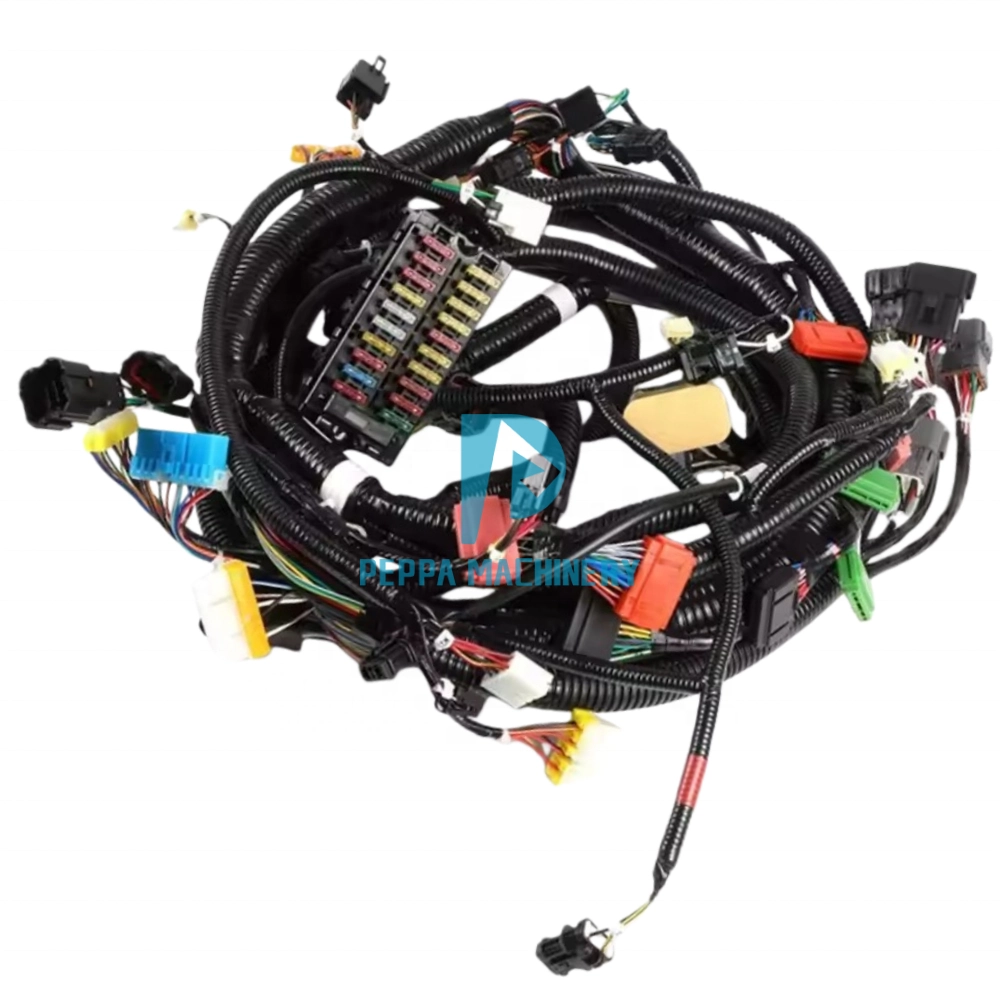
Internal Wiring Harness Assembly for Komatsu PC200-7 to PC270-7 Series Excavators | Direct OEM Replacement Part #20Y-06-31110 (20Y0631110)
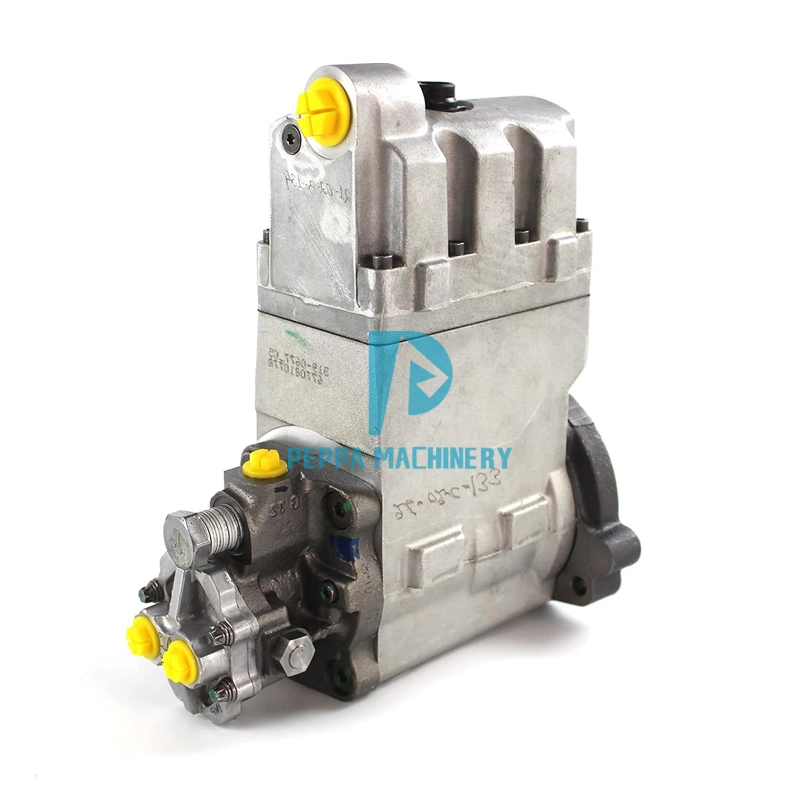
Fuel Feed / Transfer Pump Assembly for Caterpillar C7 & C9 Engines | Direct Replacement for OEM Parts #319-0678, 254-4358, 304-0678, 295-4778, 228-589
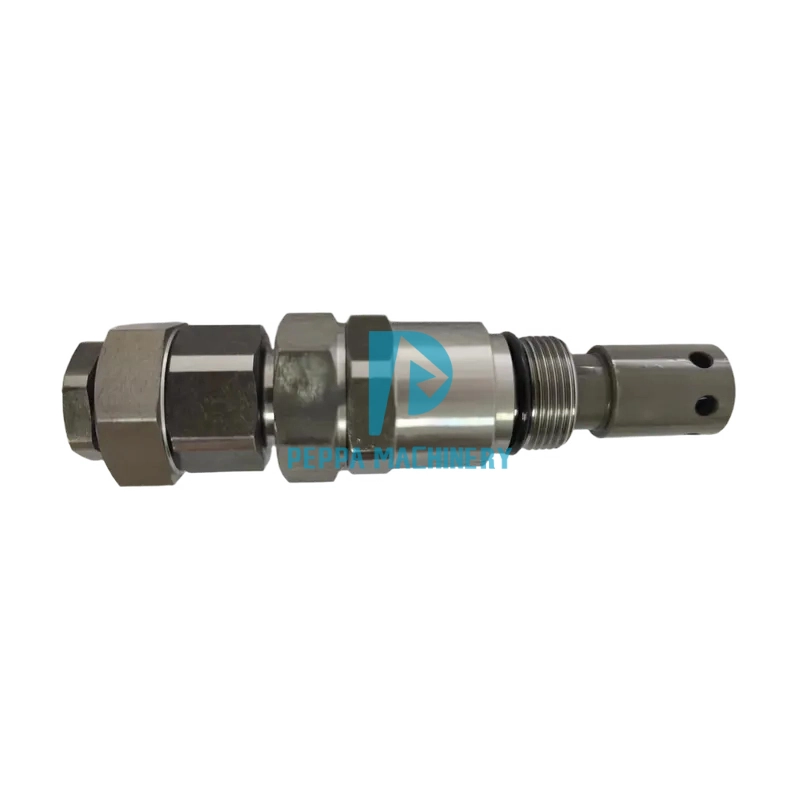
DH220-5 Main Control Valve Relief Valve 2420-1225 for Daewoo Doosan Excavator Solenoid Valve Hydraulic Accessories
Excavator Parts
Do you provide technical support or installation guidance?
While we do not offer on-site installation, we can provide basic technical advice, diagrams, or documentation to assist your technicians with installation and troubleshooting.
What types of parts do you mainly offer?
Our main product categories include:
• Engine parts (liner kits, crankshafts, water/oil pumps, etc.)
• Electrical parts (sensors, monitors, throttle motors, wiring harnesses)
• Hydraulic parts (pumps, valves, cylinders)
• Sealing kits (NOK, SKF, PQ brands, floating seals, O-rings)
Are your parts genuine or OEM?
We offer both genuine parts and high-quality OEM alternatives. You can choose according to your budget and application needs. All OEM products are tested to meet or exceed original specifications.
How can I verify compatibility before placing an order?
Please provide us with your machine brand, model number, and the part number (if available). Our team will double-check the compatibility to ensure you receive the correct parts.
What brands of excavator parts do you supply?
We supply a full range of parts compatible with major international and Chinese brands, including Caterpillar, Komatsu, Hitachi, Volvo, Doosan, Hyundai, Sany, Liugong, XCMG, Zoomlion, and more.
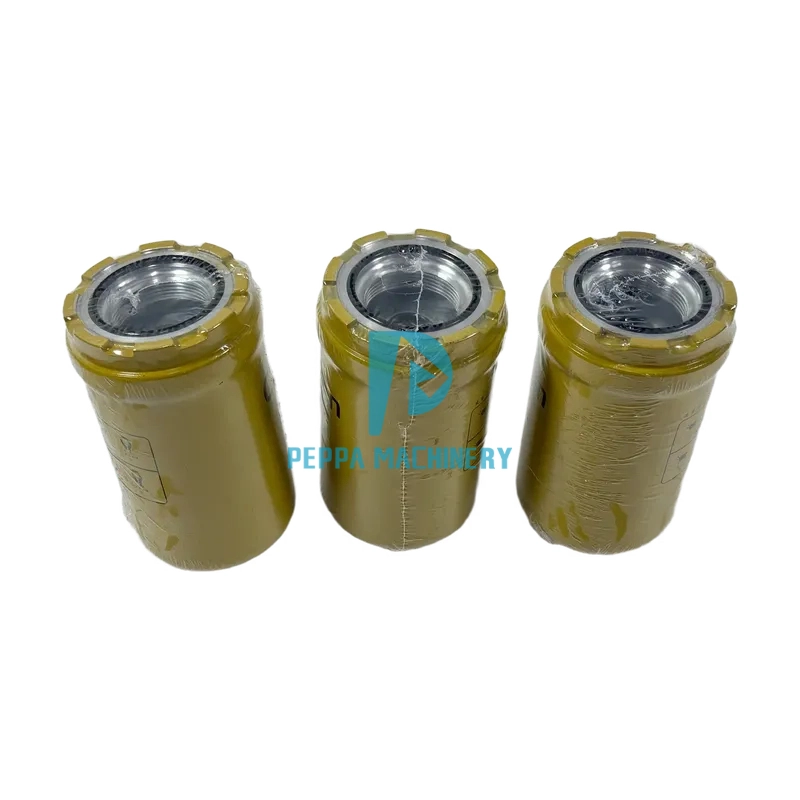
51-8670 Hydraulic Filter Applicable to HF35519 518670 2897836 518670X 1588987 Compatible with Caterpillar 352FVG 325CL
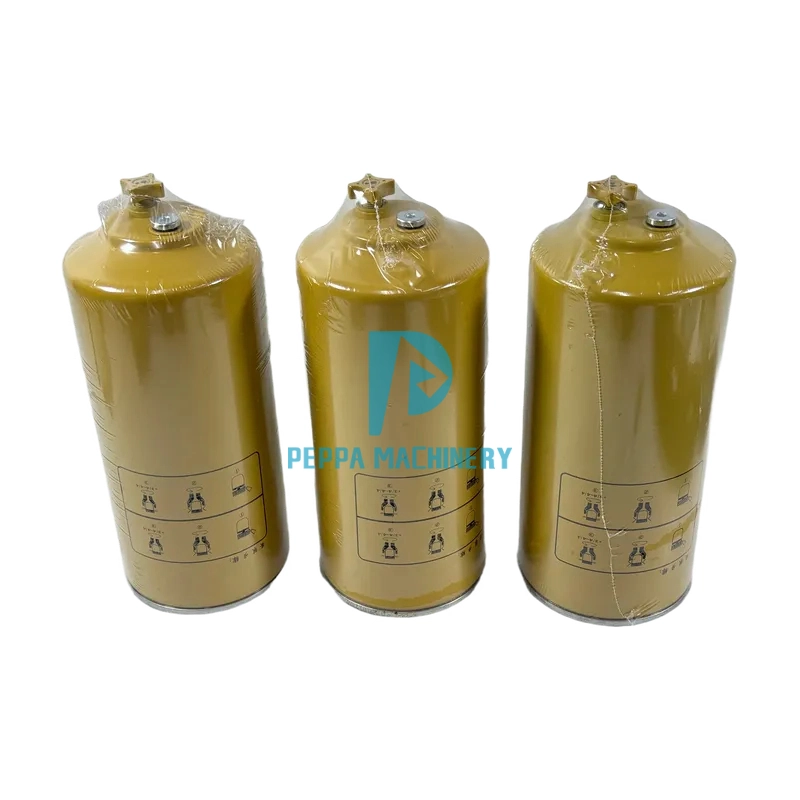
4385386 Fuel Water Separator Fuel Filter 382-0664 Oil-water Separator Hydraulic Oil Filter for CAT 312D2 320D2
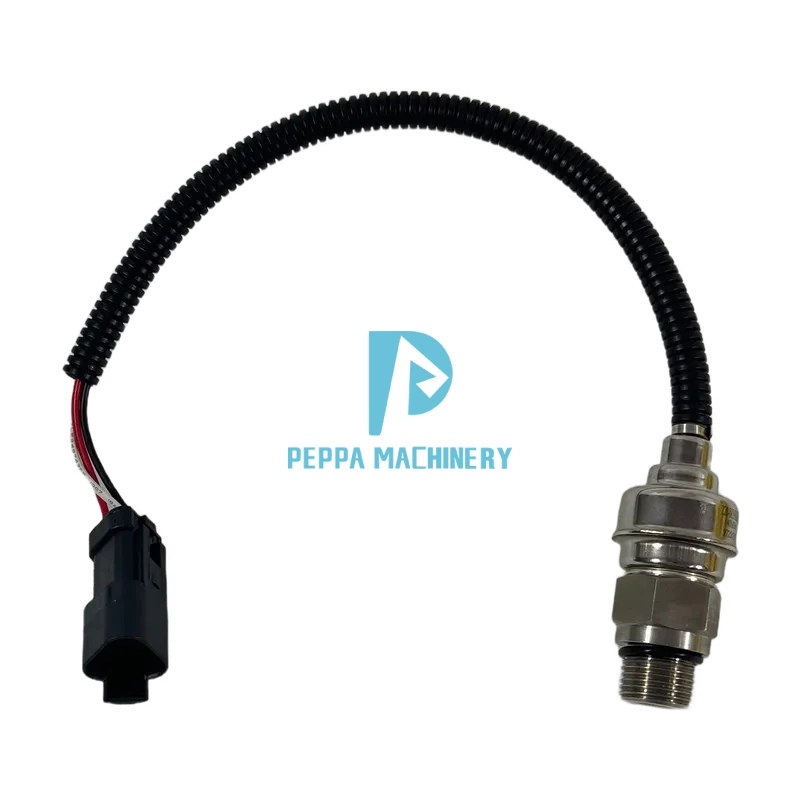
Pressure Sensor 221-8859 106-0178 for Caterpillar CAT 311B 311C 312C 314D 315B 320C 323D 324D 330C 336D 345B 385C
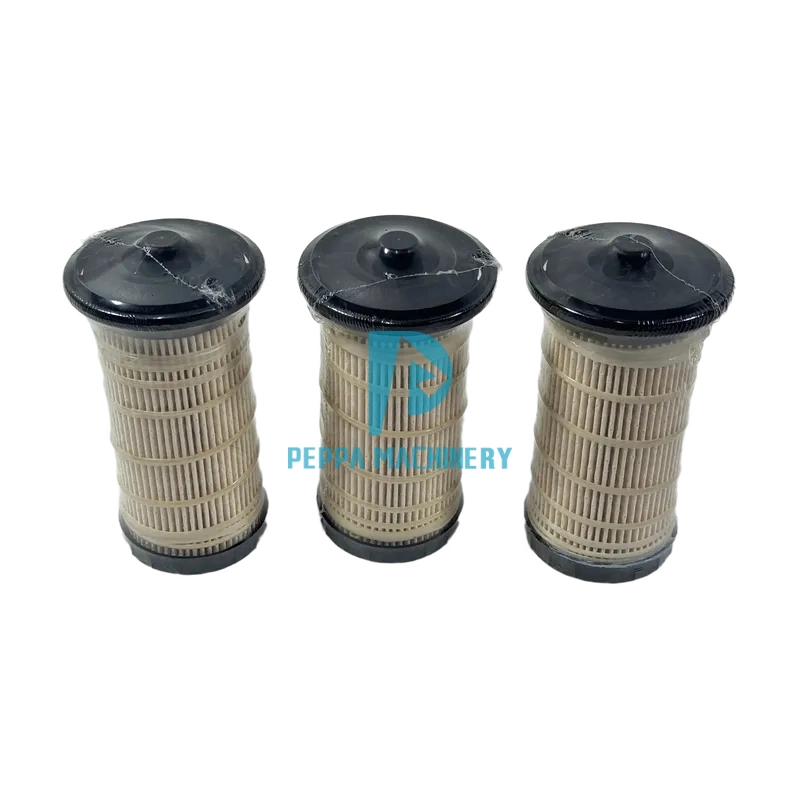
360-8960 Fuel Filter Element for Caterpillar C4.4 & C7.1 Engines | Fits 312D, 320D, 312E, 320E, 326D2, 336D2 Excavators
Get more information
Want to know more? Contact us today to get detailed product specifications, customized solutions, and a free consultation tailored to your needs.
Rest assured that your privacy is important to us, and all information provided will be handled with the utmost confidentiality.

Reliable Source for Quality Excavator Components.
Follow Us
Our Partners


Our Payment Methods


 High Quality
 7/24 Service
 Guaranteed Warranty
 Scan QR Code
Facebook
TikTok
YouTube
Pinterest
Twitter