








Can a high output alternator reduce excavator downtime?
- 1) What exact alternator amperage do I need to support added electric pumps, anti‑idle heaters, LED worklights and telematics on a 20‑ton excavator without overloading the charging system?
- 2) Can installing a high output alternator invalidate my excavator's OEM electrical warranty or trigger CANbus fault codes?
- 3) What wiring, fuse and pulley modifications are required to safely retrofit a 200–250 A alternator on an older excavator?
- 4) How does a high output alternator affect battery lifespan and starting reliability in arctic or subzero climates?
- 5) Will a high output alternator reduce excavator downtime caused by electrical failures, and how do I measure that improvement (MTTR/MTBF)?
- 6) What are realistic cost, lead time, and ROI calculations for retrofitting a high output alternator on a mid‑size excavator (parts, wiring, downtime, and expected savings)?
- Concluding summary: Advantages of a properly specified high output alternator for excavator fleets
Can a High Output Alternator Reduce Excavator Downtime? A Practical Buyer’s Guide
Upgrading to a high output alternator (high‑amperage alternator / heavy equipment alternator) can eliminate chronic charging shortfalls, support added telematics, LED lighting, electric hydraulic pumps and cab electrics, and materially improve excavator uptime—when specified and installed correctly. Below are six specific long‑tail questions often missing definitive, up‑to‑date answers online, with practical, evidence‑based guidance for buyers and fleet maintenance managers.
1) What exact alternator amperage do I need to support added electric pumps, anti‑idle heaters, LED worklights and telematics on a 20‑ton excavator without overloading the charging system?
How to calculate required alternator amperage (step‑by‑step):
- Inventory additional electrical loads (list each device, voltage and steady + peak amp draw). Typical ranges: LED worklight 5–20 A each, telematics/PLC ~1–5 A, electric hydraulic pump motor 50–250 A depending on power, diesel block heater/shore power loads 10–80 A. These are representative; measure actual draw with a clamp meter or use manufacturer nameplate amperage.
- Include base machine charging demand: measure alternator output during normal operation and peak inrush events (starter motor and ECM loads). Many mid‑size excavators' stock alternators provide roughly 70–150 A; verify in OEM specs.
- Sum continuous amperage of all loads likely to run simultaneously. Add 25–40% margin for transient loads and future accessories (industry best practice when sizing charging capacity for heavy equipment).
- Factor duty cycle: if an accessory runs intermittently (e.g., LED floodlights only while working), you can use average running amps rather than continuous amps. For continuous loads (heaters, hydraulic pump for remote hydraulics), size for continuous operation.
- Select an alternator rating above the calculated required continuous current. For example, if continuous requirement is 180 A, choose a 220–260 A high output alternator to avoid thermal derating and to give headroom.
Why margin matters: alternators derate at high temperatures and at low engine RPMs; electrical control modules may request peak charging at idle. A high‑amperage alternator with 20–40% headroom prevents battery discharge during peak events and extends battery life.
2) Can installing a high output alternator invalidate my excavator's OEM electrical warranty or trigger CANbus fault codes?
Short answer: It can—unless you follow OEM guidelines and use compatible components. Key considerations:
- Warranty: OEM warranties often reference use of aftermarket parts that meet OEM specifications. Installing a non‑OEM alternator might affect the warranty on the charging system or ECM if the alternator causes a failure. To avoid this, request a written OEM exemption or use an OEM‑approved high output alternator or upgrade kit.
- CANbus/ECM compatibility: Modern excavators integrate the alternator into the vehicle network. ECUs may expect certain voltage/field control signals or use a smart regulator protocol. If you replace the alternator with a unit that has a different regulator interface, you may see fault codes, charging warnings, or inverter/telemetry issues.
- Mitigation steps: obtain the OEM charging system pinout and regulator control spec; choose a high output alternator with matching regulator (internal or remote) or a CANbus‑aware regulator; some installations require an interface module or reprogramming of the ECM by an authorized dealer to accept the new alternator profile.
- Documentation: keep purchase invoices, datasheets and an installation sign‑off from a certified technician to demonstrate due diligence if warranty questions arise.
3) What wiring, fuse and pulley modifications are required to safely retrofit a 200–250 A alternator on an older excavator?
Retrofit checklist (electrical & mechanical):
- Main battery cable: upgrade to an appropriate gauge for continuous current. Typical guidance: 150–200 A ≈ 2/0 AWG (depending on length), 250–300 A ≈ 3/0–4/0 AWG. Use marine/automotive high strand count cable and properly rated terminals. Always size cable for both continuous amperage and voltage drop limits.
- Fusing/fusible link: install battery‑side protection sized slightly above alternator continuous rating (e.g., use a 300 A fuse on a 250 A alternator) and protect accessory branches individually. Use UL‑listed or ISO‑certified components rated for vibration and temperature.
- Grounding: run an equal‑size ground cable to chassis and battery negative; clean and secure all chassis bolt locations to ensure low resistance return path.
- Pulley and belt: verify alternator RPM vs engine accessory drive RPM. High output alternators often need a pulley ratio that keeps alternator RPM in an efficient band across idle to max engine speed. Check belt width and tensioner capacity; you may need a wider belt or multiple belts and an upgraded tensioner to handle higher torque and reduce slip.
- Mounting and clearances: confirm brackets and air flow for alternator cooling; high output units run hotter and may need better ventilation or relocation to avoid heat soak from nearby manifolds.
- Voltage regulator/interface wiring: if the alternator has an external regulator or CANbus connector, wire the control lines to the OEM harness per the supplier/OEM interface documentation. Preserve shielded signal wiring to avoid noise coupling into ECM/telematics lines.
- Testing after install: perform voltage/amp checks at idle, mid‑RPM and high RPM; check ripple with an oscilloscope if sensitive electronics are present; confirm no stray fault codes on ECM/CANbus.
Always engage a qualified heavy equipment electrician or OEM dealer for retrofits. Improper wiring or pulley mismatch is a common cause of alternator failures and electrical fires.
4) How does a high output alternator affect battery lifespan and starting reliability in arctic or subzero climates?
Cold climates stress batteries (lower starting capacity; higher internal resistance). A correctly sized high output alternator improves cold‑start reliability but only when combined with proper charging control and battery choice:
- Faster recharge: higher amperage replenishes depleted batteries faster after cranking or heavy accessory use, reducing the window when the battery sits at low state of charge—a major factor in premature battery sulfation in lead‑acid cells.
- Charge profile and temperature compensation: use a regulator with temperature compensation or an external battery charger/conditioning strategy. Without proper voltage regulation, high output alternators can overcharge at high states of charge or at elevated temperatures; in cold climates, charging voltage needs to be slightly higher but controlled to avoid gassing when temperatures change.
- Battery type: choose batteries rated for cold cranking (high CCA) and deep cycling if accessories are heavy. AGM or gel variants can be better for vibration and partial state‑of‑charge operation. Verify compatibility with higher charge currents—some AGM batteries accept higher charge currents but need proper regulation.
- Practical measures: add battery insulation or heated battery boxes, use reliable battery isolation/management systems for multiple battery banks, and log battery voltage/CCA across seasons to detect degradation early.
Conclusion: a high output alternator reduces cold‑start and battery‑replacement events when matched to an appropriate battery, regulator, and preventive maintenance (thermal management and state‑of‑charge monitoring).
5) Will a high output alternator reduce excavator downtime caused by electrical failures, and how do I measure that improvement (MTTR/MTBF)?
Direct answer: Yes—for failures caused by undercharging, repeated jump starts, and accessory overloads. It will not prevent mechanical failures unrelated to the charging system. To quantify improvements:
- Baseline data collection: log current downtime events tied to electrical causes (no‑start, battery replacements, alternator replacements, telematics outages) for 3–6 months. Record MTTR (mean time to repair) and MTBF (mean time between failures) for electrical incidents.
- Install a pilot upgrade on a subset of machines and continue the same logging for 3–6 months. Track metrics: number of battery‑related failures, emergency roadside callouts, engine no‑start occurrences, and hours lost to electrical faults.
- Compare: calculate percentage reduction in electrical downtime events and delta in MTTR/MTBF. Real world fleet pilots commonly show significant drops in battery‑related incidents because the root cause (insufficient charging capacity) is addressed—but magnitude depends on baseline condition and operator behavior.
- Other measurable benefits: fewer battery replacements, fewer jump‑starts (fuel/time saved), and reduced operator idle to recharge batteries—these translate to hard dollar and availability gains.
Recommendation: run a documented pilot, instrument alternator output and battery state‑of‑charge, and include telematics/ECM logs in the analysis. This is the only way to produce defensible MTTR/MTBF improvements for procurement approval.
6) What are realistic cost, lead time, and ROI calculations for retrofitting a high output alternator on a mid‑size excavator (parts, wiring, downtime, and expected savings)?
How to build an ROI model (step‑by‑step):
- Identify upfront costs: alternator unit (cost varies by brand and amperage), wiring and connector materials, mechanical brackets/pulley, labor hours for uninstall/install and testing, and any required ECM interface module or programming. Request quotes from suppliers and installers for accurate numbers.
- Estimate downtime cost: quantify the opportunity cost per machine day (rental value, operator idle cost, missed production). Use this to calculate the cost of installation downtime—consider doing installs during scheduled service windows to minimize impact.
- Estimate annual savings: reduced battery replacements, fewer emergency repairs, lower lost‑production hours due to no‑starts, and potential fuel savings from reduced idling. Use fleet historical spend on electrical callouts as a baseline.
- Calculate simple payback and ROI: annual savings ÷ total installed cost = payback years. For procurement, present both conservative and optimistic scenarios and sensitivity to variables like battery life extension and reduced emergency calls.
Example (hypothetical template, replace with your vendor quotes):
- Assumptions: Parts & materials $2,000; labor $600 (4–6 hours); downtime cost (half day) $400. Total installed cost = $3,000.
- Estimated annual savings: fewer battery replacements and callouts = $1,200; reduced lost production = $1,000. Annual savings = $2,200.
- Simple payback ≈ 1.4 years. ROI improves if multiple failure‑prone machines are upgraded (volume discounts) or if installs occur during scheduled maintenance to eliminate extra downtime.
Important: replace the example numbers with quotes from JBParts (www.jbpartsgz.com) and your local installer, and run a pilot to verify the assumed savings before fleet‑wide rollout.
Concluding summary: Advantages of a properly specified high output alternator for excavator fleets
When sized, installed and integrated correctly, a high output alternator delivers:
- Greater charging capacity to support telematics, LED lighting, electric pumps and heaters without battery drain.
- Fewer battery‑related no‑start events and emergency service calls—directly improving uptime when undercharging was the root cause.
- Faster recovery from high‑draw events and better battery health when combined with correct regulation and temperature compensation.
- Predictable ROI when pilots and load audits are used to validate assumptions and to size alternators properly.
Best practice checklist before purchase: perform an electric load analysis, consult OEM charging specs, choose a CANbus‑compatible regulator or OEM‑approved alternator, upgrade cabling and protection, and pilot the retrofit with telemetry logging to validate MTTR/MTBF gains.
If you would like a detailed alternator sizing audit, OEM‑matched retrofit options, or a quote for a high output alternator and installation, contact JBParts: www.jbpartsgz.com or jbparts@aliyun.com. Our team can supply alternator datasheets and assist with pilot measurement plans.

Isuzu SP 4JG1 4JG2 4JG3 Cylinder Liner 1876182070 1-87618207-0 1876182080 1-87618208-0 1876182100 1-87618210-0
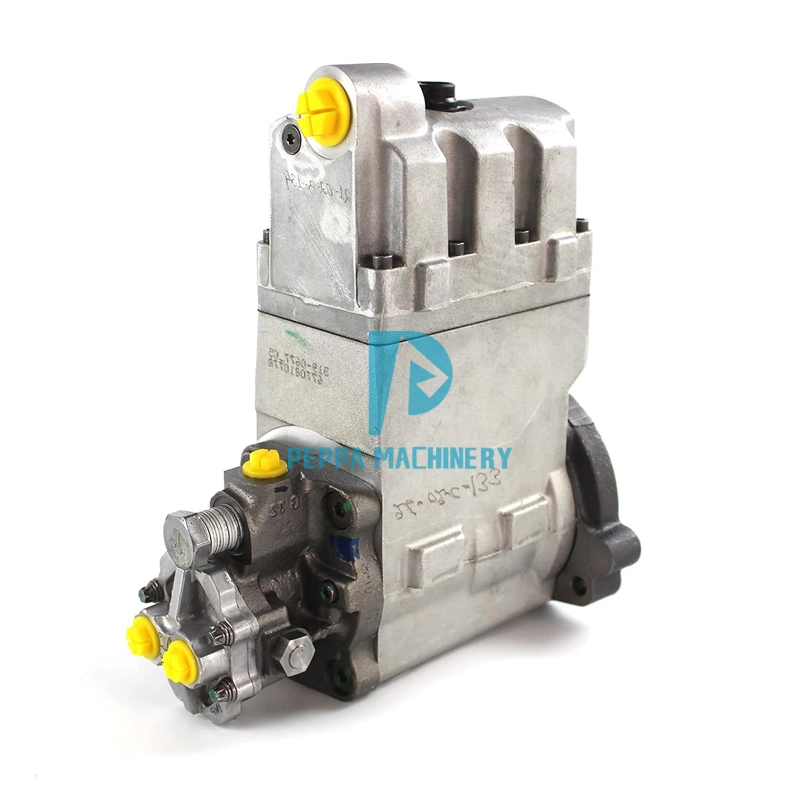
Fuel Feed / Transfer Pump Assembly for Caterpillar C7 & C9 Engines | Direct Replacement for OEM Parts #319-0678, 254-4358, 304-0678, 295-4778, 228-589
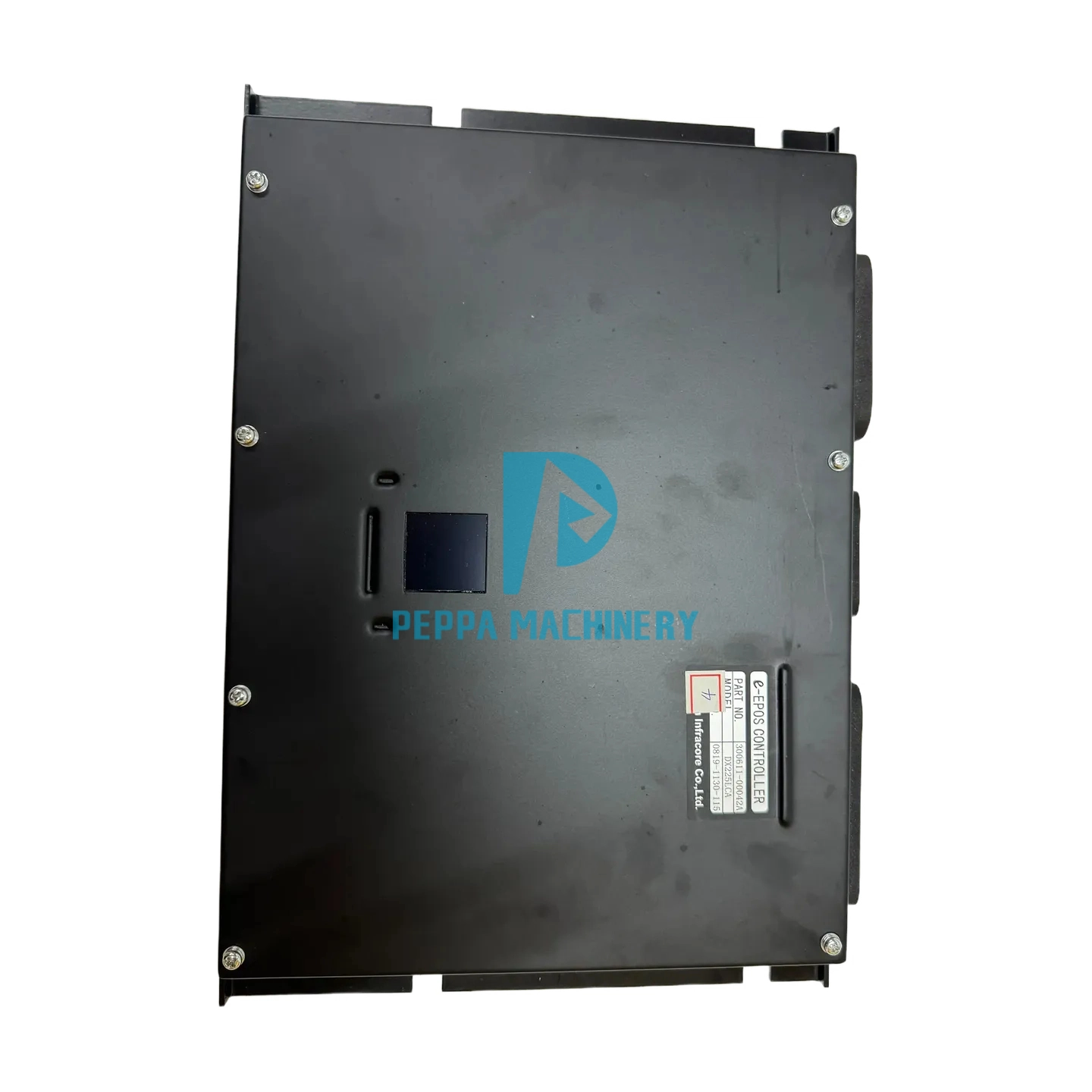
Excavator Accessories Excavator Controller DX225 DX225LCA E-EPOS Controller Computer Board 300611-00042 K1026740 K1001369C K1056425 ECU ECM

Isuzu Engine 6WG1 Turbo 1876183290 1-87618329-0 8981921861 8-98192186-1 14400-4441 1144004370 114400-4370 49188-018312 49188-11940
Excavator Parts
Are your parts genuine or OEM?
We offer both genuine parts and high-quality OEM alternatives. You can choose according to your budget and application needs. All OEM products are tested to meet or exceed original specifications.
Do you provide technical support or installation guidance?
While we do not offer on-site installation, we can provide basic technical advice, diagrams, or documentation to assist your technicians with installation and troubleshooting.
What brands of excavator parts do you supply?
We supply a full range of parts compatible with major international and Chinese brands, including Caterpillar, Komatsu, Hitachi, Volvo, Doosan, Hyundai, Sany, Liugong, XCMG, Zoomlion, and more.
What types of parts do you mainly offer?
Our main product categories include:
• Engine parts (liner kits, crankshafts, water/oil pumps, etc.)
• Electrical parts (sensors, monitors, throttle motors, wiring harnesses)
• Hydraulic parts (pumps, valves, cylinders)
• Sealing kits (NOK, SKF, PQ brands, floating seals, O-rings)
How can I verify compatibility before placing an order?
Please provide us with your machine brand, model number, and the part number (if available). Our team will double-check the compatibility to ensure you receive the correct parts.
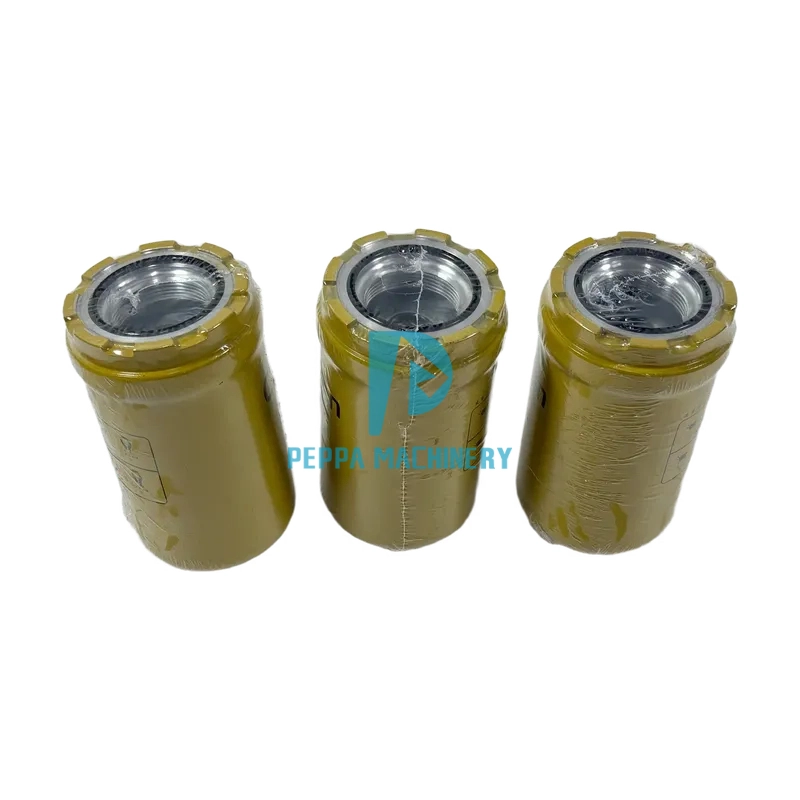
51-8670 Hydraulic Filter Applicable to HF35519 518670 2897836 518670X 1588987 Compatible with Caterpillar 352FVG 325CL
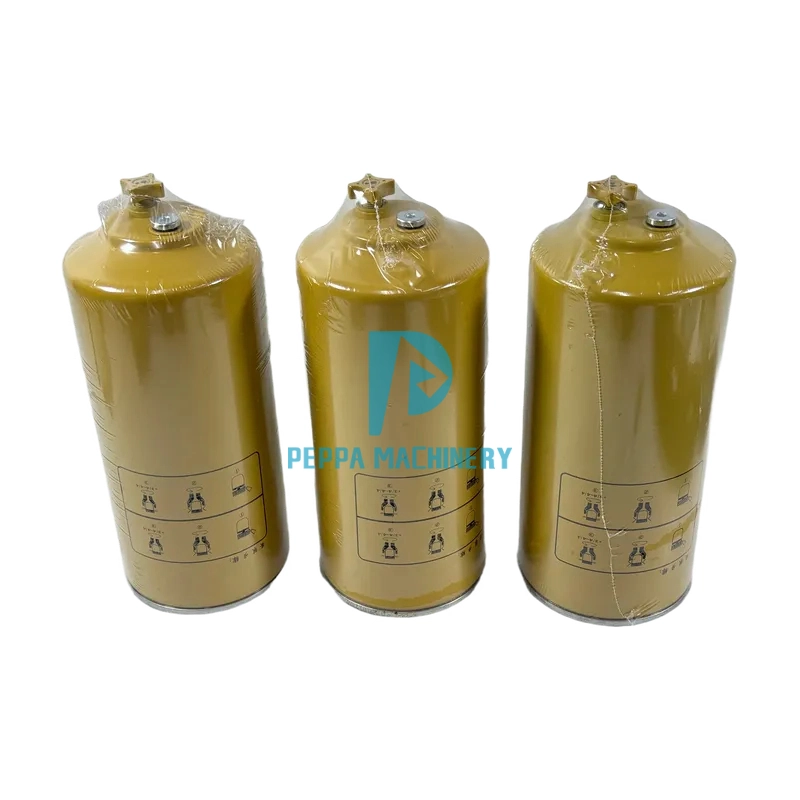
4385386 Fuel Water Separator Fuel Filter 382-0664 Oil-water Separator Hydraulic Oil Filter for CAT 312D2 320D2
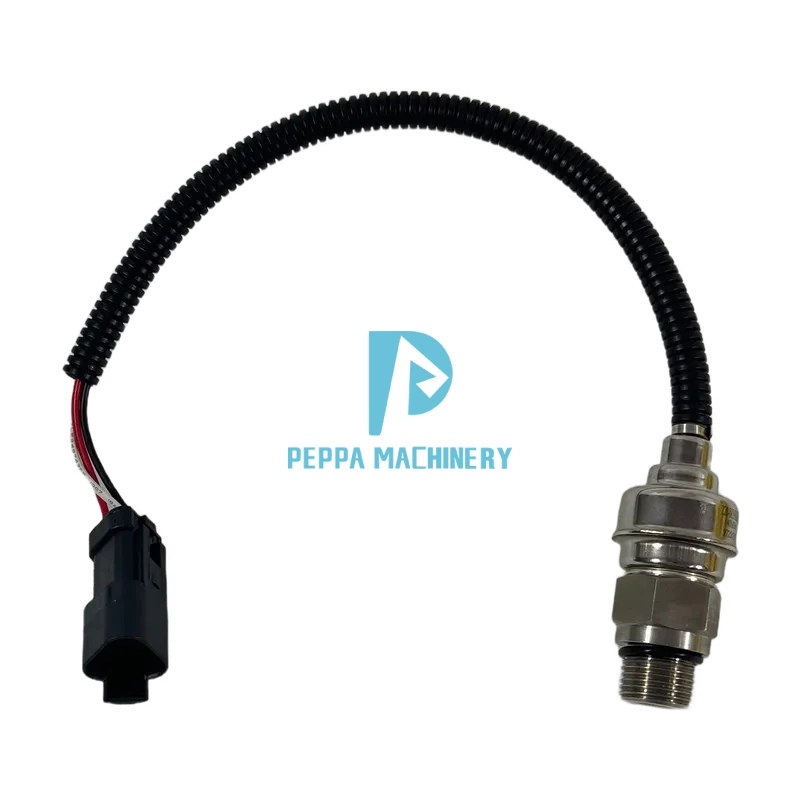
Pressure Sensor 221-8859 106-0178 for Caterpillar CAT 311B 311C 312C 314D 315B 320C 323D 324D 330C 336D 345B 385C
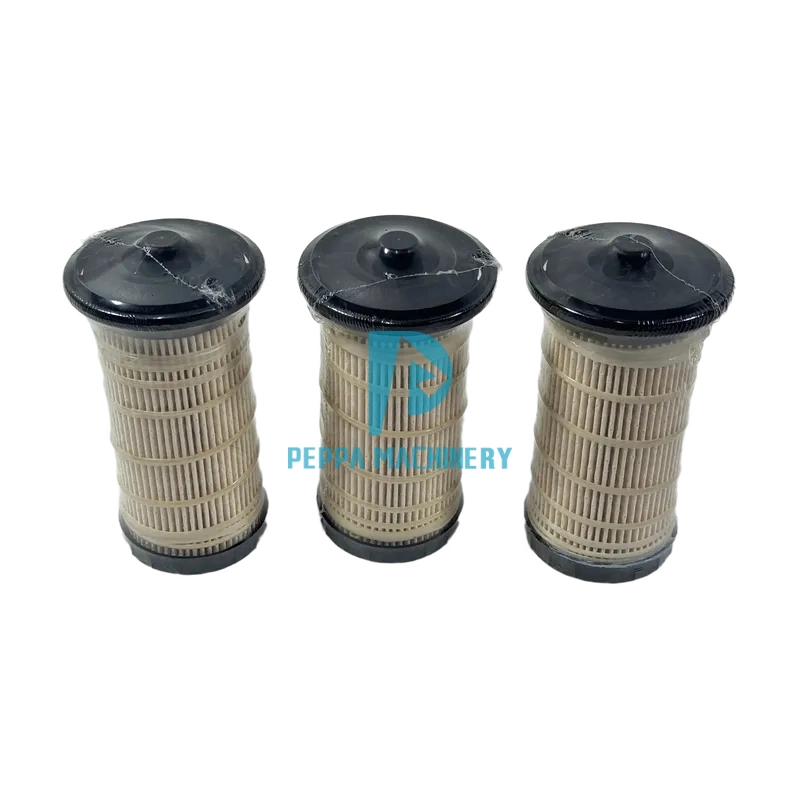
360-8960 Fuel Filter Element for Caterpillar C4.4 & C7.1 Engines | Fits 312D, 320D, 312E, 320E, 326D2, 336D2 Excavators
Get more information
Want to know more? Contact us today to get detailed product specifications, customized solutions, and a free consultation tailored to your needs.
Rest assured that your privacy is important to us, and all information provided will be handled with the utmost confidentiality.

Reliable Source for Quality Excavator Components.
Follow Us
Our Partners


Our Payment Methods


 High Quality
 7/24 Service
 Guaranteed Warranty
 Scan QR Code
Facebook
TikTok
YouTube
Pinterest
Twitter