








What warranty and quality checks for engine overhaul gasket kits?
- 1. How do I verify a 'complete engine overhaul gasket kit' matches my excavator engine when parts catalogs show multiple sub-models?
- 2. What precise material tests and documentation should I demand from suppliers to avoid premature gasket failure?
- 3. Which gaskets and bolts must always be replaced during an excavator engine overhaul to prevent head gasket failures?
- 4. How should I inspect and measure head gasket flatness, thickness and MLS layers on arrival to confirm OEM-grade tolerances?
- 5. When is it necessary to use additional sealants, and which products and application methods are safe for diesel excavator engine overhaul gasket kits?
- 6. What warranty terms and factory quality checks should I require to ensure long-term reliability of engine overhaul gasket kits?
1. How do I verify a 'complete engine overhaul gasket kit' matches my excavator engine when parts catalogs show multiple sub-models?
Answer:
- Start with engine identity, not chassis: record the engine model, engine serial number, cylinder head casting number and the OEM part numbers stamped on the head/casing. Excavator models (Komatsu, CAT, Hitachi, Volvo) often ship different engine sub-versions under one machine model.
- Cross-reference OEM part numbers: request the supplier list every gasket and seal with its OEM cross-reference number. A genuine or OEM-equivalent engine overhaul gasket kit should map each gasket to an OEM part number or provide dimensional drawings.
- Dimension check for critical parts: measure head gasket inner/outer bore diameters, thickness, cylinder bore-to-bore spacing and major O-ring diameters. Ask the supplier to provide these dimensions if your parts catalog is ambiguous.
- Ask for a pictured test-fit: before final shipment, request photos of the largest gaskets (head, oil pan, timing cover) laid over your removed components or a single sample sent for test-fit. This avoids mismatches that cause a full-engine rework delay.
- Beware of “universal” or “fits many” claims: universal kits increase risk—only accept them after dimensional confirmation. For long-running production engines, request the kit variant for your engine serial range.
- Final check: validate valve cover bolt spacing and dowel pin positions against your head casting. If any single bolt hole or dowel does not align, do not install—the cost of downtime greatly exceeds a return.
2. What precise material tests and documentation should I demand from suppliers to avoid premature gasket failure?
Answer:
- Material Test Report (MTR): require MTRs for metallic components showing chemical composition (e.g., ASTM or EN codes). For multi-layer steel (MLS) head gaskets, MTR should confirm steel grade and coating.
- Elastomer certification: for O-rings and soft seals, request compound identification (NBR, HNBR, FKM/Viton), recommended temperature/fluids and durometer (shore A) measurements. Elastomer compatibility with diesel, fuel, oil and coolant is crucial.
- First Article Inspection (FAI) / Initial Sample Inspection Report: ask for FAI showing dimensional verification against drawings—this confirms supplier production control.
- Production traceability / batch numbers: every kit should be batch-labeled and traceable to production records. This lets you track back if a failure appears in one batch.
- Quality system evidence: request supplier certificates such as ISO 9001 or IATF 16949 (automotive tier suppliers). While not proof of product performance, they indicate a controlled manufacturing process.
- Independent third-party testing options: for high-value or mission-critical engines, commission sample tests by SGS, Bureau Veritas or an equivalent lab—chemical composition, hardness, coating adhesion, and seal compression set tests.
- Typical acceptance criteria to request: no porosity in sealing rings, MLS layers fully bonded with anti-corrosion coating, elastomer shore A within ±5 points of stated value, and dimensional tolerances provided in mm for all critical bores and thicknesses.
3. Which gaskets and bolts must always be replaced during an excavator engine overhaul to prevent head gasket failures?
Answer:
- Replace always: head gasket, valve cover gaskets, oil pan gasket, intake/exhaust manifold gaskets, turbocharger gaskets, rear main seal, camshaft seals, water pump gasket, injector O-rings, and all rubberized or composite seals. These materials degrade with heat and age and are low-cost insurance against leaks.
- Torque-to-yield (TTY) and single-use fasteners: many modern diesel engines use TTY head bolts or studs. Check the OEM manual: if bolts are TTY, they must be replaced. Reusing TTY bolts is a major cause of head gasket failure.
- Reuse only after verification: standard grade bolts and studs that are not TTY can sometimes be reused if undamaged and within elongation/hardness spec. Always check bolt specifications and measure elongation or hardness per manual before reuse.
- Replace soft elements: O-rings in fuel injectors and coolant passages must be replaced. Elastomer seals suffer compression set; reuse risks leaks and coolant/oil cross-contamination.
- Consider related systems: if the water pump, thermostats or injector sleeves show wear or corrosion, replace them—internal corrosion or uneven thermal cycling can lead to head warp and subsequent gasket failure.
4. How should I inspect and measure head gasket flatness, thickness and MLS layers on arrival to confirm OEM-grade tolerances?
Answer:
- Visual inspection first: examine head gaskets for visible defects—wrinkles, torn sealing beads, delamination, coating flaking, or foreign particles. MLS gaskets should have uniform layer edges and continuous sealing beads.
- MLS layer count and bonding: confirm the specified number of stainless steel layers and look for consistent laser-welded or mechanically bonded edges. Irregular bonding is a red flag.
- Thickness and bore measurement: use a micrometer or calibrated thickness gauge to measure head gasket thickness at manufacturer-specified locations. MLS gaskets are thin but precisely built; a difference from spec indicates wrong part or out-of-tolerance production.
- Flatness check on mating surfaces: use a precision straightedge and feeler gauges across the cylinder head and block mating surfaces. While exact flatness specs vary by engine model, typical allowable warp is small—consult the engine service manual. If you can't find the manual, use conservative acceptance criteria (e.g., no more than 0.05–0.10 mm across a 300 mm span) and send suspect heads to a machine shop.
- Test bore concentricity: place the head gasket over a ring gauge or mock-up cylinder to check bore roundness and alignment; MLS sealing rings must sit flush without deviations.
- Sample mechanical tests: for mission-critical purchases, request sample hardness and coating adhesion tests for MLS layers. These require lab equipment; reputable suppliers will provide reports on request.
5. When is it necessary to use additional sealants, and which products and application methods are safe for diesel excavator engine overhaul gasket kits?
Answer:
- Principle: avoid adding sealants to head gasket faces. Modern MLS head gaskets are designed to seal without additional RTV or silicone on cylinder head faces. Adding sealant under a head gasket can change compression characteristics and cause thermal hotspots.
- Appropriate uses: use designated anaerobic thread sealants for pipe threads (fuel lines, coolant fittings) when OEM specifies; use high-temp RTV for complex flange corners like oil pan seams or timing covers when the OEM permits.
- Product selection: choose high-temperature, oil-resistant sealants from known brands and stress compatibility with engine fluids. For elastomers, use sealants that do not cause swelling or chemical attack (avoid ketone-based adhesives near nitrile seals).
- Application best-practices: apply sealant sparingly and only at OEM-specified locations. For RTV, apply a thin continuous bead and allow proper cure time before filling fluids. For anaerobic sealants on threaded fasteners, clean threads and apply a single drop; do not coat threads intended to be torque-shear.
- Examples to avoid: do not fill deck face imperfections with thick sealant instead of machining a warped head—this is a temporary fix and often leads to failure.
6. What warranty terms and factory quality checks should I require to ensure long-term reliability of engine overhaul gasket kits?
Answer:
- Reasonable warranty expectations: for aftermarket engine overhaul gasket kits, typical warranties range from 6 to 24 months depending on supplier confidence and supporting QC. Many reputable suppliers offer 12 months limited warranty against manufacturing defects. OEM parts often carry the OEM dealer warranty terms—ask for details.
- Warranty scope and exclusions: ensure the warranty covers manufacturing defects in materials and workmanship, not installation errors, pre-existing engine damage (warped head, cracked block), misuse, or improper torque procedures. A good warranty will also state return and replacement logistics clearly.
- Required pre-shipment QC documentation: insist on MTRs, FAI reports, dimensional inspection records, and batch traceability labels. These records should be provided with the first shipment and be available on request for subsequent orders.
- Factory quality checks to demand: visual inspection records, dimensional CMM/fixture checks for critical parts, seal compound hardness controls, and final packing checks (vacuum or moisture-proof packaging for rubber parts). Suppliers should log inspection results and keep retention samples.
- Sampling and acceptance testing: define acceptance criteria (e.g., sample size, defect thresholds) and consider pre-shipment sample acceptance or third-party inspection if the order is large.
- After-sales support: require clear RMA procedures, committed lead-times for replacement shipment, and root-cause analysis reports for any returned defective kits. Suppliers who offer retest and corrective action reporting (8D or CAPA) show stronger E-E-A-T credentials.
- Practical procurement clause to add to contracts: request a minimum 12-month limited warranty (or OEM-equivalent), MTR and FAI with every new part-number evaluation, and an option for independent lab testing at supplier cost if systematic failures exceed an agreed threshold.
Conclusion:Choosing an engine overhaul gasket kit for excavators demands more than price comparison. Prioritize kits with verifiable fitment (engine serial/part-number mapping), documented metallurgy (MTRs), verified elastomer grades, MLS head gasket integrity, clear batch traceability and a defined warranty that covers manufacturing defects. Proper incoming inspection (dimension checks, visual inspection, sample testing) and following OEM installation practices (replace TTY bolts, correct torque sequence, avoid head-surface sealants) dramatically reduce the risk of rework and downtime. High-quality kits—OEM-equivalent MLS head gaskets, certified elastomers, and traceable QC—deliver longer seal life, fewer leaks and lower total cost of ownership.
For a quote or to request MTR/FAI documentation for engine overhaul gasket kit options compatible with Komatsu, Caterpillar, Hitachi and other excavator engines, contact us at www.jbpartsgz.com or jbparts@aliyun.com.

Isuzu SP 4JG1 4JG2 4JG3 Cylinder Liner 1876182070 1-87618207-0 1876182080 1-87618208-0 1876182100 1-87618210-0
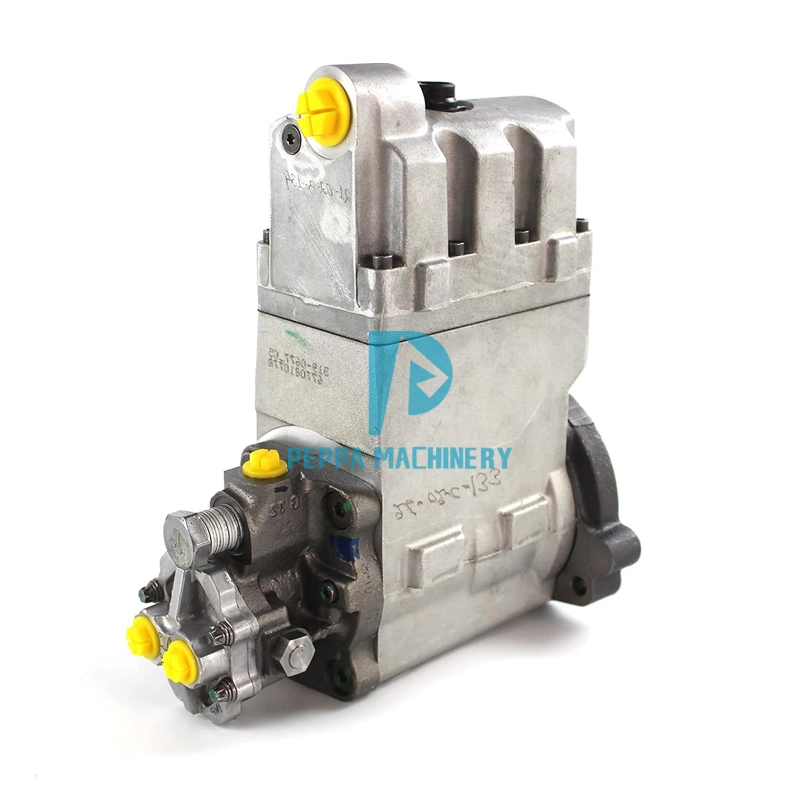
Fuel Feed / Transfer Pump Assembly for Caterpillar C7 & C9 Engines | Direct Replacement for OEM Parts #319-0678, 254-4358, 304-0678, 295-4778, 228-589
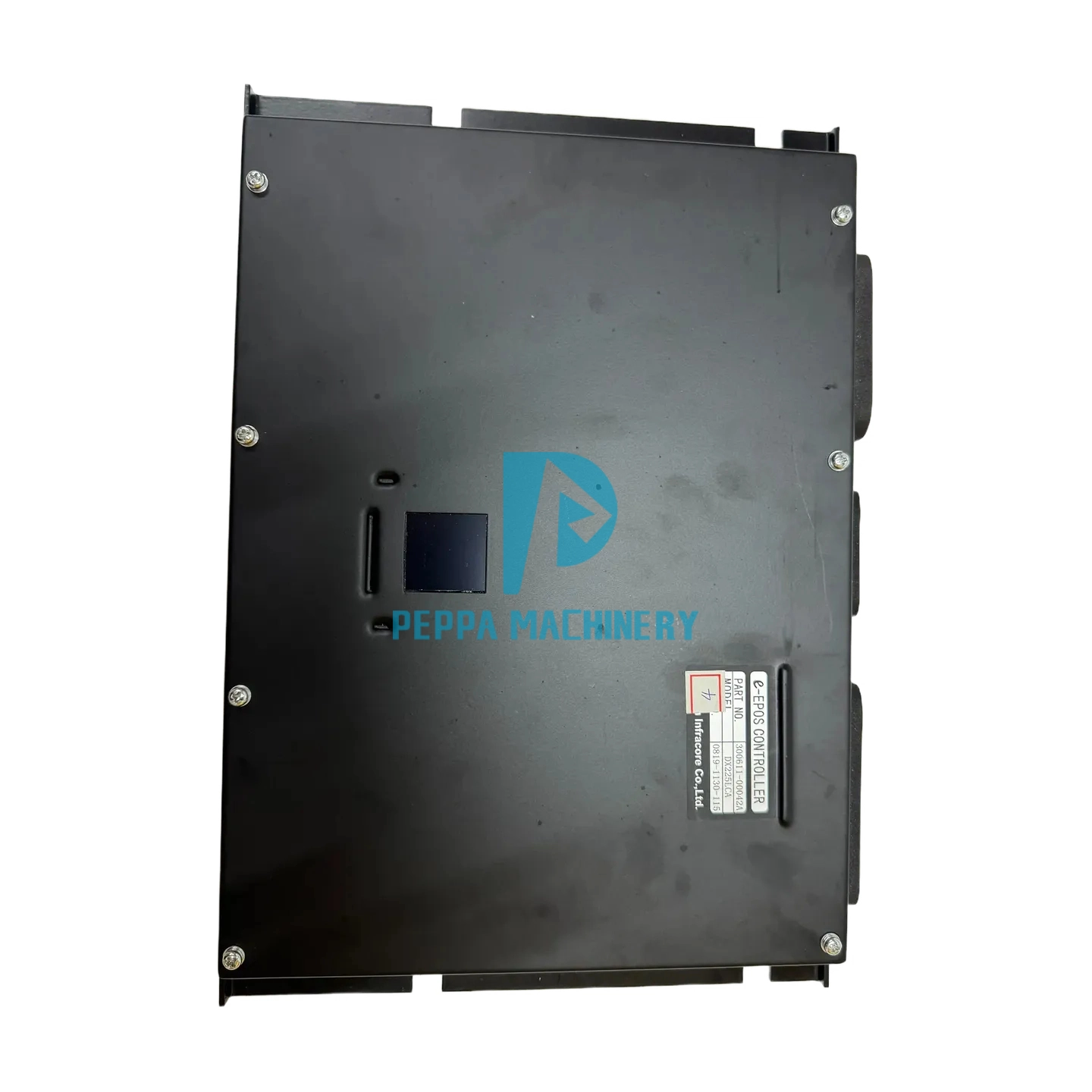
Excavator Accessories Excavator Controller DX225 DX225LCA E-EPOS Controller Computer Board 300611-00042 K1026740 K1001369C K1056425 ECU ECM

Isuzu Engine 6WG1 Turbo 1876183290 1-87618329-0 8981921861 8-98192186-1 14400-4441 1144004370 114400-4370 49188-018312 49188-11940
Excavator Parts
Do you provide technical support or installation guidance?
While we do not offer on-site installation, we can provide basic technical advice, diagrams, or documentation to assist your technicians with installation and troubleshooting.
What types of parts do you mainly offer?
Our main product categories include:
• Engine parts (liner kits, crankshafts, water/oil pumps, etc.)
• Electrical parts (sensors, monitors, throttle motors, wiring harnesses)
• Hydraulic parts (pumps, valves, cylinders)
• Sealing kits (NOK, SKF, PQ brands, floating seals, O-rings)
How can I verify compatibility before placing an order?
Please provide us with your machine brand, model number, and the part number (if available). Our team will double-check the compatibility to ensure you receive the correct parts.
Can I get help choosing the right parts for my machine?
Yes. Our experienced sales team is here to provide professional recommendations and solutions based on your excavator model, part number, or specific requirements.
Are your parts genuine or OEM?
We offer both genuine parts and high-quality OEM alternatives. You can choose according to your budget and application needs. All OEM products are tested to meet or exceed original specifications.
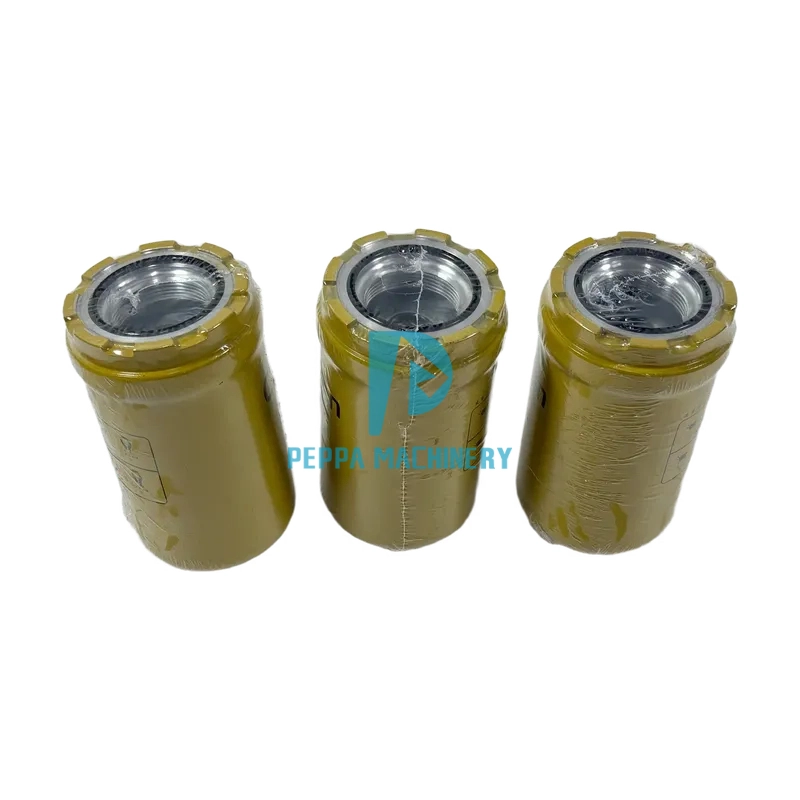
51-8670 Hydraulic Filter Applicable to HF35519 518670 2897836 518670X 1588987 Compatible with Caterpillar 352FVG 325CL
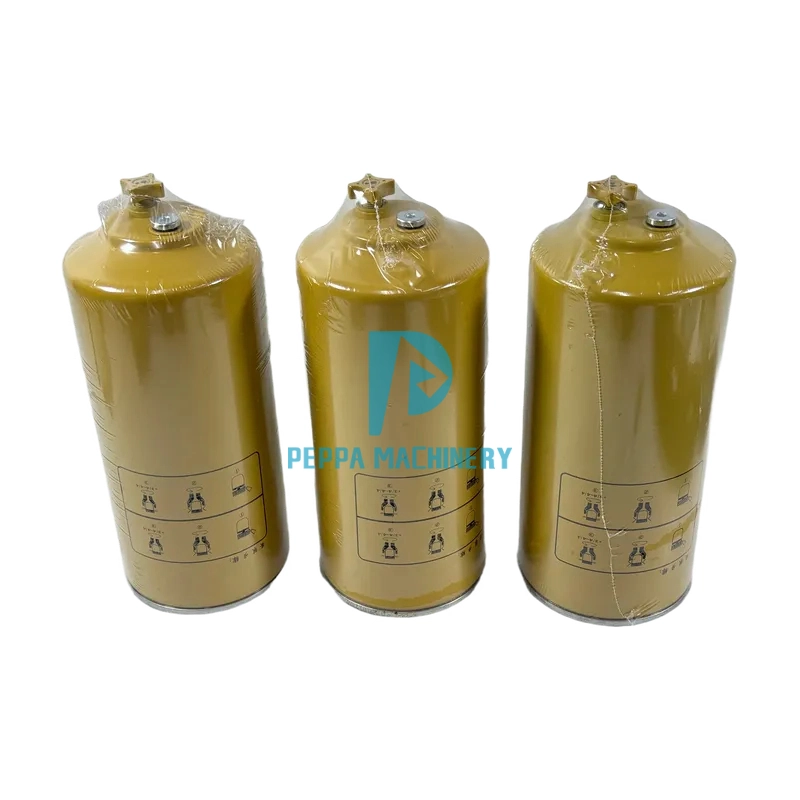
4385386 Fuel Water Separator Fuel Filter 382-0664 Oil-water Separator Hydraulic Oil Filter for CAT 312D2 320D2
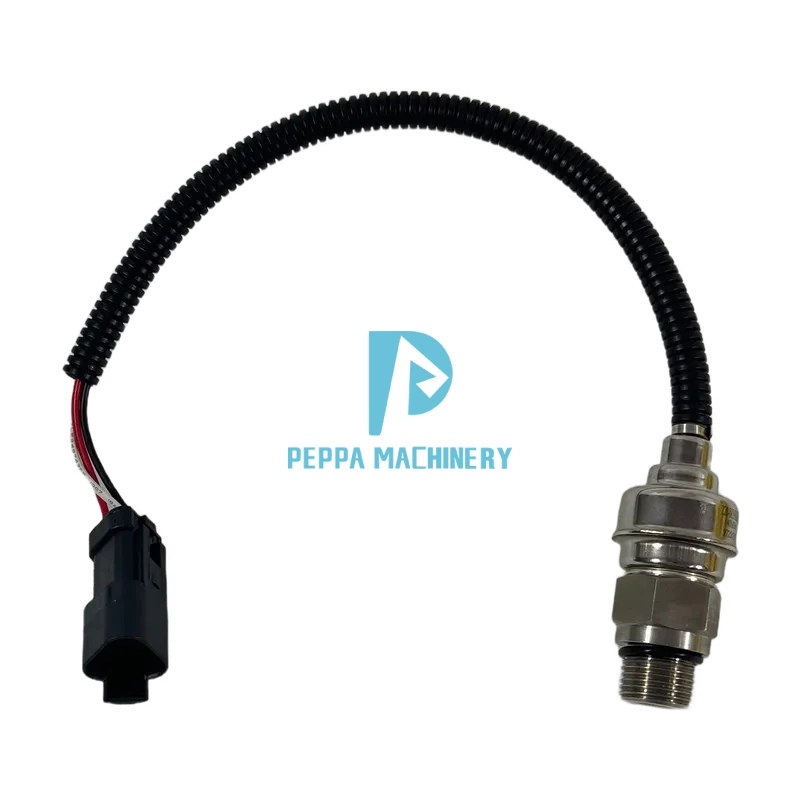
Pressure Sensor 221-8859 106-0178 for Caterpillar CAT 311B 311C 312C 314D 315B 320C 323D 324D 330C 336D 345B 385C
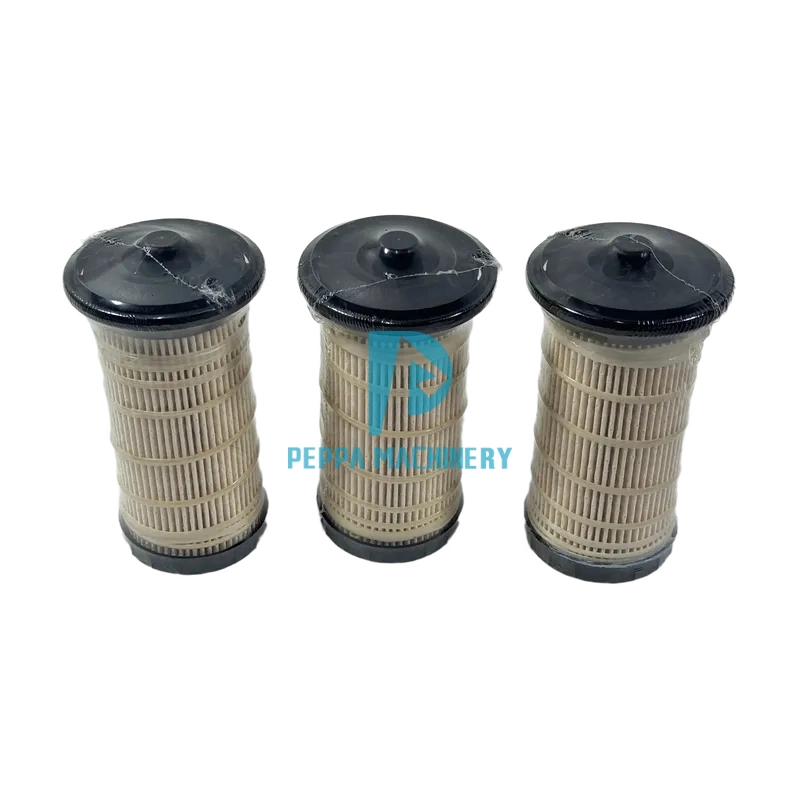
360-8960 Fuel Filter Element for Caterpillar C4.4 & C7.1 Engines | Fits 312D, 320D, 312E, 320E, 326D2, 336D2 Excavators
Get more information
Want to know more? Contact us today to get detailed product specifications, customized solutions, and a free consultation tailored to your needs.
Rest assured that your privacy is important to us, and all information provided will be handled with the utmost confidentiality.

Reliable Source for Quality Excavator Components.
Follow Us
Our Partners


Our Payment Methods


 High Quality
 7/24 Service
 Guaranteed Warranty
 Scan QR Code
Facebook
TikTok
YouTube
Pinterest
Twitter