








How to compare electric turbocharger models for excavator use?
- How to determine whether my excavator's electrical system can supply an electric turbocharger (voltage, current, and transient power)?
- What compressor map and exhaust pressure data do I need from my excavator to match an electric turbocharger for reliable low-rpm boost?
- How to compare motor/inverter specifications (kW, torque, thermal limits) across electric turbocharger models for heavy-duty excavator duty cycles?
- What mounting, shaft, and bearing differences affect retrofit compatibility and service life when replacing a mechanical turbo with an electric turbocharger on an excavator?
- What control and communication requirements (CAN messages, control algorithms, safety) should I verify before buying an electric turbocharger for my excavator?
- What are realistic maintenance, failure modes, and inspection intervals for electric turbochargers in dusty, high-temperature excavator environments, and how do I plan parts inventory?
How to determine whether my excavator's electrical system can supply an electric turbocharger (voltage, current, and transient power)?
Why this matters: electric turbochargers (e-turbos) require a DC power source and power electronics to spin the integrated motor quickly. On excavators—often retrofitted from mechanical turbos—electrical supply is the most common integration blocker.
What to check and how to calculate: first identify the e-turbo's nominal DC bus voltage and peak power demand (provided by the e-turbo datasheet in kW and peak current). Then audit your machine's electrical system: battery nominal voltage, alternator/generator continuous output, peak transient capability, cable gauge, fuse/CB ratings, and any energy storage (battery bank, supercapacitor) available.
Typical practice is to size for three power windows:
- Continuous power (kW) the e-turbo may draw during extended operation (important for thermal limits and cooling).
- Short peak power (kW for seconds) required for rapid spool-up during transient loads.
- Inrush/starting current (A) into the inverter/motor at DC bus voltage.
Perform a simple check: Peak current (A) = Peak power (kW) ÷ DC voltage (V). If the resulting current exceeds what your alternator, cables, and connectors can supply, you must add an intermediate energy buffer (supercap or second battery bank) or upgrade alternator/inverter and wiring. Many passenger-vehicle e-turbos run on 48V systems; heavy equipment designs often require much higher bus voltages and power (common designs range up to several hundred volts) to achieve the rotor torque and transient power needed for large compressors—confirm the exact bus voltage on the e-turbo spec sheet.
Other checks:
- Verify DC bus compatibility (48V vs 200–800V class designs). Never assume voltage compatibility—mixing voltages will damage power electronics.
- Confirm continuous cooling capacity for the inverter/motor (liquid or oil-cooled systems are common on heavy equipment).
- Assess EMC and grounding requirements (high-power inverters emit noise that can interfere with CAN/J1939 telematics if not mitigated).
- Plan for protection: DC fuses or circuit breakers sized for peak current, and fast disconnects for maintenance.
When in doubt, request the e-turbo supplier's power profile (time vs power/current during a spool event) and run it against your machine's alternator curve and battery state-of-charge scenarios. If retrofit is intended, budget for inverter, cabling, energy buffer and a thermal management upgrade.
What compressor map and exhaust pressure data do I need from my excavator to match an electric turbocharger for reliable low-rpm boost?
Why this matters: a turbocharger—electric or mechanical—must operate within the compressor map for the expected air mass flows and pressure ratios of your engine across transient and steady duty cycles. Mismatching leads to surge, inefficiency, or premature wear.
Data you need from the engine:
- Engine displacement and max RPM range, and the typical working band (e.g., 1,200–2,200 rpm for many excavator diesels).
- Mass air flow requirements at key operating points (e.g., idle, low-load, rated-load). If mass flow isn't available, estimate using engine air requirement formulas or extract from OEM fuel maps/ECM logs.
- Measured or modeled exhaust backpressure at those operating points (important for turbine-side matching).
- Transient cycles: how frequently and how fast the engine load changes (digging cycles, swing cycles). These drive the benefit and design point for e-turbo transient assist.
How to use a compressor map: overlay your engine's required pressure ratio and mass flow operating points onto candidate e-turbo compressor maps. The e-turbo must provide sufficient corrected mass flow at the needed pressure ratios without operating in surge or choke. Because e-turbos can actively control shaft speed, you gain more usable operating envelope—however, the compressor map still defines mechanical limits.
Practical steps for buyers:
- Ask suppliers for compressor maps and corrected mass flow vs pressure ratio curves specific to their electric assisted turbo models.
- If you lack measured engine mass-flow or exhaust pressure, capture engine CAN/ECM logs (air-fuel data and manifold pressures) during representative cycles or ask the OEM for the engine map.
- Engage with the e-turbo vendor or an engineer to perform map-overlay analysis—ensure the selected model has operating points comfortably away from surge lines during likely transient conditions.
How to compare motor/inverter specifications (kW, torque, thermal limits) across electric turbocharger models for heavy-duty excavator duty cycles?
Why this matters: motor and inverter specs determine spool speed, torque availability, thermal endurance and therefore real-world performance in excavator duty cycles which often demand repeated high-energy transients.
Key specs to collect and compare:
- Peak motor power (kW) and peak torque (Nm) and the duration those peaks can be sustained.
- Continuous power rating and thermal derating curve (how much power the motor can sustain at given ambient/coolant temps).
- Maximum shaft speed (rpm) and rotor inertia—higher speed often reduces required torque but increases bearing and sealing demands.
- Motor type (permanent magnet synchronous vs induction)—PMSMs typically have higher torque density but require temperature management and rotor magnets protection from high temps.
- Cooling method (air-cooled, oil-cooled, liquid-cooled) and required cooling flow/heat rejection spec.
- Inverter peak/cont. current ratings, switching frequency, and protection features (short-circuit, overtemperature, overcurrent).
How to interpret them for excavators: focus on duty-cycle ratings, not just peak numbers. Excavator cycles are often high-frequency transients (digging strokes every few seconds). A motor that delivers a high peak for 2 s but can't repeat that pattern without cooldown is unsuitable. Ask vendors for S1/S2 duty-cycle charts or time-at-load curves that reflect repetitive transients similar to your machine's cycle.
Also evaluate thermal systems: many heavy-duty e-turbo solutions use oil or liquid cooling integrated into the turbo housing. Ensure your machine can provide the required coolant flow and that radiators, pumps, and thermostats are rated accordingly.
What mounting, shaft, and bearing differences affect retrofit compatibility and service life when replacing a mechanical turbo with an electric turbocharger on an excavator?
Why this matters: physical and mechanical compatibility determine installation complexity, NVH, and reliability. Electric turbos often integrate a motor on the shaft or replace the center housing rotating group, and mounting impacts sealing, lubrication and alignment.
Key mechanical checks:
- Flange and manifold interfaces—verify turbine inlet flange, outlet, and compressor housing mountings match or if adaptors are required.
- Shaft design—motors integrated into the turbo may change shaft length and balance. Confirm shaft coupling and clearances with exhaust manifold and compressor piping to avoid rubbing or misalignment.
- Bearing type and lubrication—many e-turbos use advanced ceramic bearings or oil-lubricated bearings with specific oil pressure and filtration requirements. Ensure your machine can maintain required oil feed, pressure and cleanliness.
- Sealing and contamination control—excavator environments are dusty; confirm IP rating for electrical connectors and ingress protection for bearings and motor compartments (IP67 or higher is desirable for off-highway duty).
- Rotor dynamics and balance—integrated motors add rotor mass; verify supplier has performed NVH and rotor-dynamics validation for heavy-duty use to avoid premature bearing wear or vibration issues.
Serviceability considerations: check whether the e-turbo is serviceable in the field (replaceable CHRA, bearing kits, seals) and whether special tools or calibration steps are required. For fleet operations, prefer modular designs with swappable rotating groups and established reman/core programs to reduce downtime and inventory cost.
What control and communication requirements (CAN messages, control algorithms, safety) should I verify before buying an electric turbocharger for my excavator?
Why this matters: an e-turbo is a controlled actuator requiring integration with the engine control system. Poor integration leads to drivability issues, incorrect boost, or unsafe behavior.
Control integration checklist:
- Communication protocol—confirm if the e-turbo controller uses CAN J1939, custom CAN IDs, or another protocol. Obtain a message map (PGNs) and expected signals (command torque, feedback speed, temperatures, fault codes).
- Control authority—decide whether the e-turbo will be commanded by the engine ECU (preferred) or operate as an independent assist controller. Full ECM integration allows coordinated fueling, EGR, and transient control to avoid smoke or overboost.
- Safety and failsafe behavior—review default safe states (e.g., limp mode, safe-speed limits) for sensor or power loss, and how faults are reported to ECM/telematics. For machine safety, alignment with machine functional safety standards (e.g., ISO 13849/IEC 61508 for control systems) is recommended.
- Calibration needs—ask if the e-turbo requires mapping and tuning for your engine (gain scheduling, boost target maps). Budget engineering hours for calibration on a dyno or in-field testing.
- Latency and control loop rates—transient benefit depends on control bandwidth. Confirm sampling rates, command latency, and closed-loop control design; systems with low-latency drive-by-wire CAN and fast motor control will provide the best transient boost performance.
Document requirements up front and request a developer integration package from the vendor (CAN message definitions, dbc files, fault code tables, and example sequences). Engage your OEM/ECM vendor early if full integration is intended.
What are realistic maintenance, failure modes, and inspection intervals for electric turbochargers in dusty, high-temperature excavator environments, and how do I plan parts inventory?
Why this matters: electric turbos add electrical and thermal systems that require different maintenance than mechanical turbos. Excavator duty and environment accelerate wear without proper inspection.
Common failure modes and preventative actions:
- Bearing and seal wear due to contamination—use high-quality filtration and maintain oil cleanliness; inspect seals and bearings at shorter intervals if working in heavy-dust sites.
- Electrical connector corrosion and wiring abrasion—choose IP-rated connectors and secure wiring looms away from heat and moving parts; inspect annually or per OEM interval.
- Overtemperature and thermal cycling—ensure cooling system is checked (coolant levels, pump operation, radiator cleanliness) per service schedule; thermal cycling can degrade magnet materials or insulation over time.
- Power electronics degradation—dust, vibration, and temperature stress can shorten inverter life; schedule inverter health checks and log fault histories via telematics.
Inspection intervals and inventory planning:
- Initial post-install inspection at 50–100 hours for retrofit projects to confirm no leaks, connector issues or unusual vibration.
- Adopt a preventive inspection at every major service interval (e.g., every 250–500 hours) focused on filters, oil cleanliness, connector integrity and cooling circuits.
- Keep critical spares on hand for fleet reliability: CHRA/rotating group (or a reman core), bearing/seal kit, inverter power module or fuses, and main electrical connectors. Which spares to stock depends on downtime cost and supplier lead times.
- Establish an agreement with the supplier for warranty support, core exchange, and recommended spare lists. Ensure the supplier provides clear repair manuals, torque specs, and service tolerances.
Lifecycle expectations: suppliers often rate components in operating hours (e.g., bearings and electronics rated for tens of thousands of hours under defined conditions). Verify supplier test data for vibration, thermal cycling, and dust ingress suited to off-highway use. Ask for accelerated life test reports representative of excavator environments.
Conclusion: electric turbochargers (e-turbos) bring substantial advantages for excavators—faster transient response, improved low-end torque, better control of boost and emissions, and potential fuel savings—provided you choose models matched to your machine's electrical capacity, compressor map, mechanical interfaces, control architecture, and maintenance capability. Careful comparison of motor/inverter duty ratings, compressor maps, power supply needs, mounting/shaft details, CAN/control integration, and serviceability is essential to avoid costly retrofit rework and downtime.
For tailored model comparisons, retrofit feasibility checks, and a parts quote, contact us at www.jbpartsgz.com or jbparts@aliyun.com.

Isuzu SP 4JG1 4JG2 4JG3 Cylinder Liner 1876182070 1-87618207-0 1876182080 1-87618208-0 1876182100 1-87618210-0
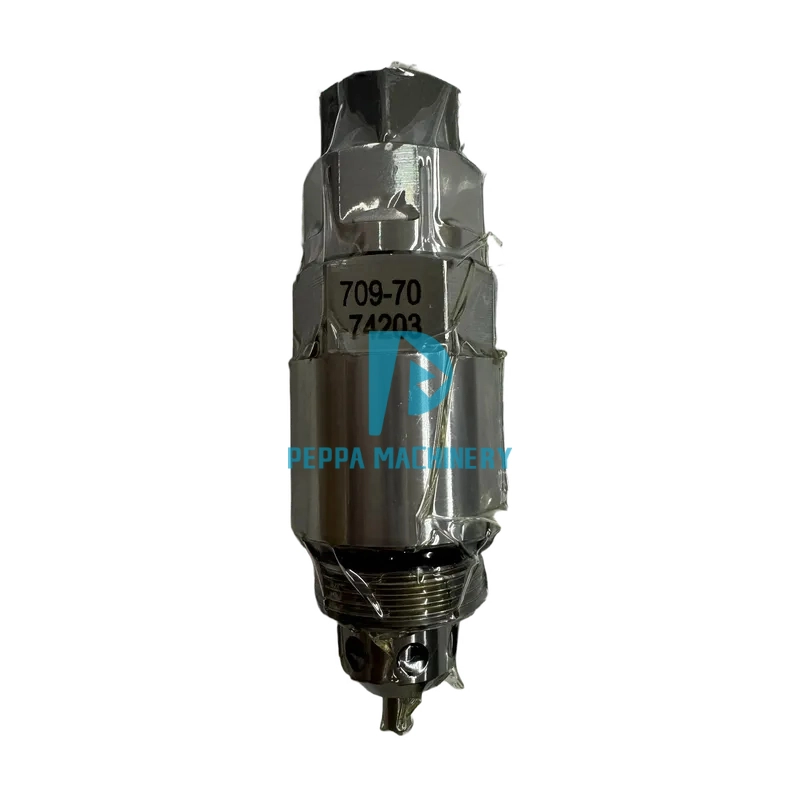
709-70-74203 7097074203 Relief Valve for PC200-5 PC200-6

New for CAT 312D 320D Excavator Spare Parts 4343436 434-3436 221-8859 Metal Pressure Switch and Sensor
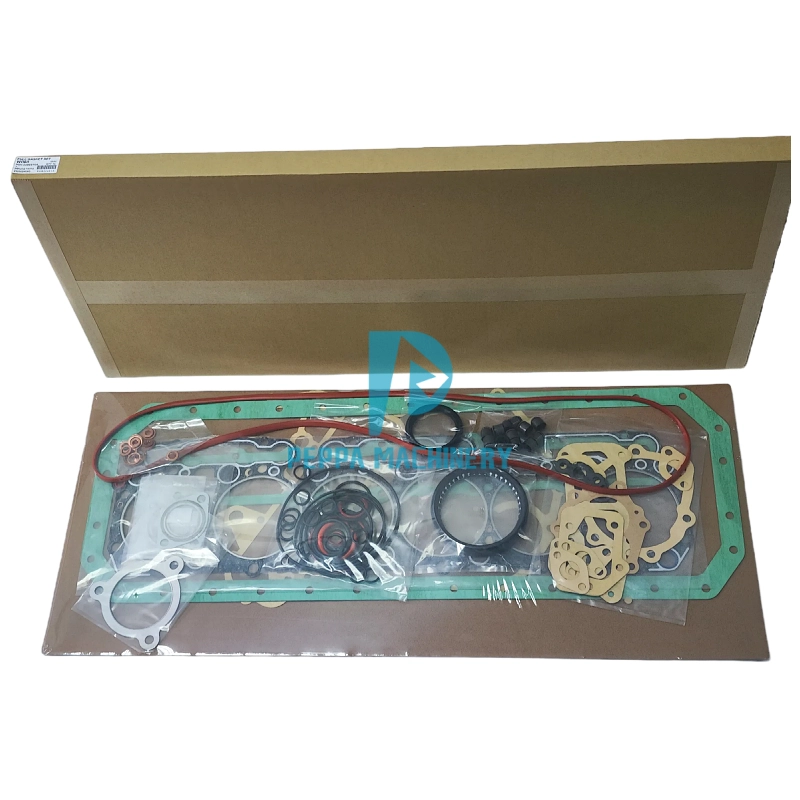
W06D W06DT Engine Overhaul Repair Kit Full Gasket
Excavator Parts
How can I verify compatibility before placing an order?
Please provide us with your machine brand, model number, and the part number (if available). Our team will double-check the compatibility to ensure you receive the correct parts.
Are your parts genuine or OEM?
We offer both genuine parts and high-quality OEM alternatives. You can choose according to your budget and application needs. All OEM products are tested to meet or exceed original specifications.
What types of parts do you mainly offer?
Our main product categories include:
• Engine parts (liner kits, crankshafts, water/oil pumps, etc.)
• Electrical parts (sensors, monitors, throttle motors, wiring harnesses)
• Hydraulic parts (pumps, valves, cylinders)
• Sealing kits (NOK, SKF, PQ brands, floating seals, O-rings)
Can I get help choosing the right parts for my machine?
Yes. Our experienced sales team is here to provide professional recommendations and solutions based on your excavator model, part number, or specific requirements.
Do you provide technical support or installation guidance?
While we do not offer on-site installation, we can provide basic technical advice, diagrams, or documentation to assist your technicians with installation and troubleshooting.
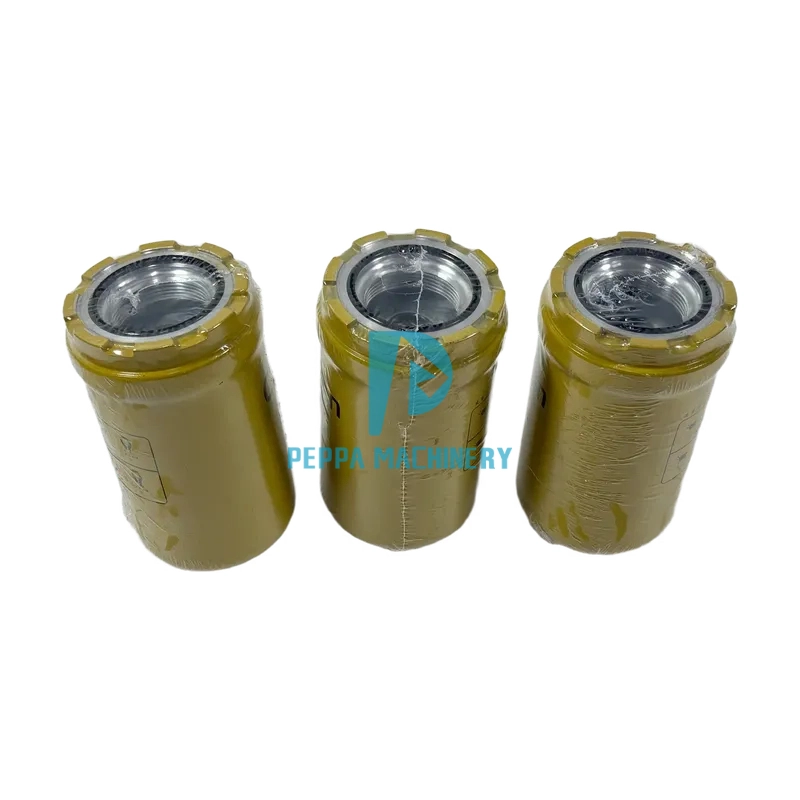
51-8670 Hydraulic Filter Applicable to HF35519 518670 2897836 518670X 1588987 Compatible with Caterpillar 352FVG 325CL
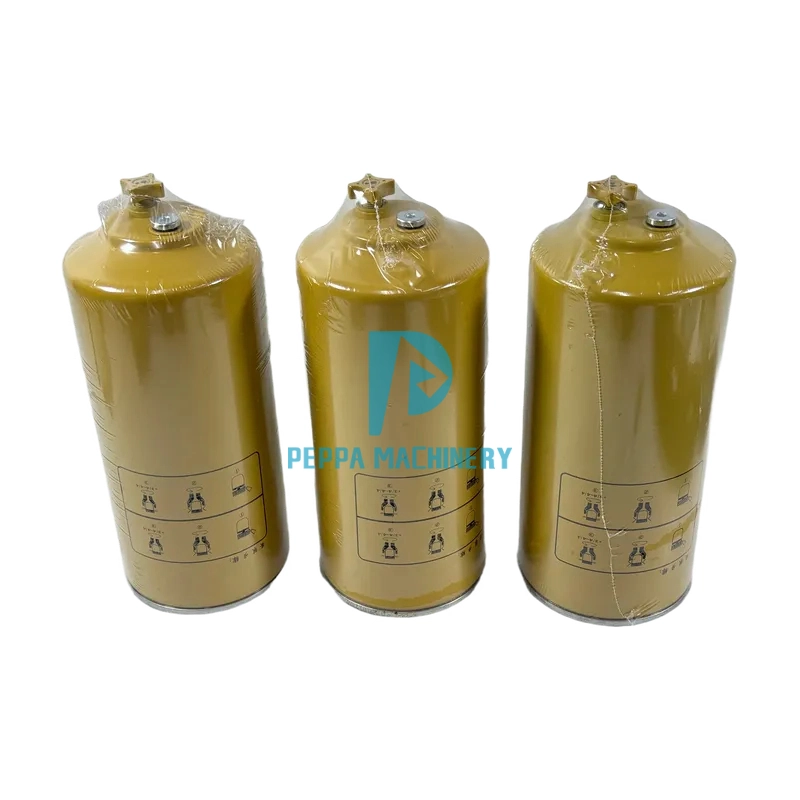
4385386 Fuel Water Separator Fuel Filter 382-0664 Oil-water Separator Hydraulic Oil Filter for CAT 312D2 320D2
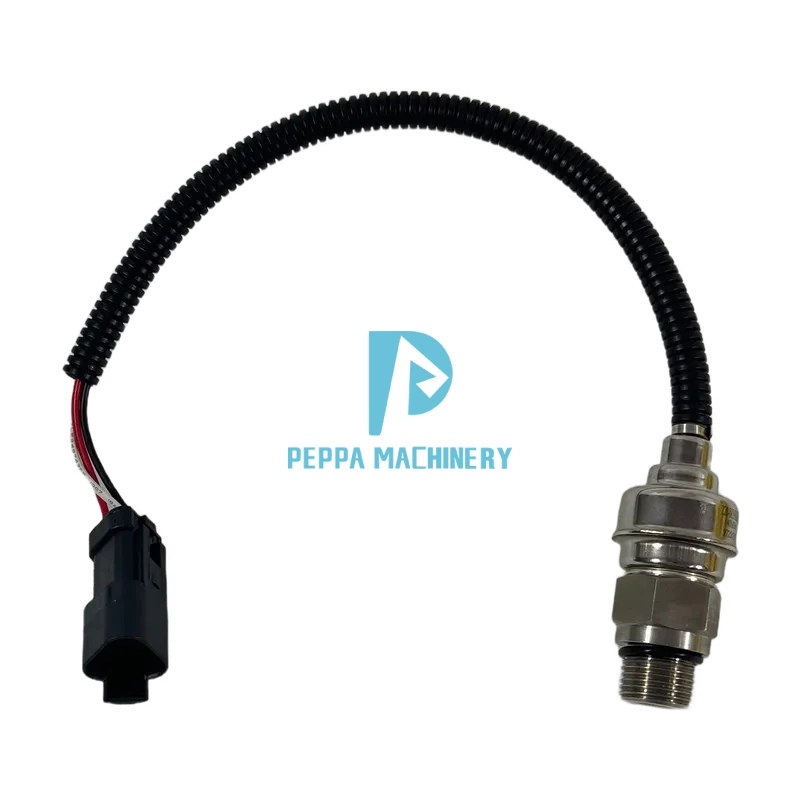
Pressure Sensor 221-8859 106-0178 for Caterpillar CAT 311B 311C 312C 314D 315B 320C 323D 324D 330C 336D 345B 385C
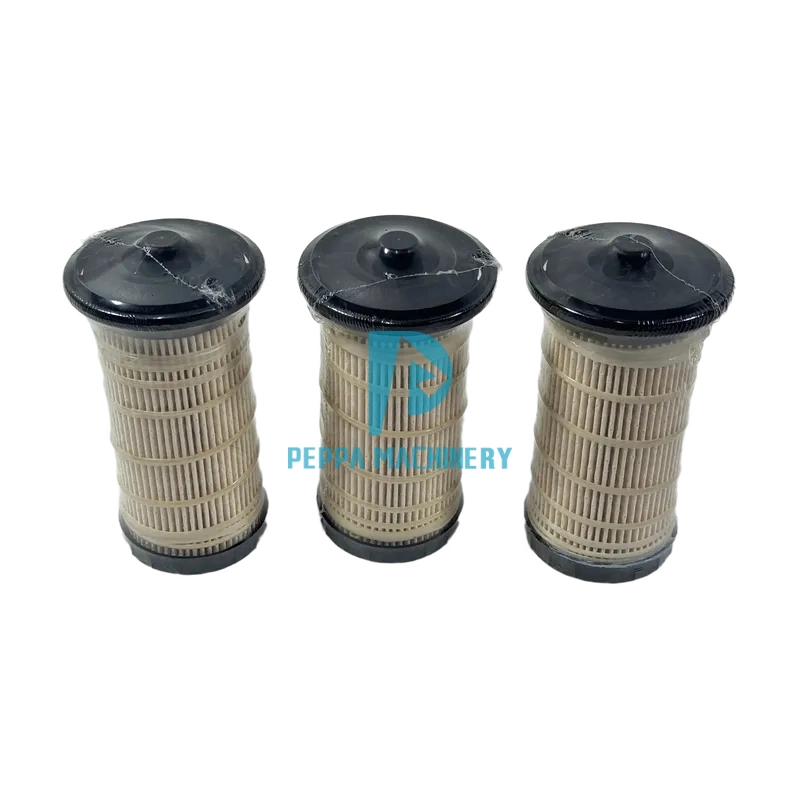
360-8960 Fuel Filter Element for Caterpillar C4.4 & C7.1 Engines | Fits 312D, 320D, 312E, 320E, 326D2, 336D2 Excavators
Get more information
Want to know more? Contact us today to get detailed product specifications, customized solutions, and a free consultation tailored to your needs.
Rest assured that your privacy is important to us, and all information provided will be handled with the utmost confidentiality.

Reliable Source for Quality Excavator Components.
Follow Us
Our Partners


Our Payment Methods


 High Quality
 7/24 Service
 Guaranteed Warranty
 Scan QR Code
Facebook
TikTok
YouTube
Pinterest
Twitter