








Can a new alternator improve excavator uptime and performance?
- Can installing a higher-amperage new alternator on my mid-size excavator (e.g., CAT 320) reduce battery cycling without damaging electronic control modules?
- How do I verify that a new alternator's internal voltage regulator is compatible with my excavator's ECU and CAN-bus charging strategy?
- What are the correct on-site diagnostic steps (with expected voltages and tolerances) to confirm a failing alternator on an excavator without removing it?
- When replacing an alternator on an IP67-rated hydraulic excavator operating in mud and salt, what sealing and connector standards should I demand from the new alternator to prevent premature failure?
- Can switching from a brushed to a brushless new alternator measurably extend service intervals and reduce downtime for 24/7 fleet operations, and what trade-offs exist?
- What realistic uptime gains and ROI can I expect after replacing a weak alternator in a construction fleet, and how do I calculate them?
Can installing a higher-amperage new alternator on my mid-size excavator (e.g., CAT 320) reduce battery cycling without damaging electronic control modules?
Short answer: Yes—if you match voltage regulation and upgrade harness protection. Excavator electrical systems are voltage-sensitive: the target charging voltage band for 12V systems is typically ~13.8–14.6V. Replacing a weak alternator with a higher-amperage new alternator (greater maximum current capacity) reduces how hard the alternator runs during peak electrical demand and lowers battery cycling, which in turn extends battery life and reduces downtime.
Key technical points and best practices:
- Voltage regulation must remain the same: Always use an alternator whose regulator holds the same nominal charging voltage. A higher amp alternator that outputs the same regulation voltage will not over-volt sensitive ECUs or sensors.
- Wiring and protection: Higher continuous current requires thicker charge cables, properly sized fuses/linemates, and upgraded crimping/connectors to avoid overheating. Verify harness ampacity and upgrade to a gauge rated for the alternator’s continuous output.
- Thermal management: Higher-power alternators run hotter under load; ensure proper airflow/clearances and confirm the new alternator’s thermal rating for off-highway duty cycles.
- Electrical noise and filtering: Higher output can increase ripple under faulty rectifier conditions; ensure the alternator has adequate rectifiers and filtering to protect ECU CAN-bus signals.
Conclusion: For mid-size machines a properly specified higher-amperage new alternator can materially reduce battery cycling and downtime—provided the voltage regulator is compatible and the vehicle wiring/protection is upgraded accordingly.
How do I verify that a new alternator's internal voltage regulator is compatible with my excavator's ECU and CAN-bus charging strategy?
Compatibility is crucial: many modern excavators use intelligent charging strategies and CAN/LIN communication between the ECU and the charging system. A mismatch can cause charging faults, diagnostic codes, or limp-home modes.
Verification steps:
- Check the machine service manual: confirm whether the alternator uses a fixed internal regulator, an externally controlled regulator, or a CAN-enabled smart regulator. The manual usually specifies permitted alternator part numbers and regulator types.
- Compare voltage setpoint and dynamic behavior: measure charging voltage under three conditions—engine off/resting, idle, and 1,500–2,000 rpm under electrical load. A compatible regulator holds stable charging within ~13.8–14.6V on 12V systems; deviations or hunting indicate incompatibility.
- CAN-bus signaling: If the OEM alternator reports status on the CAN bus, a drop-in aftermarket alternator without equivalent messaging can trigger ECU fault codes. Ask the supplier whether the alternator supports the same CAN messages or if a gateway/adapter is required.
- ECU reprogramming: Some OEM setups expect alternator presence/characteristics stored in ECU software. If required, reprogram or update ECU parameters after replacement to avoid false alarms.
Work with a parts supplier who provides exact fit or ECU-aware alternator options. JB Parts (www.jbpartsgz.com) can verify regulator type for your model—contact jbparts@aliyun.com.
What are the correct on-site diagnostic steps (with expected voltages and tolerances) to confirm a failing alternator on an excavator without removing it?
Practical, field-safe diagnostics can confirm alternator health before swapping parts. Tools you’ll need: a digital multimeter, clamp meter, and, if possible, an oscilloscope for ripple checks.
Step-by-step:
- Resting battery voltage: With engine and accessories off, a healthy 12V battery reads ~12.4–12.8V. Significantly lower implies battery or parasitic drain.
- Charging voltage at idle: Start engine and measure at the battery positive. Expect ~13.8–14.6V for a healthy 12V charging system. If <13.5V, alternator undercharges; if >15V, overcharging/regulator fault.
- Charging voltage at higher rpm: Increase engine speed to normal working revs and confirm voltage stays in the 13.8–14.6V band. Voltage that climbs significantly with rpm suggests regulator issues.
- Load test: Turn on full electrical load (lights, heater fan, auxiliary pumps). Voltage should remain within the specified band. If voltage collapses under load, alternator current delivery or connections are suspect.
- AC ripple test: Use an oscilloscope or a multimeter with AC sensitivity to check for AC ripple. Excessive ripple indicates rectifier/diode problems that can damage electronics.
- Clamp meter: Measure alternator output current at operating rpm. Compare to alternator rated output—if measured current is much lower under load, alternator may be failing.
Document readings and compare with OEM tolerances in the service manual. If you are uncertain, bench-testing or sending the alternator to a certified workshop gives a definitive result.
When replacing an alternator on an IP67-rated hydraulic excavator operating in mud and salt, what sealing and connector standards should I demand from the new alternator to prevent premature failure?
Environmental protection matters for uptime. For machines exposed to water, mud, vibration, and salt spray you should insist on the following features from a new alternator:
- Ingress protection: Seek alternators designed to at least IP65; for immersion-prone equipment specify IP67-rated housings and connectors where available.
- Marine-grade coatings and corrosion-resistant fasteners: Salt-spray resistant coatings and stainless hardware extend service life in coastal or de-icing environments.
- Sealed connectors and overmolded harnesses: Use OEM-style sealed multi-pin connectors (DT, Deutsch, etc.) and overmolded cable boots to prevent water intrusion at terminals.
- High-temp bearings and shaft seals: Alternators designed for off-highway duty use heavier-duty bearings and lip seals to resist contamination and thermal cycling.
- Conformal-coated regulator boards: If the alternator has onboard electronics, conformal coating protects against moisture and salt contamination.
Insist on supplier test reports (e.g., IP test certification, salt-spray ASTM B117 data) and warranty terms that reflect off-road use. When in doubt, choose heavy-equipment rated alternators rather than automotive replacements.
Can switching from a brushed to a brushless new alternator measurably extend service intervals and reduce downtime for 24/7 fleet operations, and what trade-offs exist?
Brushless alternators remove brushes and slip rings, eliminating one of the most common wear items. For continuous-duty or 24/7 fleets, brushless designs offer tangible uptime advantages:
- Longer service life: No brush wear means fewer scheduled brush replacements; expected service-life extension is significant in high-hour applications.
- Lower maintenance frequency: Reduced preventive-maintenance tasks and fewer on-site failures due to brush or commutator wear.
- Better high-temperature performance: Brushless units tolerate higher operating temperatures because there is no brush friction heat.
Trade-offs and considerations:
- Higher initial cost: Brushless alternators are more expensive up-front but often justify the price in lower maintenance and downtime.
- Different failure modes: Brushless units rely on internal electronics (regulators, diode stacks); when they fail, replacements are generally full-unit swaps rather than brush change repairs.
- Compatibility: Verify mechanical fit, pulley ratios, and regulator behavior before switching design types.
For fleets running many hours per year, brushless new alternators typically deliver a positive lifecycle ROI by reducing unscheduled downtime.
What realistic uptime gains and ROI can I expect after replacing a weak alternator in a construction fleet, and how do I calculate them?
Uptime gains depend on baseline failure rates, job criticality, and repair logistics. Instead of promising a fixed percentage, use this practical ROI method using your fleet’s data.
Step-by-step ROI calculation (example):
- Record baseline failures: Count alternator-related downtime events per year (D).
- Estimate average outage time per event in hours (H) including diagnosis and replacement.
- Estimate cost per hour of downtime (C) including operator, idle machine cost, and lost productivity.
- Calculate annual downtime cost = D × H × C.
- Estimate reductions after installing new alternators: fewer failures (e.g., 70–90% reduction for old/worn failures). Use conservative figures if unsure.
- Subtract new annual downtime cost from old to get annual savings. Compare to cost to purchase and install the new alternator (purchase + labor + any harness upgrades).
Sample worked example (conservative):
- D = 4 alternator-related failures/year
- H = 6 hours average outage per failure
- C = $250/hour (operator + lost productivity + machine overhead)
- Annual downtime cost = 4 × 6 × 250 = $6,000
- Assume new alternator reduces failures by 75% → expected failures = 1/year → new downtime cost = 1 × 6 × 250 = $1,500
- Annual savings = $4,500. If the new alternator + install = $1,800, payback < 6 months.
Real numbers will differ; collect fleet-specific D, H, and C. Include battery replacement savings (fewer shallow cycles lengthen battery life), reduced tow/repair fees, and lower diagnostic labor. That full calculation shows how a new alternator can pay for itself quickly in heavy-use fleets.
Concluding summary — advantages of a new alternator for excavator uptime and performance
A correctly specified new alternator improves excavator uptime by stabilizing charging voltage, reducing battery cycling, preventing ECU and sensor faults, and cutting unscheduled maintenance. Selecting the right unit—matching regulator type and CAN compatibility, ensuring environmental sealing (IP rating), upgrading wiring, and considering brushless options—delivers measurable gains in service life and fleet availability. Use on-site diagnostics to confirm failures and run a simple ROI model to justify upgrades.
If you need a quote or compatibility check for your excavator model, contact JB Parts at jbparts@aliyun.com or visit www.jbpartsgz.com for OEM and heavy-duty aftermarket alternators. We provide fit verification, IP-rated options, and wiring upgrade recommendations to ensure the new alternator improves your fleet’s uptime.

Isuzu SP 4JG1 4JG2 4JG3 Cylinder Liner 1876182070 1-87618207-0 1876182080 1-87618208-0 1876182100 1-87618210-0

4BG1 6BG1 Liner Set 1878141050 1-87814105-0 1878141060 1-87814106-0 1878141070 1-87814107-0 Genuine Engine Parts
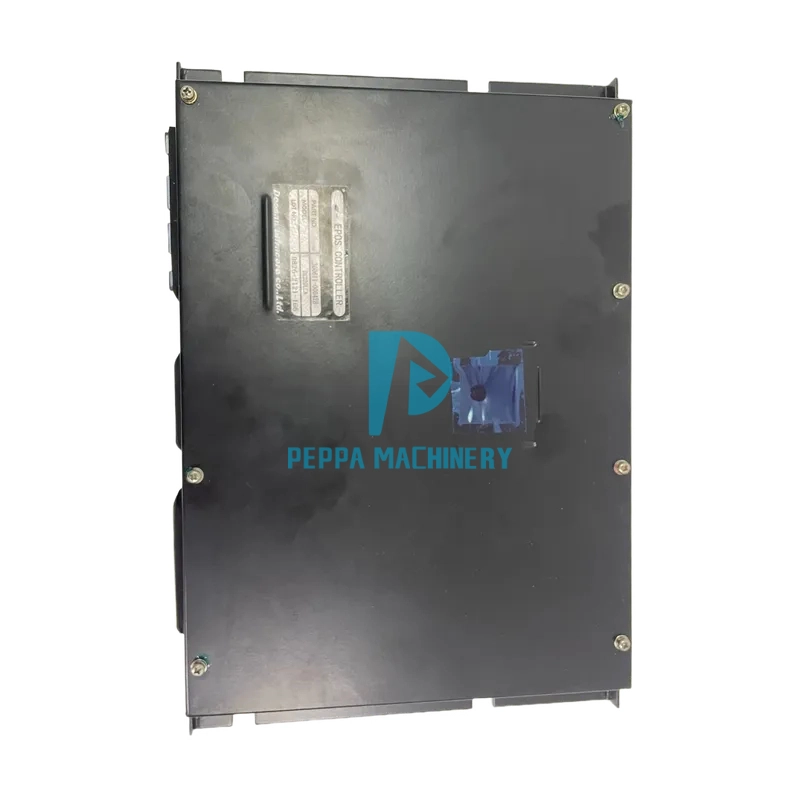
Direct-Injection Engine ECU Electric Controller 300611-00042B New Condition Iron Material for DX220LCA Excavator
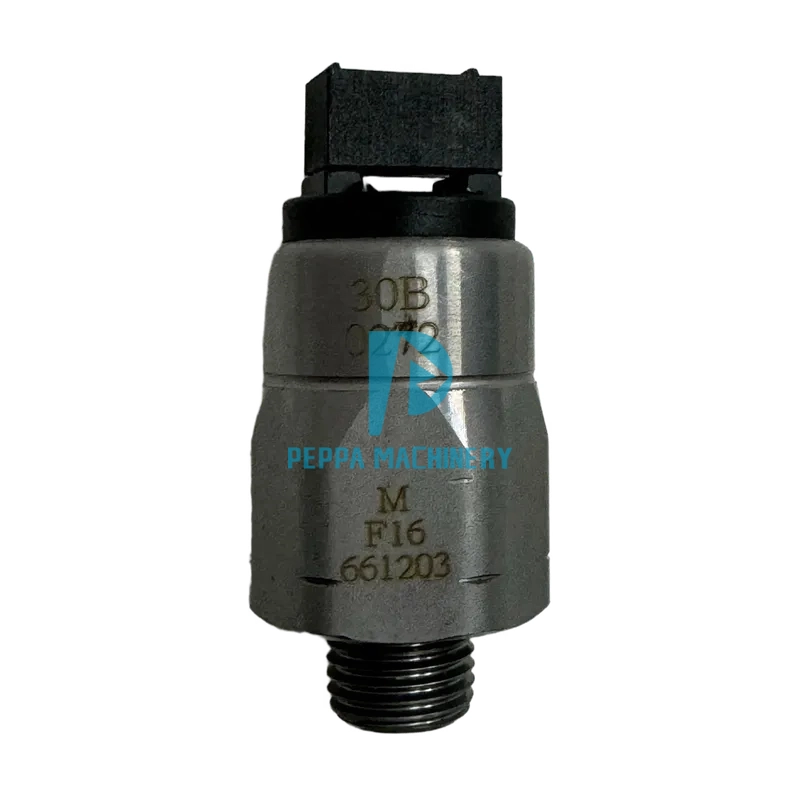
Sany Excavator Electric Oil Pressure Switch Hydraulic Oil Pressure Sensor for Engine Model 661203 661204 660404
Excavator Parts
How can I verify compatibility before placing an order?
Please provide us with your machine brand, model number, and the part number (if available). Our team will double-check the compatibility to ensure you receive the correct parts.
What types of parts do you mainly offer?
Our main product categories include:
• Engine parts (liner kits, crankshafts, water/oil pumps, etc.)
• Electrical parts (sensors, monitors, throttle motors, wiring harnesses)
• Hydraulic parts (pumps, valves, cylinders)
• Sealing kits (NOK, SKF, PQ brands, floating seals, O-rings)
Do you provide technical support or installation guidance?
While we do not offer on-site installation, we can provide basic technical advice, diagrams, or documentation to assist your technicians with installation and troubleshooting.
Can I get help choosing the right parts for my machine?
Yes. Our experienced sales team is here to provide professional recommendations and solutions based on your excavator model, part number, or specific requirements.
Are your parts genuine or OEM?
We offer both genuine parts and high-quality OEM alternatives. You can choose according to your budget and application needs. All OEM products are tested to meet or exceed original specifications.
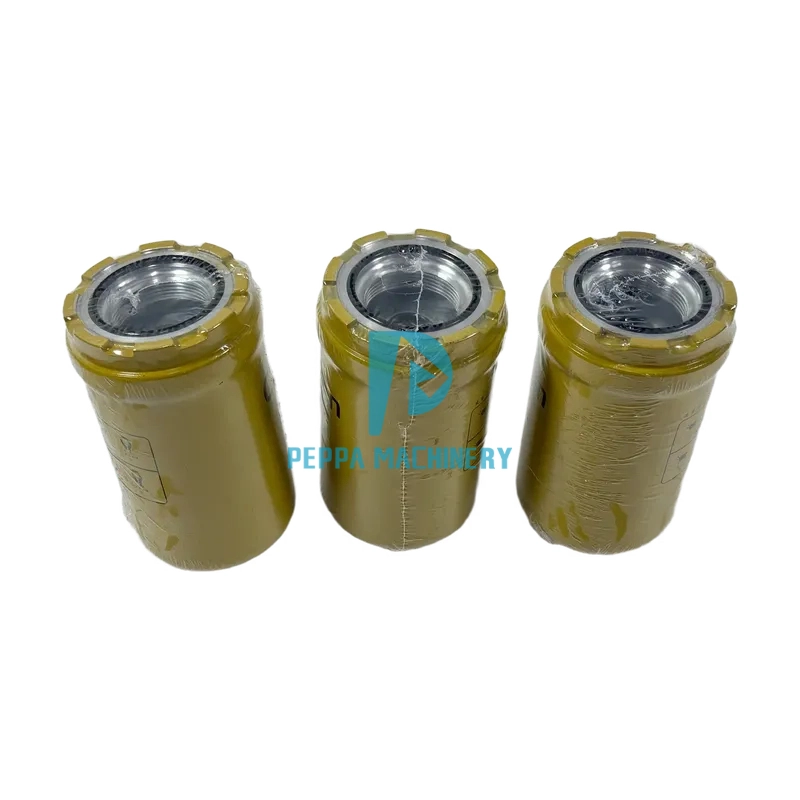
51-8670 Hydraulic Filter Applicable to HF35519 518670 2897836 518670X 1588987 Compatible with Caterpillar 352FVG 325CL
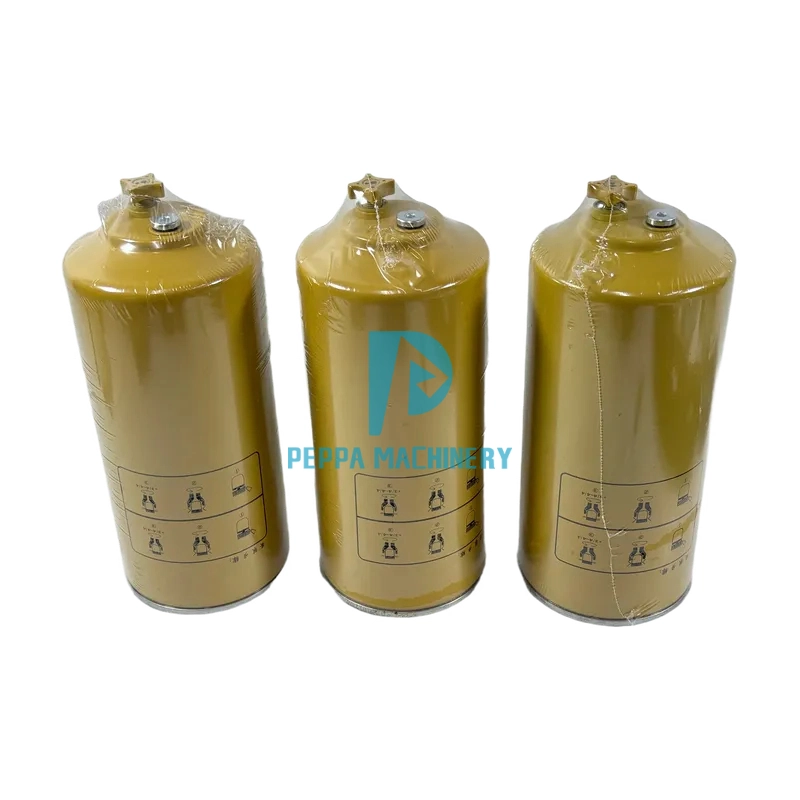
4385386 Fuel Water Separator Fuel Filter 382-0664 Oil-water Separator Hydraulic Oil Filter for CAT 312D2 320D2
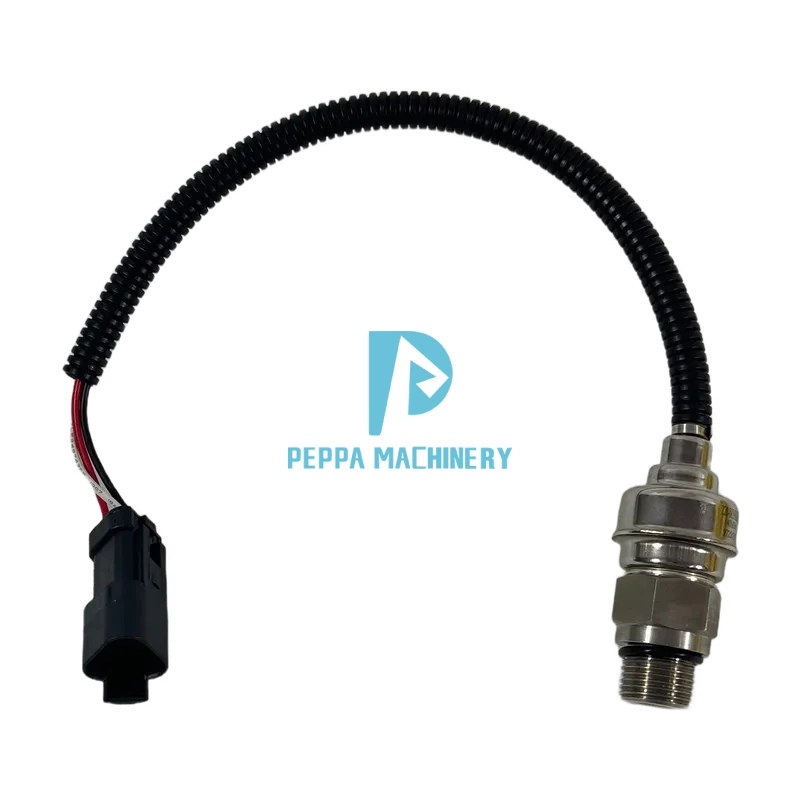
Pressure Sensor 221-8859 106-0178 for Caterpillar CAT 311B 311C 312C 314D 315B 320C 323D 324D 330C 336D 345B 385C
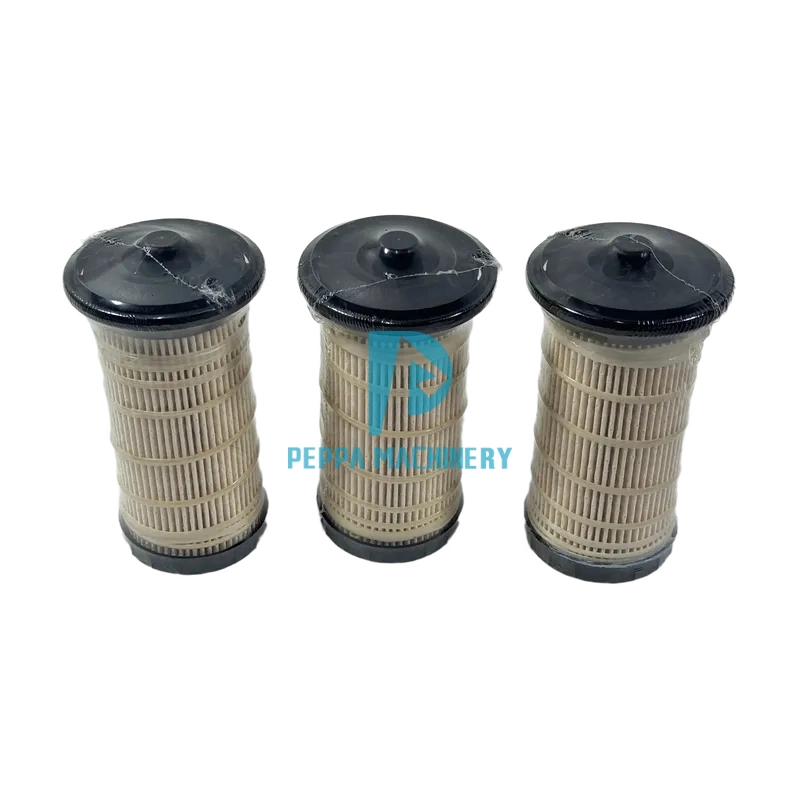
360-8960 Fuel Filter Element for Caterpillar C4.4 & C7.1 Engines | Fits 312D, 320D, 312E, 320E, 326D2, 336D2 Excavators
Get more information
Want to know more? Contact us today to get detailed product specifications, customized solutions, and a free consultation tailored to your needs.
Rest assured that your privacy is important to us, and all information provided will be handled with the utmost confidentiality.

Reliable Source for Quality Excavator Components.
Follow Us
Our Partners


Our Payment Methods


 High Quality
 7/24 Service
 Guaranteed Warranty
 Scan QR Code
Facebook
TikTok
YouTube
Pinterest
Twitter