








What alternator specs matter for heavy-duty excavators?
- 1) What alternator amperage and duty-cycle rating do I need to run hydraulic controls, multiple cameras, and HVAC at idle on a 30‑ton excavator?
- 2) How should I size the alternator pulley ratio to guarantee adequate charging at low idle without overspeeding at high RPM?
- 3) Which thermal and ingress protection specs (temperature rise, IP rating, insulation class) matter for dusty, hot mining excavators?
- 4) Can I replace a 24V OEM alternator with a higher-amp aftermarket unit and what wiring, ECU and CANbus issues must I address?
- 5) How do I test alternator diodes and the voltage regulator in-field when hydraulic load spikes cause ECU resets?
- 6) What rectifier and transient-protection specs reduce ECM damage from load-dump events and inductive spikes on excavators?
- Concluding summary: Advantages of choosing the right alternator specs for excavators
What Alternator Specs Matter for Heavy-Duty Excavators? 6 Deep Questions Answered
Choosing the correct alternator (output, voltage regulator type, cooling, rectifier and mechanical fit) is a critical parts decision that affects uptime, battery life and control-electronics reliability on excavators. Below are six long-tail, high-value questions beginners and maintenance teams often search for but rarely find thorough answers to. Each answer includes practical checks, calculations and specification thresholds you can use when buying OEM or aftermarket alternators.
1) What alternator amperage and duty-cycle rating do I need to run hydraulic controls, multiple cameras, and HVAC at idle on a 30‑ton excavator?
Why this matters: Excavator electrics must be supported at low idle RPM when alternator output drops. Under-sizing causes battery discharge, ECU resets and reduced reliability during typical operating cycles.
How to determine required alternator output:
- Inventory continuous loads: list each consumer (pump clutches, ECU/PLC, lights, cabin HVAC blower and compressor clutch, camera systems, telematics modem, heated mirrors, warning beacons, seat heaters). Use manufacturers’ current draws (amps) or measure with a clamp meter. Typical values: cabin HVAC blower 5–15 A, camera system 1–5 A per camera, ECU/telematics 2–10 A, heavy work lights 10–30 A each depending on LED vs halogen.
- Account for peak loads: starter motor is separate on most heavy gear, but accessories like AC compressor clutch or defroster can be intermittent peaks. Add the largest simultaneous peak as a short-duration allowance.
- Apply margins: for continuous operation size the alternator so Rated Output (at available RPM) ≥ Sum(continuous loads) × 1.25. The 25% margin covers battery charging, aging, and measurement error. If battery recharging after frequent cold starts is important, add additional 20–30 A for charge current.
- Check idle performance: alternator rated amperage is often specified at a wide-open-throttle RPM (e.g., 2000–3000 rpm). Request or verify the alternator’s output curve vs RPM from the vendor. For excavators that idle frequently, make sure the alternator provides >= 70–80% of its rated output at low idle RPM (example requirement: if you need 180 A at idle, choose an alternator whose data sheet shows ~180 A at your engine idle speed or change pulley ratio).
Practical example (simplified):If continuous loads = 120 A and you want 25% margin → 120 × 1.25 = 150 A. If battery recharge after cranking requires another 30 A, spec the alternator for ~180 A at the excavator’s low idle RPM (or 150 A with a pulley and regulator strategy that ensures charge at idle).
Why OEM data matters: Many alternators are advertised at 2000–3000 rpm. Always obtain the amperage-versus-RPM curve (or request low-idle output) and confirm the rated continuous duty at the RPM range typical for your machine.
2) How should I size the alternator pulley ratio to guarantee adequate charging at low idle without overspeeding at high RPM?
Why this matters: Pulley diameter and belt ratio determine alternator shaft RPM. Too small a pulley boosts alternator RPM (risking bearing and fan overspeed) and too large reduces low-idle output.
Steps and considerations:
- Obtain alternator max safe shaft speed from the manufacturer (RPM_lim). Most heavy-duty alternators have max shaft speeds in a specified range; never exceed this limit.
- Know engine idle RPM (N_idle) and max RPM (N_max). For many excavators idle is 600–900 rpm and max may be 2000–2500 rpm. Use the machine’s service manual for exact numbers.
- Calculate desired alternator speed (N_alt) = pulley_ratio × engine_RPM, where pulley_ratio = engine_pulley_diameter / alternator_pulley_diameter.Design goal: ensure N_alt at N_idle provides the amperage you need (check the alternator output curve). Then verify N_alt at N_max < RPM_lim and ideally < 0.85 × RPM_lim for bearing life and reliability.
- Practical rule-of-thumb: size so alternator reaches about 60–80% of its rated RPM at idle to secure enough field excitation and output, while staying below safe limits at high rpm.
Example: If your engine idle is 700 rpm and the alternator reaches rated output at 3200 rpm, you need a pulley ratio that multiplies 700 rpm toward 3200 rpm: required pulley_ratio ≈ 3200/700 ≈ 4.6. If that would exceed alternator shaft limits at engine max rpm, either choose a higher-output alternator with a lower required ratio or use an alternator with an internal fan and bearings rated for higher shaft speeds.
Other notes: Use toothed belts or heavy-duty V-belts as recommended; belt slip reduces low-idle output. Consider a two-stage pulley strategy only with professional guidance—modifying pulley ratios affects other accessories and warranty.
3) Which thermal and ingress protection specs (temperature rise, IP rating, insulation class) matter for dusty, hot mining excavators?
Why this matters: Alternators in harsh environments suffer accelerated insulation breakdown, bearing wear, and diode/rectifier failures. Inadequate protection shortens service life and causes electrical faults that can cascade into ECM failures.
Key spec areas and target thresholds:
- Temperature rise: Look for alternator data that specifies allowable temperature rise over ambient at rated continuous current. For hot duty (surface mining or tropical climates) prefer alternators rated for continuous operation up to 60–70°C ambient or with temperature-rise ratings that keep internal temps within insulation class limits. Insulation class H (180°C) is common in heavy duty; confirm the winding insulation class and derating recommendations.
- Ingress protection (IP) rating: For dusty, wet sites IP65 is a reasonable minimum (dust-tight and protected against water jets). For regular high-pressure washdowns or immersion risk seek IP67 or IP6K9K rated units. Sealing is also important for the rectifier junction box and connectors.
- Sealed bearings and ventilation: Alternators with labyrinth-sealed bearings and forced-air cooling (directional fans, clear airflow paths) perform better in dusty conditions. Serviceable filters or guarded air paths help reduce dust ingestion.
- Thermal protection and derating curve: Choose alternators that provide thermal sensors or over-temperature protection and that supply manufacturer derating curves by ambient temperature so you can predict delivered amperage at site temperatures.
Buyers should ask suppliers for the alternator’s continuous output vs ambient-temperature curve and request test certificates or field performance data for similar applications. Don’t assume a standard vehicle alternator will survive mine-site dust and heat without additional protection or higher-spec design.
4) Can I replace a 24V OEM alternator with a higher-amp aftermarket unit and what wiring, ECU and CANbus issues must I address?
Why this matters: Voltage and communication mismatches can damage ECUs, create charging-system conflicts and void warranty. Simply increasing amperage or changing regulator type without addressing control signals risks system instability.
Compatibility checklist:
- Voltage system match: Never mix 12V and 24V systems. If your excavator is 24V, buy a 24V alternator. Some vendors offer dual-voltage designs, but wiring/harness and isolators must match the vehicle architecture.
- Regulator and control interface: Modern heavy machines may use external voltage regulators or have alternators with built-in CANbus-enabled regulators. Confirm whether the engine or machine control module (ECM) expects a field-feedback or 'L' lamp sense signal and whether it controls alternator excitation. If the OEM alternator had an external regulator, replacing it with an internally-regulated aftermarket unit often requires rewiring or adding a conversion harness and may require ECM reprogramming.If the alternator communicates over CANbus, obtain the vendor’s pinout and communication parameters and ensure the new alternator’s protocol and message IDs match the machine bus or that a gateway is used.
- Batteries and charging strategy: Higher amp alternators can demand heavier cables and upgraded battery isolators or charge distribution systems. Ensure battery cables and busbars are sized for continuous and peak charge currents; check for voltage drop at connectors and fuse/breaker ratings.
- Transient and load-dump protection: The ECM and sensors rely on controlled voltage during load-dump events. Upgrading to a higher-amp alternator may change system transients—verify the alternator has adequate transient suppression (TVS diodes, robust regulator with load-dump protection) or add external protection modules recommended by the ECM manufacturer.
Before swapping, request an alternator wiring compatibility sheet, CANbus documentation, and advise the machine OEM or electronics vendor. If uncertain, use an alternator vendor experienced with heavy equipment integrations to supply a plug-and-play harness and verification tests.
5) How do I test alternator diodes and the voltage regulator in-field when hydraulic load spikes cause ECU resets?
Why this matters: Diode failures and regulator instability cause voltage ripple, load-dump spikes and undervoltage that reset control electronics. Simple bench checks miss issues that appear under real loads.
Step-by-step in-field diagnostic checks (safety first — wear PPE and follow lockout):
- Measure open-circuit voltage (engine stopped, battery fully charged): should be battery voltage ~12.6 V (12 V system) or ~25.2 V (24 V system).
- Start engine and measure charging voltage at steady rpm and under load with a quality multimeter: target charging voltage is typically 13.8–14.6 V for 12 V systems (27.6–29.2 V for 24 V). Voltage below 13.5 V at operating speed indicates undercharging; above 15.0 V indicates overcharging which can damage electronics.
- Measure voltage ripple (AC component): use a true-RMS multimeter or oscillograph; acceptable ripple is generally <0.5 V peak-to-peak on a 12 V system when the alternator is healthy (lower is better for ECUs and sensors). High ripple indicates diode pack faults or poor grounding.
- Diode test under voltage: with engine running, disconnect battery negative momentarily (only with caution and if procedure allowed by OEM) — a sudden change helps reveal diode bank shorts via change in alternator behavior. Safer method: use an oscilloscope across the battery to look for waveform distortion from bad diodes.Alternatively measure AC voltage at the alternator output with engine running; DC+AC measurement gives indication of rectifier health (AC content should be very low at healthy alternator output).
- Monitor voltage during hydraulic load spikes: use data logger or scope across a representative period while cycling hydraulic loads. Watch for voltage dips, transients (spikes) and recovery times. Repeated dips below the ECM reset threshold point to insufficient alternator amplitude at that operating point or missing transient suppression.
- Check regulator and field wiring: inspect harnesses, connectors, sense wires and grounds. Corroded sense leads introduce voltage drop and false feedback to the regulator leading to over/undercharging.
If tests point to diode or regulator faults, replace the whole assembly or rectifier pack; do not replace only one diode unless manufacturer supports that. After replacement, repeat the dynamic test under hydraulic cycling to confirm the issue is resolved.
6) What rectifier and transient-protection specs reduce ECM damage from load-dump events and inductive spikes on excavators?
Why this matters: Load-dump and inductive transients are common in heavy machinery. Alternators with inadequate suppression pass damaging spikes to the battery bus and ECUs, causing random resets, sensor failures and long-term electronics degradation.
Key protection features to require:
- Robust transient voltage suppression (TVS) integrated or external: specify TVS diodes rated for the system voltage and high-energy capability to clamp load-dump pulses to safe levels for the ECM. Confirm the vendor’s transient energy absorption ratings and test data.
- Integrated transient/over-voltage protection in the regulator: modern alternator regulators include multi-stage clamping and soft-start logic to limit voltage excursions during sudden load disconnects. Ask for the regulator’s load-dump performance curves.
- High-quality rectifier diodes with thermal padding and vibration-resistant mounting: diodes rated for continuous current above alternator rating and with good heat-sinking reduce failures that could create high-resistance paths and spikes.
- Low impedance grounding and dedicated sense wires with low voltage-drop routing: good grounding reduces common-mode transients and ensures the regulator senses true system voltage. Use star-grounding near the battery negative if possible.
- Recommended external measures: an engine bay DC surge suppressor (load-dump module) between alternator and battery/ECM bus and in-line ferrites or R-C snubbers where long wiring harness runs act as inductors.
Practical procurement note: Ask alternator suppliers for surge/load-dump test reports or evidence of compliance with heavy-vehicle transient immunity tests. If the site has repeated load-dump incidents, work with an alternator manufacturer or systems integrator to design a combined alternator + external suppression solution tuned to your machine’s wiring inductance.
Concluding summary: Advantages of choosing the right alternator specs for excavators
Specifying the correct alternator—matching amperage at low idle, proper pulley ratio, thermal and ingress protection, regulator compatibility and robust transient suppression—delivers measurable advantages: higher uptime, reduced ECU and battery failures, predictable recharge after starts, and longer service intervals. Investing in the right alternator upfront saves replacement costs and unscheduled downtime in demanding environments.
For part selection, matching OEM fitment, or custom alternator solutions for heavy-duty excavators, contact us for a quote: www.jbpartsgz.com or jbparts@aliyun.com.
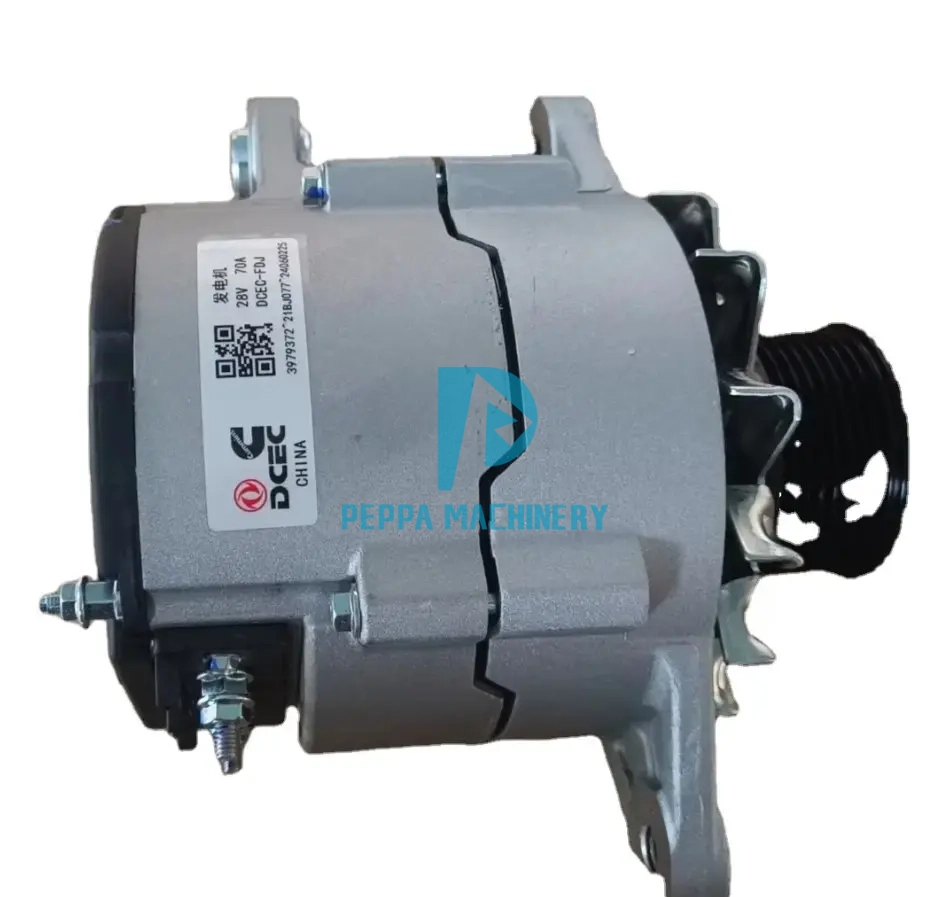
Cummins 24V AC Alternator - Genuine OEM Part #3979372 | Fits Mining & Construction Equipment
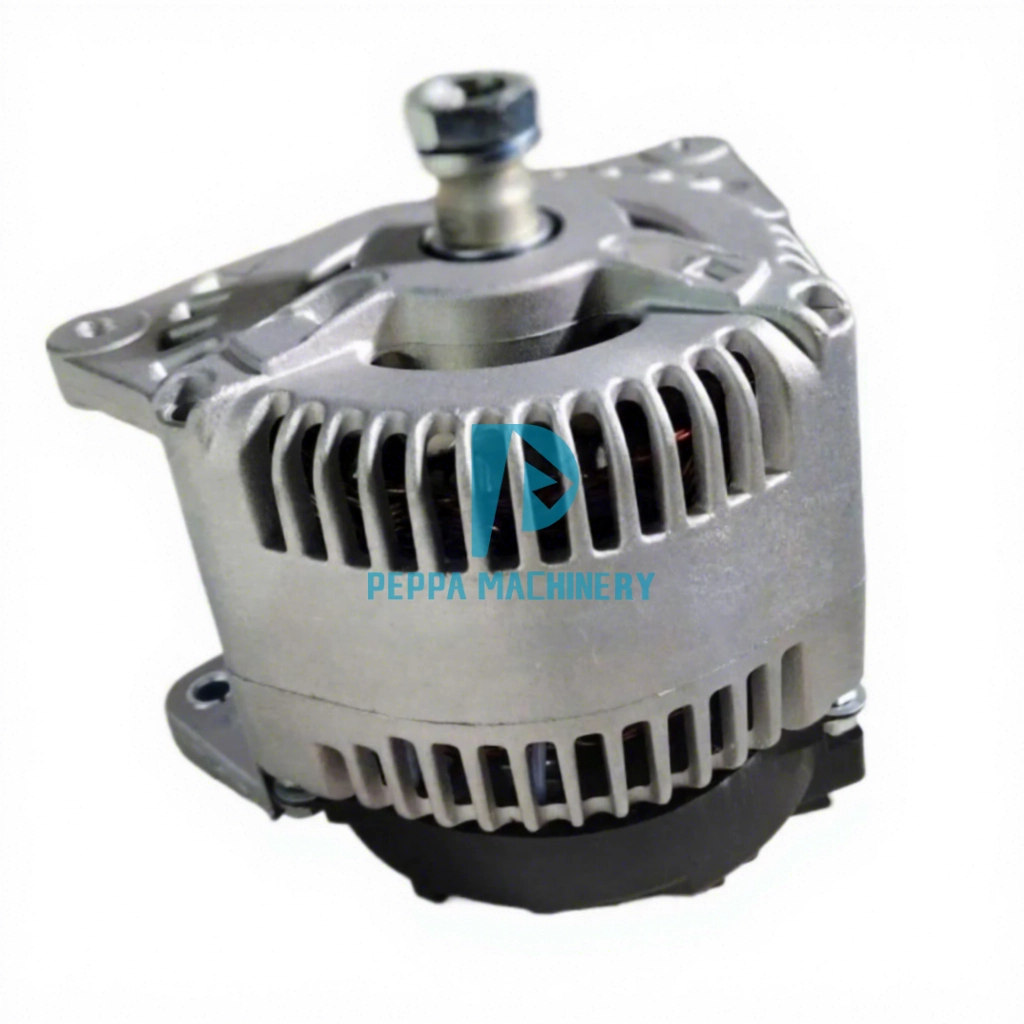
Direct Replacement Alternator for Caterpillar C4.4 & 3054C Industrial Engines | Part #4246821
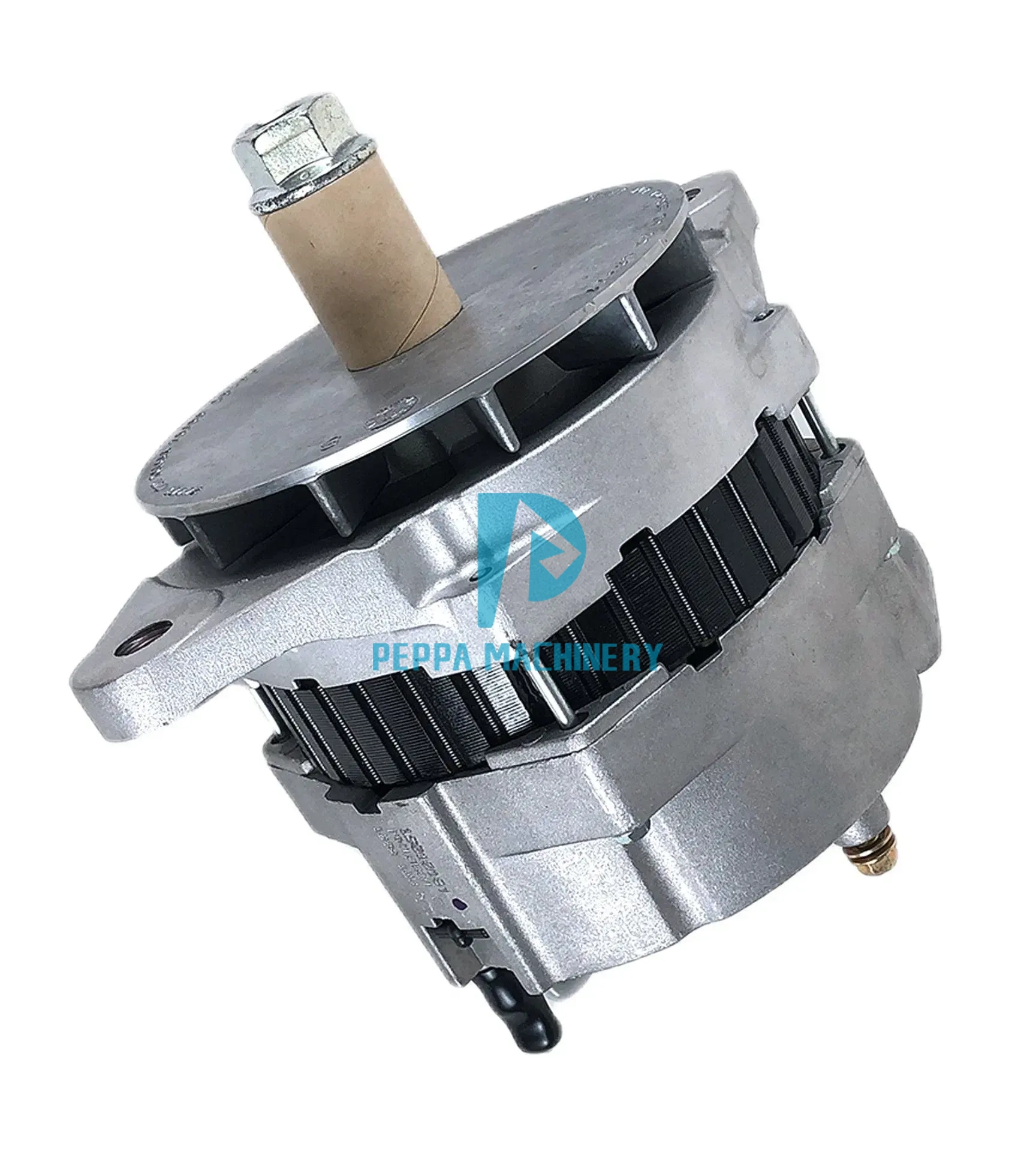
19010108 OEM Replacement Alternator for Diesel Engine Models | Fits Select Trucks & Excavators
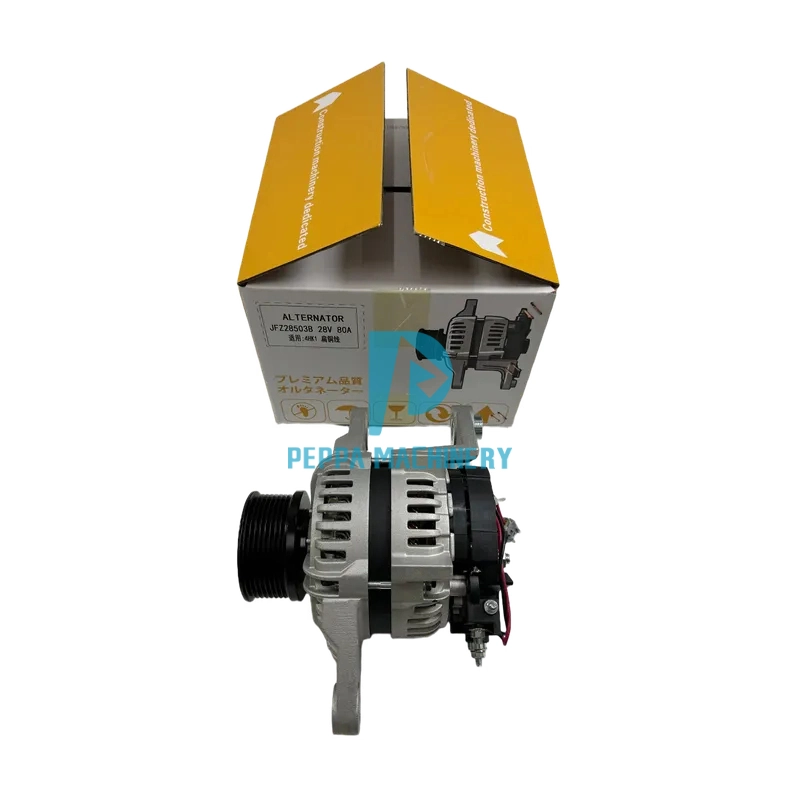
Excavator parts Alternator JF728503B for 4HK1
Excavator Parts
Do you provide technical support or installation guidance?
While we do not offer on-site installation, we can provide basic technical advice, diagrams, or documentation to assist your technicians with installation and troubleshooting.
Are your parts genuine or OEM?
We offer both genuine parts and high-quality OEM alternatives. You can choose according to your budget and application needs. All OEM products are tested to meet or exceed original specifications.
What types of parts do you mainly offer?
Our main product categories include:
• Engine parts (liner kits, crankshafts, water/oil pumps, etc.)
• Electrical parts (sensors, monitors, throttle motors, wiring harnesses)
• Hydraulic parts (pumps, valves, cylinders)
• Sealing kits (NOK, SKF, PQ brands, floating seals, O-rings)
Can I get help choosing the right parts for my machine?
Yes. Our experienced sales team is here to provide professional recommendations and solutions based on your excavator model, part number, or specific requirements.
What brands of excavator parts do you supply?
We supply a full range of parts compatible with major international and Chinese brands, including Caterpillar, Komatsu, Hitachi, Volvo, Doosan, Hyundai, Sany, Liugong, XCMG, Zoomlion, and more.
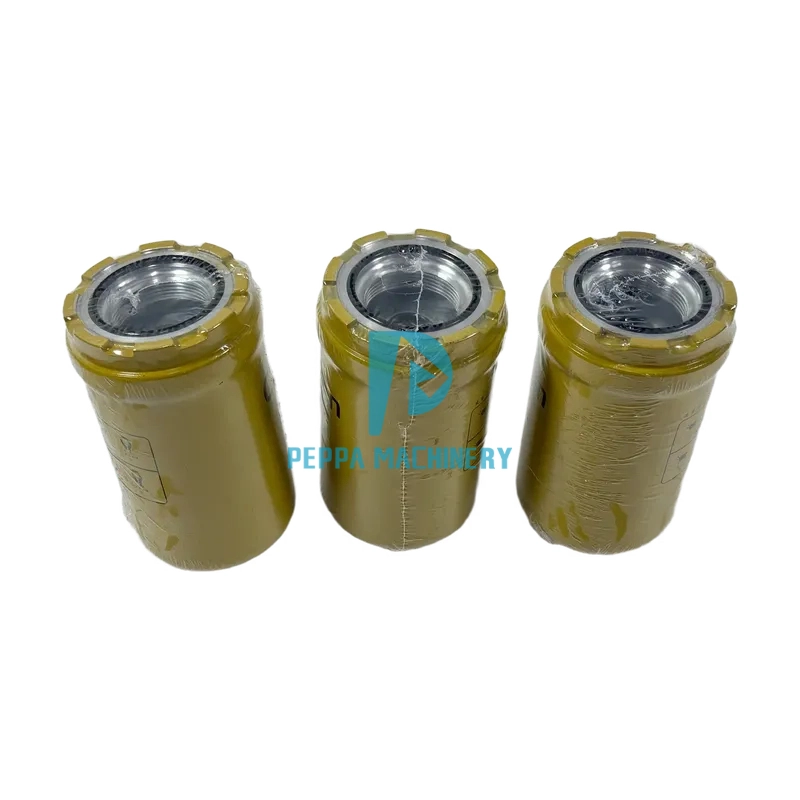
51-8670 Hydraulic Filter Applicable to HF35519 518670 2897836 518670X 1588987 Compatible with Caterpillar 352FVG 325CL
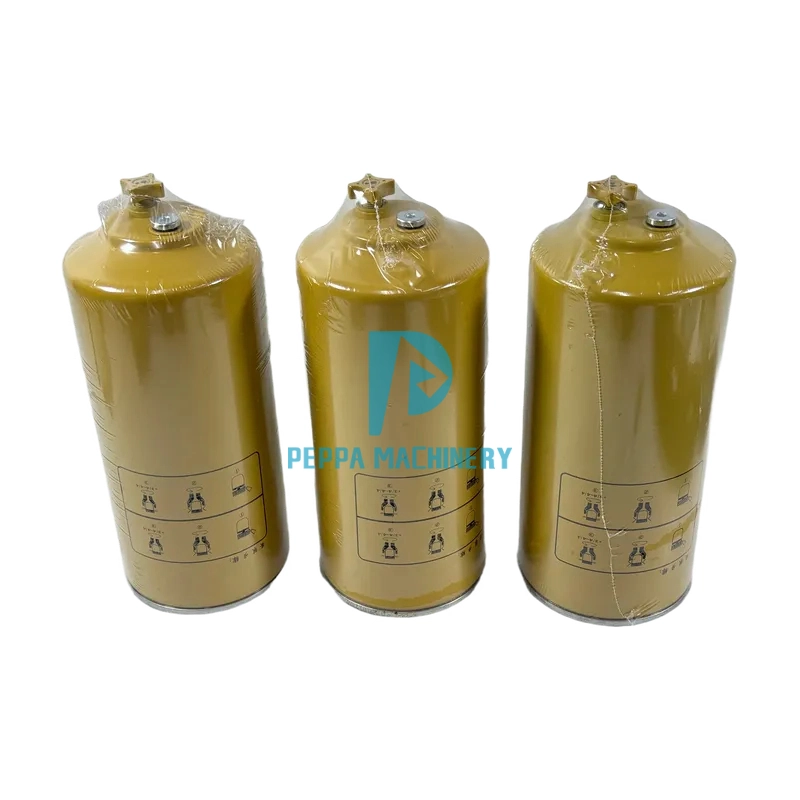
4385386 Fuel Water Separator Fuel Filter 382-0664 Oil-water Separator Hydraulic Oil Filter for CAT 312D2 320D2
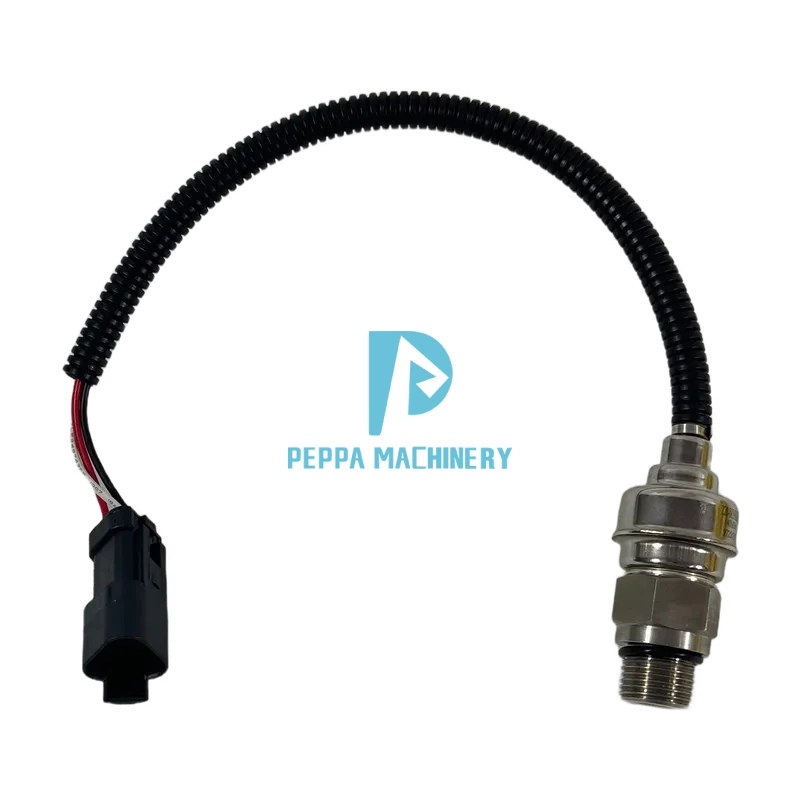
Pressure Sensor 221-8859 106-0178 for Caterpillar CAT 311B 311C 312C 314D 315B 320C 323D 324D 330C 336D 345B 385C
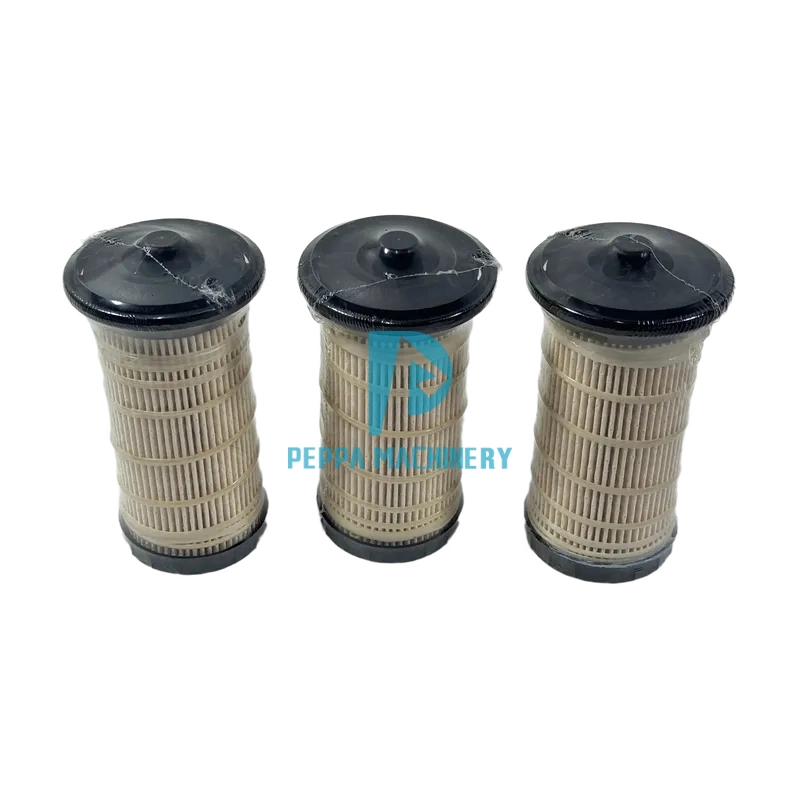
360-8960 Fuel Filter Element for Caterpillar C4.4 & C7.1 Engines | Fits 312D, 320D, 312E, 320E, 326D2, 336D2 Excavators
Get more information
Want to know more? Contact us today to get detailed product specifications, customized solutions, and a free consultation tailored to your needs.
Rest assured that your privacy is important to us, and all information provided will be handled with the utmost confidentiality.

Reliable Source for Quality Excavator Components.
Follow Us
Our Partners


Our Payment Methods


 High Quality
 7/24 Service
 Guaranteed Warranty
 Scan QR Code
Facebook
TikTok
YouTube
Pinterest
Twitter