








OEM vs Aftermarket Stop Solenoids: Buyer’s Comparison
- Why stop solenoids matter for excavators and heavy equipment
- Function and failure modes
- Operational impact and safety
- Standards and traceability
- OEM vs Aftermarket: Technical comparison
- Design, materials and manufacturing tolerances
- Compatibility and interchangeability
- Reliability and real-world performance
- Cost, warranty and lifecycle considerations
- Upfront cost vs total cost of ownership
- Warranty, technical support and documentation
- Stocking strategy and procurement
- Installation, testing and maintenance best practices
- Pre-installation checks
- Installation tips and torque specifications
- Testing and preventive maintenance
- How I decide whether to buy OEM or aftermarket
- Decision matrix
- Supplier qualification checklist
- Risk mitigation
- Guangzhou Peppa Machinery: how we help
- FAQ
- 1. What is the difference between a stop solenoid and a fuel shutoff solenoid?
- 2. Can I use a 12V aftermarket solenoid on a 24V system?
- 3. How long should a stop solenoid last?
- 4. What tests can I perform to check a solenoid?
- 5. Is it safe to use an aftermarket solenoid for a machine under warranty?
- 6. How do I cross-reference an OEM stop solenoid?
Stop solenoids (also called fuel shutoff solenoids or engine stop solenoids) are small components with an outsized impact on machine uptime, safety, and fuel system behavior. In this article I draw on over 15 years of experience in excavator parts sourcing and field troubleshooting to compare OEM and aftermarket stop solenoids across performance, fit, lifecycle cost, and risk. I also provide a practical decision framework that helps buyers choose the right solenoid for their operational profile and procurement constraints.
Why stop solenoids matter for excavators and heavy equipment
Function and failure modes
A stop solenoid is an electro-mechanical actuator that controls fuel flow to an engine — typically by moving a plunger that opens or closes a fuel valve when energized or de-energized. Failures usually manifest as no-start, dieseling, intermittent shutdowns, or stalled engines. Understanding these failure modes helps prioritize either higher-spec OEM parts or cost-effective aftermarket spares in inventory.
Operational impact and safety
Because a faulty stop solenoid can cause unexpected engine stops or prevent shutdown, it impacts both productivity and safety. In remote worksites, unscheduled downtime translates directly to high hourly equipment costs. For safety-critical applications (e.g., demolition or work near people), I recommend parts with traceable quality documentation and reliable sealing against dust and vibration.
Standards and traceability
When evaluating suppliers I look for quality management certifications such as ISO 9001 to ensure consistent manufacturing and traceability. See ISO's overview of quality management systems for reference: https://www.iso.org/iso-9001-quality-management.. For component design basics, the solenoid concept is summarized here: https://en.wikipedia.org/wiki/Solenoid.
OEM vs Aftermarket: Technical comparison
Design, materials and manufacturing tolerances
OEM stop solenoids are designed to meet the original equipment manufacturer’s specifications, which often include proprietary materials, exact dimensional tolerances, and specific electromagnetic characteristics. Aftermarket solenoids vary: High Quality aftermarket brands often match OEM tolerances and use high-quality coils and seals; low-cost options may cut corners on insulation, coil wire gauge, or seal materials, reducing lifespan under vibration and high heat.
Compatibility and interchangeability
OEM parts are guaranteed compatibility for a specific engine or model. Aftermarket parts can be cross-referenced and physically interchangeable, but electrical characteristics (coil resistance, pull-in voltage) may differ. Mismatched electrical specs can cause slow actuation or excess current draw. I always compare datasheets (coil resistance, voltage rating, duty cycle) before substituting a non-OEM solenoid.
Reliability and real-world performance
Field reliability depends on coil construction, plunger materials, seal quality, and environmental protection (IP rating). In my fleet experience, high-quality aftermarket solenoids from reputable suppliers perform near OEM for many years; cheaper aftermarket parts typically show higher early-failure rates. For mission-critical machines, I favor OEM or High Quality branded aftermarket options with verified test reports.
| Characteristic | OEM | High Quality Aftermarket | Budget Aftermarket |
|---|---|---|---|
| Dimensional fit | Exact | Close | Variable |
| Electrical spec match | Guaranteed | Often matches | May differ |
| Materials & seals | OEM-specified | High-grade | Lower-grade |
| Warranty & traceability | Strong | Variable, often good | Poor |
| Typical cost | High | Moderate | Low |
Note: This table synthesizes common industry patterns and my field observations. For component test standards and performance verification, consult relevant SAE papers and manufacturer test reports; SAE maintains standards and papers on component testing (see https://www.sae.org/).
Cost, warranty and lifecycle considerations
Upfront cost vs total cost of ownership
Upfront, aftermarket solenoids can save 30–70% compared to OEM pricing depending on brand and market. However, I evaluate total cost of ownership (TCO): replacement frequency, labor for installation, downtime cost per hour, and collateral damage risk (e.g., a failing solenoid that causes a stuck engine can damage turbochargers or bearings). For high-utilization fleets I often recommend investing in higher-quality parts to reduce unplanned downtime.
Warranty, technical support and documentation
OEM suppliers often provide structured warranty policies and OEM-level technical support. Reputable aftermarket suppliers also provide warranties and sometimes better lead times, but less consistent documentation. Where warranty matters (leased equipment, long contracts), insist on written repair/replacement terms and ask for failure-rate data where available.
Stocking strategy and procurement
My recommended stocking strategy balances cost and risk: keep OEM or High Quality aftermarket stop solenoids as primary spares for critical machines, with budget aftermarket units as emergency fallbacks when immediate replacement is needed and the machine can be removed from critical duty until full-quality parts arrive. Centralize procurement through a qualified supplier who can provide traceability and technical data sheets.
Installation, testing and maintenance best practices
Pre-installation checks
Before installing any replacement stop solenoid I check physical fit, coil resistance (ohms) against specified values, voltage rating (12V / 24V), connector type, and mechanical travel. A digital multimeter and a simple bench power source are indispensable. Miswiring or incorrect voltage is a common cause of premature failure.
Installation tips and torque specifications
Follow manufacturer torque specs for mounting bolts to avoid distortion. Ensure electrical connectors are clean and sealed; use dielectric grease where appropriate to prevent corrosion. Route wiring away from high-temperature areas and sharp edges. Securely fasten ground connections to prevent erratic behavior.
Testing and preventive maintenance
Test solenoids at regular service intervals: verify activation at operating voltage, check for sluggish movement, and perform leak checks on fuel-control interfaces. Record activation current and response time as baseline metrics; trends in increased current or slower actuation often precede mechanical failure.
How I decide whether to buy OEM or aftermarket
Decision matrix
When advising clients, I use a simple decision matrix that weighs criticality, cost sensitivity, and lead time:
- If machine is safety-critical or under warranty → prefer OEM
- If machine has high utilization and downtime cost is high → OEM or High Quality aftermarket
- If cost pressure is high and machine can be temporarily sidelined → quality aftermarket accepted
- For emergency field repairs → use tested aftermarket as temporary fix and plan for OEM replacement
Supplier qualification checklist
Qualified suppliers should provide: datasheets with coil resistance and voltage, IP rating or environmental protection details, quality system certificates (e.g., ISO 9001), warranty terms, and sample testing data. I require these before approving a new aftermarket brand for fleet use.
Risk mitigation
Maintain a traceability log for installed parts (part number, supplier batch, installation date) to identify failure patterns. Use periodic audits of aftermarket suppliers and require failure analysis on returned parts to prevent repeated issues.
Guangzhou Peppa Machinery: how we help
As a sourcing consultant I frequently work with established wholesale partners. Guangzhou Peppa Machinery Equipment Co., Ltd. is a professional one-stop wholesale service provider for excavator parts located in Guangzhou Wholesale Center. With more than 15 years of experience, Peppa Machinery supplies engine systems, electrical systems, hydraulic systems and sealing systems, offering both imported parts and OEM products. Their main engine accessory lines include cylinder sleeve components and engine parts for Caterpillar, Komatsu, Cummins, Isuzu, Mitsubishi, Hino, etc.; large and small bearings; overhaul kits; crankshafts; connecting rods; turbochargers; water pumps; oil pumps; compressors; and more.
At Peppa Machinery they understand each customer has unique needs when it comes to excavator parts. Their customized service support provides tailored solutions to ensure maximum efficiency and satisfaction. They combine industry experience with personalized attention to match operational requirements.
Why I recommend Peppa Machinery in many procurement scenarios:
- Wide product coverage: Engine Parts, Electrical Parts, Hydraulic Parts, Genuine Parts, Seal Kits, Undercarriage Parts.
- OEM and imported parts sourcing capability for major brands (Caterpillar, Komatsu, Cummins, Isuzu, Mitsubishi, Hino).
- 15+ years in the Guangzhou wholesale market with established logistics and customs experience for global shipping.
- Custom service and parts advice to match machine duty cycles and budgets.
If you need help evaluating stop solenoid options for your fleet, Peppa Machinery can provide product datasheets, cross-reference assistance, and bulk pricing. For critical applications they can source OEM assemblies; for budget-conscious programs they offer vetted aftermarket alternatives with warranty options.
FAQ
1. What is the difference between a stop solenoid and a fuel shutoff solenoid?
They are typically the same device; stop solenoid and fuel shutoff solenoid are used interchangeably to describe the electromechanical actuator that stops fuel flow to the engine when de-energized.
2. Can I use a 12V aftermarket solenoid on a 24V system?
No. Voltage mismatch will cause incorrect operation and likely damage. Always match the solenoid voltage to the system (12V vs 24V) and check coil resistance and rated duty cycle before installation.
3. How long should a stop solenoid last?
Service life varies with quality and operating environment. High-quality OEM or High Quality aftermarket solenoids in normal conditions can last several years; budget units may fail within months. Regular testing and proper installation extend life.
4. What tests can I perform to check a solenoid?
Use a multimeter to check coil resistance, apply rated voltage briefly to verify actuation, and observe current draw. Check for smooth plunger movement and inspect seals for leakage. Keep baseline values in service records.
5. Is it safe to use an aftermarket solenoid for a machine under warranty?
Using non-OEM parts may affect warranty terms. Always check the warranty policy; some manufacturers allow compatible aftermarket parts while others require OEM parts for warranty coverage.
6. How do I cross-reference an OEM stop solenoid?
Start with the engine/machine part number, then request datasheets: mounting dimensions, connector type, coil resistance, and voltage rating. Suppliers like Peppa Machinery can provide cross-reference assistance for compatible OEM and aftermarket alternatives.
If you want personalized recommendations for your fleet, need data sheets, or want to view available stop solenoids and related engine parts, contact Guangzhou Peppa Machinery Equipment Co., Ltd. for expert parts sales advice and tailored procurement solutions. They can help source OEM products or vetted aftermarket alternatives to match your maintenance strategy.
Contact & view products: Guangzhou Peppa Machinery Equipment Co., Ltd. — Engine Parts, Electrical Parts, Hydraulic Parts, Genuine Parts, Seal Kits, Undercarriage Parts. Request datasheets, pricing, and cross-reference support to make the best choice for your stop solenoid needs.
References: Solenoid basics (Wikipedia) https://en.wikipedia.org/wiki/Solenoid; ISO quality standard overview https://www.iso.org/iso-9001-quality-management.; SAE International (component testing and engineering resources) https://www.sae.org/; Association of Equipment Manufacturers https://www.aem.org.
Field Case Studies: Boosted Uptime with High Output Alternators
How to Choose a High Output Alternator for Excavators
Cost Breakdown: Excavator Fuel Pump Replacement and Savings
OEM vs Aftermarket Excavator Injectors: Pros and Cons
Excavator Parts
What types of parts do you mainly offer?
Our main product categories include:
• Engine parts (liner kits, crankshafts, water/oil pumps, etc.)
• Electrical parts (sensors, monitors, throttle motors, wiring harnesses)
• Hydraulic parts (pumps, valves, cylinders)
• Sealing kits (NOK, SKF, PQ brands, floating seals, O-rings)
Can I get help choosing the right parts for my machine?
Yes. Our experienced sales team is here to provide professional recommendations and solutions based on your excavator model, part number, or specific requirements.
What brands of excavator parts do you supply?
We supply a full range of parts compatible with major international and Chinese brands, including Caterpillar, Komatsu, Hitachi, Volvo, Doosan, Hyundai, Sany, Liugong, XCMG, Zoomlion, and more.
Are your parts genuine or OEM?
We offer both genuine parts and high-quality OEM alternatives. You can choose according to your budget and application needs. All OEM products are tested to meet or exceed original specifications.
How can I verify compatibility before placing an order?
Please provide us with your machine brand, model number, and the part number (if available). Our team will double-check the compatibility to ensure you receive the correct parts.
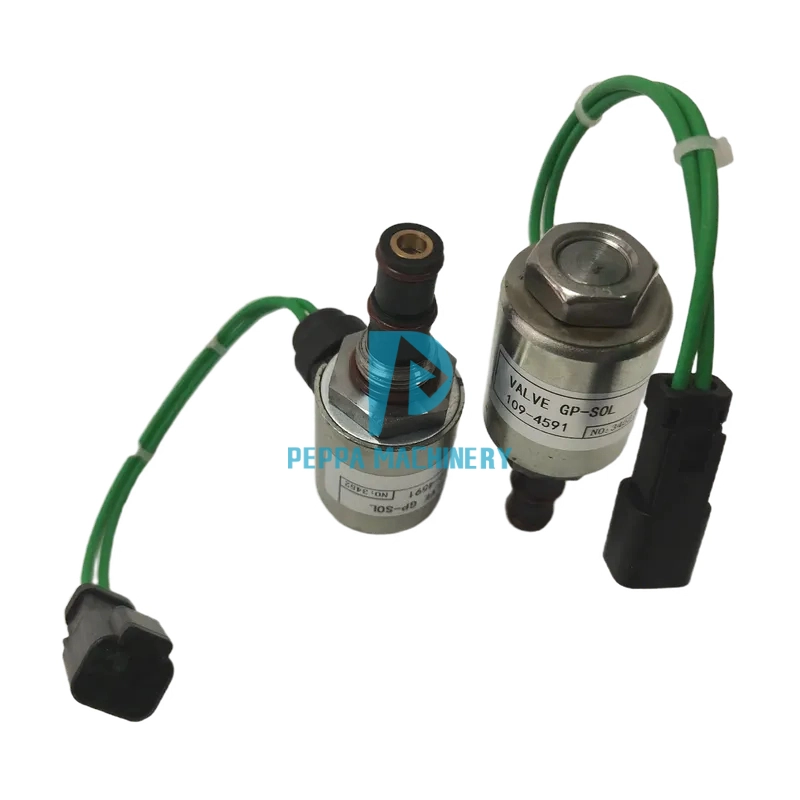
109-4591 1094591 Stop Solenoid for Caterpillar CAT D5M D6M D6R D7R
Peppa Machinery offers the Stop Solenoid VOE4576774 for CAT D5M D6M D6R D7R. Compatible with engines, it ensures optimal performance and durability for your heavy machinery needs.

3939019 SA-4889-24 Stop Solenoid FOR R300-9 R320-7 R330-9
Peppa Machinery 3939019 SA-4889-24 stop solenoid for R300-9, R320-7, R330-9. High-performance OEM replacement, durable and precise control for engine shutoff. Easy fitment, reliable operation. Order genuine 3939019 SA-4889-24 now.

Isuzu SP 4JG1 4JG2 4JG3 Cylinder Liner 1876182070 1-87618207-0 1876182080 1-87618208-0 1876182100 1-87618210-0
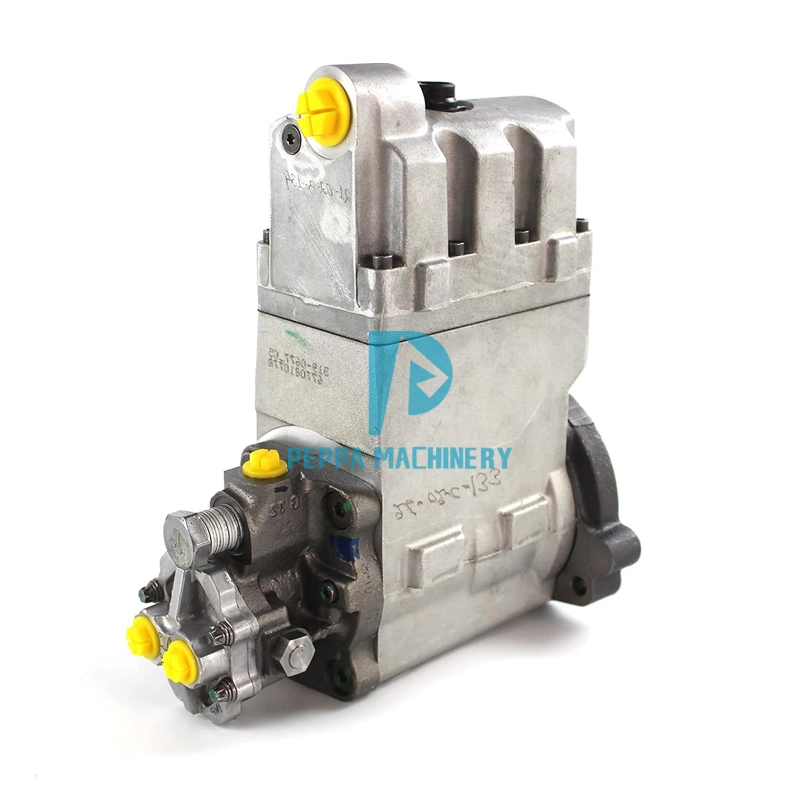
Fuel Feed / Transfer Pump Assembly for Caterpillar C7 & C9 Engines | Direct Replacement for OEM Parts #319-0678, 254-4358, 304-0678, 295-4778, 228-589

Reliable Source for Quality Excavator Components.
Follow Us
Our Partners


Our Payment Methods


 High Quality
 7/24 Service
 Guaranteed Warranty
 Scan QR Code
Facebook
TikTok
YouTube
Pinterest
Twitter