








Stop Solenoid Compatibility: Find the Right Part Number
- Understanding stop solenoids and their role
- What a stop solenoid does and common types
- Key specifications that determine compatibility
- Compatibility and part number matching
- How OEM part numbers are structured and why they matter
- Using cross-reference tools and interpreting replacements
- Common troubleshooting and replacement guide
- Diagnosing a suspected stop solenoid
- Safe bench testing procedure
- Compatibility checklist and practical examples
- Quick compatibility checklist
- Comparative table: typical attributes by brand family
- Choosing a reliable supplier and quality considerations
- What to expect from a professional parts provider
- Why OEM vs. aftermarket matters
- Peppa Machinery: tailored support for stop solenoid needs
- Practical workflow: replace a stop solenoid without uncertainty
- Step-by-step replacement plan
- When to involve engineering or OEM support
- FAQ — Stop Solenoid Compatibility
- 1. How do I find the correct stop solenoid part number if the tag is missing?
- 2. Can I substitute a 12V solenoid with a 24V unit?
- 3. What coil resistance indicates a bad solenoid?
- 4. Are aftermarket stop solenoids reliable?
- 5. How do I test a solenoid without removing it from the machine?
- 6. What standards or references should I consult for quality assurance?
- Contact and next steps
I often get called in to troubleshoot stalled engines and non-responsive shutdown systems on excavators. In most cases the culprit is a stop solenoid (fuel shutoff solenoid) that is either electrically or mechanically incompatible with the original unit. In this article I explain, step by step, how to identify the correct stop solenoid part number, verify electrical and mechanical compatibility, test suspect units safely, and choose a reliable supplier for replacement parts. I draw on industry standards, OEM catalogs, and more than a decade of hands-on experience servicing heavy equipment.
Understanding stop solenoids and their role
What a stop solenoid does and common types
A stop solenoid (also called a fuel shutoff solenoid or stop valve solenoid) is an electromechanical device that controls fuel flow to diesel engines. When energized it retracts a plunger to allow fuel flow; when de-energized the spring returns the plunger to stop fuel and shut down the engine. Typical types include direct-acting push/pull plunger solenoids, pilot-operated solenoid valves, and rotary stop solenoids used on some governors. For general theory see the solenoid overview on Wikipedia.
Key specifications that determine compatibility
Compatibility is not just about form factor: you must match electrical, mechanical and control-system specifications. The primary attributes I check are:
- Rated voltage (commonly 12V or 24V on excavators) and coil resistance
- Duty cycle — continuous vs intermittent
- Plunger stroke, diameter and return spring force
- Mounting dimensions (thread size, flange bolt pattern, orientation)
- Electrical connector type (two-pin spade, Deutsch connectors, M12, etc.)
- Response time and sealing requirements for fuel exposure
These items collectively determine whether a replacement will function safely and reliably in your machine.
Compatibility and part number matching
How OEM part numbers are structured and why they matter
OEM part numbers encode manufacturing and revision information. Simply replacing by visual similarity can lead to misfit solenoids (wrong voltage, incorrect stroke, incompatible mounting). Always cross-reference the OEM number from the machine's parts manual. Major OEM parts catalogs are searchable online: Caterpillar parts at parts.cat.com, Komatsu parts at komatsuamerica.com/parts, and Cummins parts at cummins.com.
Using cross-reference tools and interpreting replacements
When an exact OEM part is unavailable, cross-reference tools can identify compatible aftermarket or OEM-equivalent numbers. I recommend three steps:
- Confirm electrical specs: voltage and coil resistance must match within manufacturer tolerance.
- Compare mechanical dimensions: plunger stroke and mounting interface must align.
- Verify operating environment rating: fuel exposure, temperature range, and ingress protection.
If you use third-party cross-reference services, always validate their suggestion by checking datasheets or testing a sample unit.
Common troubleshooting and replacement guide
Diagnosing a suspected stop solenoid
When an excavator won’t shut down or won’t start, the stop solenoid is a likely suspect. I follow a standard diagnostic sequence:
- Visual inspection: damaged wiring, burnt connectors, or fuel leakage.
- Measure coil resistance with a multimeter — compare to the specification in the service manual.
- Apply supply voltage directly (with caution) to confirm plunger movement; always use an isolated bench supply and a diode if needed to prevent back-EMF.
- Check control circuit for proper switching voltage at the connector when the operator requests shutdown/start.
Typical coil resistance values vary widely; you must refer to the exact part specification for acceptable ranges. If you cannot access the OEM spec, measure a known-good unit on the same machine as a baseline.
Safe bench testing procedure
Bench testing is straightforward but requires safety steps I always follow to avoid damage or injury:
- Secure the solenoid in a vice or fixture that prevents free movement of the plunger.
- Use a regulated DC power supply set to the nominal voltage (12V or 24V) and limit current initially.
- Place a series ammeter or current limit to avoid overheating coils during extended energization (intermittent solenoids can overheat).
- Observe for smooth plunger travel and full return when power is removed. Listen for sticking or grinding which indicate contamination or mechanical wear.
- Measure pull-in voltage and hold-in characteristics if diagnosing marginal parts.
Document the readings and compare them to the acceptable ranges for that part.
Compatibility checklist and practical examples
Quick compatibility checklist
Use this checklist before ordering a replacement to avoid costly downtime:
- Do you have the OEM part number from the parts manual?
- Is the replacement rated for the same system voltage and duty cycle?
- Are mounting dimensions and plunger travel identical or within tolerance?
- Does the electrical connector match, or can you adapt without compromising seals?
- Is the replacement compatible with diesel fuel exposure and ambient temps?
Comparative table: typical attributes by brand family
The table below summarizes typical characteristics for stop solenoids used across common engine brands. These are representative categories; always verify specific part data in the OEM catalog or datasheet.
| Brand Family | Typical Voltage | Common Connector | Notes |
|---|---|---|---|
| Caterpillar | 12V / 24V | 2-pin sealed or spade | Parts information at parts.cat.com. Many Cat solenoids are engine-specific. |
| Komatsu | 12V / 24V | Deutsch or spade | Refer to Komatsu parts catalog: komatsuamerica.com/parts. |
| Cummins / Isuzu / Mitsubishi / Hino | 12V common; some 24V | Spade or inline sealed | Check engine model-specific parts at cummins.com. |
Choosing a reliable supplier and quality considerations
What to expect from a professional parts provider
When I advise clients, I look for suppliers that provide:
- Clear part documentation and datasheets (coil resistance, voltage, stroke, mounting dimensions)
- Traceability to OEM or validated aftermarket manufacturing
- Warranty terms and return/testing support
- Technical consultation for cross-references and fitment
Quality systems such as ISO 9001 are a plus; see ISO information on quality management.
Why OEM vs. aftermarket matters
OEM parts match original design and typically require less validation. High-quality aftermarket parts can be cost-effective but vary in tolerance and materials. My practice is to request datasheets and, for critical applications, perform a sample validation run at idle and under load before fleet-wide adoption.
Peppa Machinery: tailored support for stop solenoid needs
Guangzhou Peppa Machinery Equipment Co., Ltd. is a professional one-stop wholesale service provider for excavator parts. Located in Guangzhou Wholesale Center, Peppa Machinery supplies excavator parts globally and provides professional parts sales advice and technical solutions. With more than 15 years of experience, their product range covers engine systems, electrical systems, hydraulic systems, and sealing systems, offering both imported parts and OEM products.
At Peppa Machinery, I appreciate that every customer has unique requirements when sourcing stop solenoids and other control components. Their main offerings include Engine Parts, Electrical Parts, Hydraulic Parts, Genuine Parts, Seal Kits, and Undercarriage Parts. Typical engine accessories they supply include engine cylinder sleeve components and other engine parts for brands such as Caterpillar, Komatsu, Cummins, Isuzu, Mitsubishi, and Hino. They also provide bearings, overhaul kits, crankshafts, connecting rods, turbochargers, water pumps, oil and fuel pumps, compressors, and related components.
Peppa Machinery differentiates itself in three practical ways I rely on when recommending suppliers:
- Inventory breadth: they stock both OEM and high-quality imported alternatives, reducing lead time for common stop solenoids and related parts.
- Technical support: they provide parts sales advice and can assist in cross-referencing OEM numbers to suitable replacements — critical when the original part number is faded or missing.
- Customized service: for fleet operators, Peppa Machinery offers tailored solutions to match operational needs, from single-unit replacements to managed spare parts programs.
For reliability and industry compliance, I also expect suppliers to follow quality controls and provide clear return and warranty policies. When you work with Peppa Machinery you gain access to their experience in matching solenoids to specific engine models and control systems, backed by 15+ years in the excavator parts market.
Practical workflow: replace a stop solenoid without uncertainty
Step-by-step replacement plan
Here is the exact workflow I use when replacing a stop solenoid in the field or in-shop:
- Record the machine serial number and engine model.
- Document the old solenoid: read any stamped numbers and photograph the unit and connector.
- Check service manual for OEM part number and dimension/spec table.
- Use the compatibility checklist above; if OEM is unavailable, ask the supplier for datasheet and sample for bench verification.
- Install the replacement and perform functional testing: power-up tests, engine start/stop cycles, and operational load tests.
- Record test data and mark the new part with installation date and any cross-reference number for future maintenance.
When to involve engineering or OEM support
If the control system includes electronic governors, CAN-based commands, or specialized interlocks, involve OEM technical support or an experienced supplier like Peppa Machinery before swapping parts. Incorrect solenoid timing or mismatch in response characteristics can cause erratic shutdown behavior or even engine damage.
FAQ — Stop Solenoid Compatibility
1. How do I find the correct stop solenoid part number if the tag is missing?
Start with the machine serial number and engine model to locate the parts manual. If that is unavailable, photograph the solenoid, note connector type and dimensions, measure coil resistance, and consult a parts specialist who can cross-reference based on those parameters. Suppliers like the OEM parts sites (Caterpillar: parts.cat.com) or Peppa Machinery can assist.
2. Can I substitute a 12V solenoid with a 24V unit?
No. Voltage mismatch will prevent the unit from operating correctly and may damage the control circuit. Always match the nominal voltage exactly, and confirm coil resistance and duty cycle compatibility.
3. What coil resistance indicates a bad solenoid?
There is no universal resistance value; you must compare the reading with the specification for that part. A dramatically higher resistance suggests an open or degraded coil; a near-zero reading suggests a short. If you cannot find a spec, compare against a known-good solenoid of the same model.
4. Are aftermarket stop solenoids reliable?
High-quality aftermarket units can be reliable and cost-effective. The risk lies with unverified low-cost parts. Request datasheets, warranty information, and, if possible, sample testing before committing to fleet-wide replacement.
5. How do I test a solenoid without removing it from the machine?
Measure the voltage at the solenoid connector while actuating the control (start/stop). If proper voltage is present but the plunger does not move, the solenoid is likely faulty. If no voltage is present, troubleshoot wiring, fuses, relays, and control outputs first.
6. What standards or references should I consult for quality assurance?
For supplier quality systems, ISO 9001 is a common benchmark: ISO 9001. For component design principles review general electromechanical practice and OEM service manuals specific to your engine or excavator model.
Contact and next steps
If you need help identifying a stop solenoid part number, validating a replacement, or sourcing reliable parts, contact Guangzhou Peppa Machinery Equipment Co., Ltd. Their experienced team can cross-reference OEM numbers, provide datasheets, and offer tailored parts programs to minimize downtime. Explore their product range and request parts sales advice today.
Visit Peppa Machinery's catalog or contact their sales engineers to get a quote and technical support for Engine Parts, Electrical Parts, Hydraulic Parts, Genuine Parts, Seal Kits, and Undercarriage Parts.
For urgent technical questions, prepare the machine serial number, photos of the existing solenoid, and any stamped numbers — this will accelerate accurate cross-referencing and a quick resolution.
Field Case Studies: Boosted Uptime with High Output Alternators
Excavator Injector Compatibility by Model and Engine Type
Engine Overhaul Gasket Kit vs Individual Gaskets: Cost & Value

Camshaft vs. Crankshaft: The Ultimate Deep Dive (Everything You Need to Know)
Excavator Parts
Are your parts genuine or OEM?
We offer both genuine parts and high-quality OEM alternatives. You can choose according to your budget and application needs. All OEM products are tested to meet or exceed original specifications.
Can I get help choosing the right parts for my machine?
Yes. Our experienced sales team is here to provide professional recommendations and solutions based on your excavator model, part number, or specific requirements.
How can I verify compatibility before placing an order?
Please provide us with your machine brand, model number, and the part number (if available). Our team will double-check the compatibility to ensure you receive the correct parts.
Do you provide technical support or installation guidance?
While we do not offer on-site installation, we can provide basic technical advice, diagrams, or documentation to assist your technicians with installation and troubleshooting.
What brands of excavator parts do you supply?
We supply a full range of parts compatible with major international and Chinese brands, including Caterpillar, Komatsu, Hitachi, Volvo, Doosan, Hyundai, Sany, Liugong, XCMG, Zoomlion, and more.
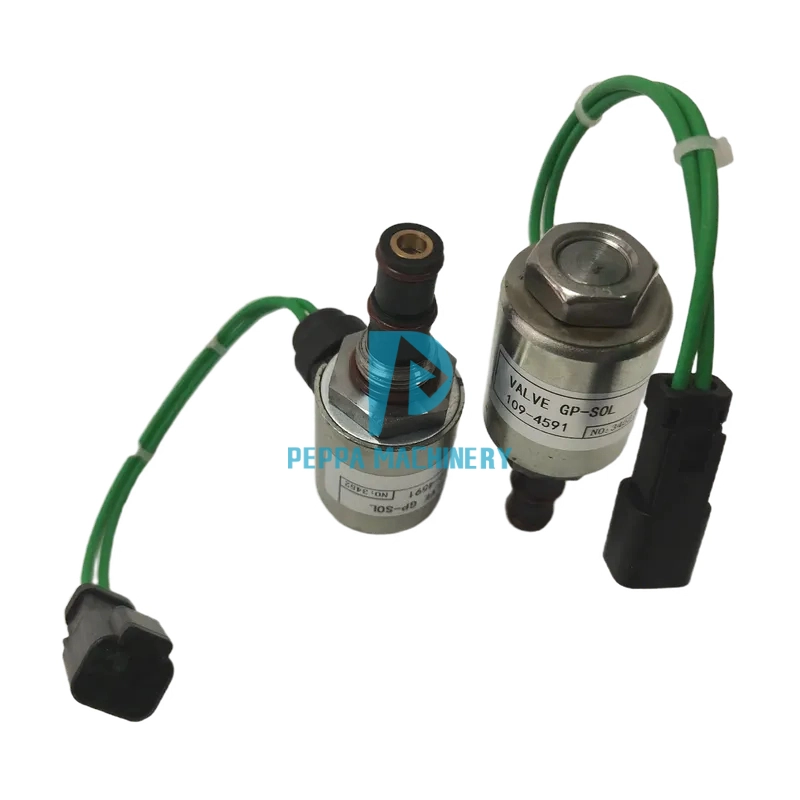
109-4591 1094591 Stop Solenoid for Caterpillar CAT D5M D6M D6R D7R
Peppa Machinery offers the Stop Solenoid VOE4576774 for CAT D5M D6M D6R D7R. Compatible with engines, it ensures optimal performance and durability for your heavy machinery needs.

3939019 SA-4889-24 Stop Solenoid FOR R300-9 R320-7 R330-9
Peppa Machinery 3939019 SA-4889-24 stop solenoid for R300-9, R320-7, R330-9. High-performance OEM replacement, durable and precise control for engine shutoff. Easy fitment, reliable operation. Order genuine 3939019 SA-4889-24 now.

Isuzu SP 4JG1 4JG2 4JG3 Cylinder Liner 1876182070 1-87618207-0 1876182080 1-87618208-0 1876182100 1-87618210-0
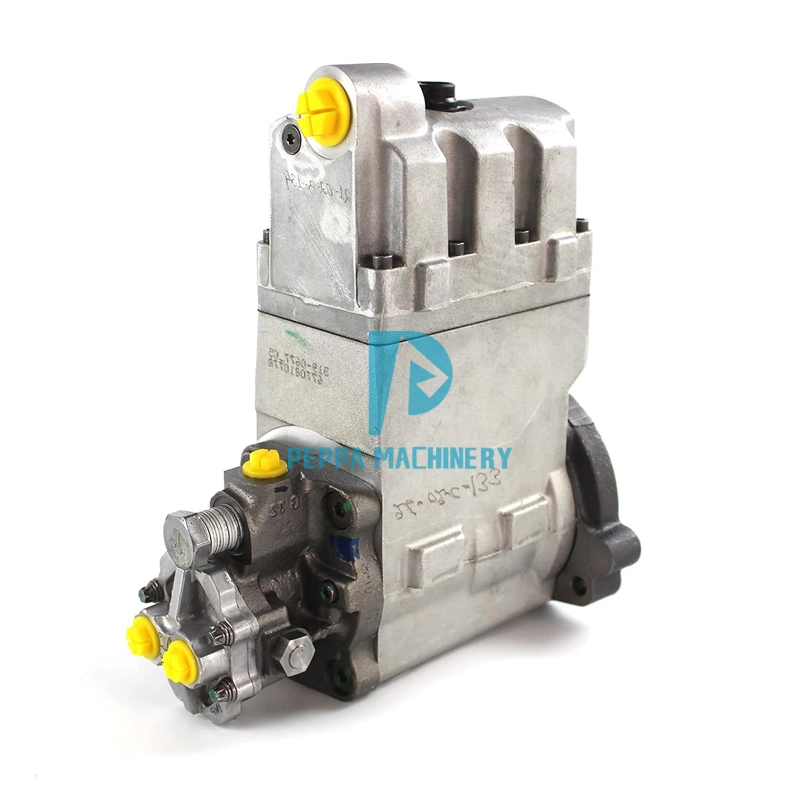
Fuel Feed / Transfer Pump Assembly for Caterpillar C7 & C9 Engines | Direct Replacement for OEM Parts #319-0678, 254-4358, 304-0678, 295-4778, 228-589

Reliable Source for Quality Excavator Components.
Follow Us
Our Partners


Our Payment Methods


 High Quality
 7/24 Service
 Guaranteed Warranty
 Scan QR Code
Facebook
TikTok
YouTube
Pinterest
Twitter