








How to Diagnose a Faulty Excavator Stop Solenoid Quickly
- Why excavators unexpectedly shut down: common failure modes
- Role of the stop solenoid in engine shutdown
- Typical symptoms pointing to solenoid failure
- Why misdiagnosis costs time and parts
- Tools, safety and prep before you begin
- Essential tools I use for a quick diagnosis
- Safety precautions and lockout
- Record serials, wiring diagrams and symptoms
- How to diagnose a faulty excavator stop solenoid quickly
- Step 1 — Fast visual and audible checks (2–5 minutes)
- Step 2 — Basic continuity and grounding checks (5–10 minutes)
- Step 3 — Coil resistance and voltage tests (10–20 minutes)
- Step 4 — Bench testing and substitute test (15–30 minutes)
- Interpreting results and deciding next steps
- Common test outcomes and their meaning
- Repair versus replace: criteria I use
- Preventive steps after repair or replacement
- Practical examples, data references and industry best practice
- Real-world case: intermittent shutdown resolved in 30 minutes
- Standards and best practices I follow
- Reference materials for deeper technical detail
- Peppa Machinery — sourcing parts and tailored service
- How Guangzhou Peppa Machinery supports quick repairs
- Products and specialties that matter for stop solenoid incidents
- Why I recommend Peppa for fleet operators
- FAQ — Common questions about diagnosing stop solenoids
- Q1: How quickly can I tell if the stop solenoid is the problem?
- Q2: What coil resistance value indicates a bad solenoid?
- Q3: Can a dirty solenoid be repaired or does it need replacement?
- Q4: Could an ECM or relay cause the same symptoms?
- Q5: Is it safe to bench-test a solenoid with a jumper battery?
- Q6: How can I avoid future stop solenoid failures?
I am an excavator parts consultant with extensive field experience diagnosing electrical and fuel system faults. In this article I explain how to diagnose a faulty stop solenoid quickly and reliably so you can minimize downtime. The guidance blends fast visual checks, safe electrical testing with a multimeter, bench testing options, and decision rules for repair or replacement. Where appropriate I reference industry best practices and authoritative resources to make my recommendations verifiable and practical for workshop use.
Why excavators unexpectedly shut down: common failure modes
Role of the stop solenoid in engine shutdown
The stop solenoid (also called a fuel shutoff solenoid or fuel cut-off solenoid) is a permanent-magnet or plunger-actuated valve that controls fuel flow to the injector pump or engine when a shutdown is commanded. When energized it allows normal fuel flow; when de-energized it closes to stop the engine. Its failure mimics fuel starvation, intermittent shutdown, or a no-start condition. For general background on solenoids and how they operate see the Wikipedia article on solenoids (https://en.wikipedia.org/wiki/Solenoid).
Typical symptoms pointing to solenoid failure
Solenoid-related symptoms I see most often in workshops include: sudden engine stop without warning; engine fails to crank or starts then dies; intermittent shutdown under load; or a click at the solenoid when the key is turned. These overlap with fuel pump, wiring harness, or ECM faults, so electrical verification is essential.
Why misdiagnosis costs time and parts
Replacing an injector pump or doing a full engine teardown because of a simple solenoid wiring fault is a common and costly mistake. I always start with the simplest, fastest checks to prove the solenoid is the cause before ordering expensive components.
Tools, safety and prep before you begin
Essential tools I use for a quick diagnosis
Have these on hand before you open anything: a digital multimeter (DMM), a fully charged 12 V jumper source or battery, insulated test leads, a noid light or test lamp, a small screwdriver set, wire brush, contact cleaner, and a parts camera or phone to record wiring and connector orientation. I recommend a Fluke-style meter; Fluke publish reliable multimeter usage guidance (Fluke multimeter basics).
Safety precautions and lockout
Always lock out the machine and remove the key, chock tracks, and wait for hot components to cool. Disconnect the battery when doing bench tests. Use insulated tools and eye protection. If the machine has a fire suppression or remote shutdown interface, ensure interruptions are coordinated with operations staff.
Record serials, wiring diagrams and symptoms
Before testing I photograph the solenoid, harness, connector pinouts and note machine serial numbers — these help when ordering replacement parts. OEM wiring diagrams (from Caterpillar, Komatsu, etc.) save time if available; keep them accessible on a tablet or printout.
How to diagnose a faulty excavator stop solenoid quickly
Step 1 — Fast visual and audible checks (2–5 minutes)
Start with the fastest checks: inspect the solenoid body and connector for corrosion, melted insulation, or oil/fuel contamination. Wiggle the wiring gently while the operator turns the key (with engine stopped) and listen for a firm click from the solenoid — a weak or absent click is a diagnostic clue. Check connector pins for corrosion or bending and clean with contact cleaner if dirty.
Step 2 — Basic continuity and grounding checks (5–10 minutes)
Using a DMM on continuity or low-resistance range, verify the ground between the solenoid body and chassis. Poor ground is a frequent cause of intermittent operation. Then check the wiring harness continuity from the connector at the solenoid back to the control switch or ECM. If continuity is broken, repair the harness before proceeding.
Step 3 — Coil resistance and voltage tests (10–20 minutes)
Measure the coil resistance across the solenoid terminals. Compare to the OEM specification if available. A shorted coil (near 0 ohms) or an open coil (infinite ohms) indicates replacement. Next, with the ignition key turned to the run position (engine off) or operator commanding shutdown, measure voltage at the solenoid connector while someone operates the switch. For most systems you should see battery voltage (around 12–24 V depending on machine) when the solenoid should be energized. No voltage suggests a supply, fuse, relay or ECM issue rather than the solenoid itself.
Step 4 — Bench testing and substitute test (15–30 minutes)
If electrical checks are inconclusive, bench-test the solenoid by removing it and applying the correct voltage from a controlled jumper source. Observe mechanical movement, armature travel, and that the solenoid holds under load. If a suspected solenoid clicks but does not move the plunger, the internal armature may be dirty or seized. A substitute test using a known-good solenoid (from a donor machine or spare stock) is the fastest field verification of cause.
| Test | Expected Result if Solenoid Good | What a Failed Result Suggests |
|---|---|---|
| Visual / Click test | Clear click; clean connector | No click = no power or bad coil |
| Ground continuity | Near 0 Ω to chassis | High/No continuity = poor ground |
| Coil resistance | Within OEM spec | Open/short = replace solenoid |
| Applied voltage test | Plunger actuates and holds | No actuation = mechanical seizure or internal failure |
| Substitute solenoid | Machine operates normally | Machine fault elsewhere (ECM/relay/wiring) |
Interpreting results and deciding next steps
Common test outcomes and their meaning
If coil resistance is out of spec or bench testing fails, replace the solenoid. If voltage is absent at the connector, trace back to fuse, relay, ignition switch or ECM. Poor grounding requires cleaning contact surfaces and re-tightening ground straps. If a substitute solenoid fixes the problem, order a like-for-like replacement (OEM or compatible aftermarket) and check the machine’s wiring harness for latent damage.
Repair versus replace: criteria I use
Repair (clean contacts, re-terminate pins) is suitable when failure is due to corrosion, broken pins, or seized plunger that frees with cleaning and lubrication. Replace the solenoid when coil continuity is out of spec, the plunger is physically damaged, or if the solenoid fails bench testing. When in doubt, use a replacement; solenoids are relatively low-cost compared to engine downtime or injector pump replacement.
Preventive steps after repair or replacement
Document diagnostics and parts replaced, secure wiring with proper routing and strain relief, apply dielectric grease to connectors exposed to moisture, and include the solenoid in periodic inspections. I also recommend updating maintenance logs to check for recurring shutdowns which could indicate systemic issues such as fuel contamination or ECM glitches.
Practical examples, data references and industry best practice
Real-world case: intermittent shutdown resolved in 30 minutes
In one field case, an excavator had repeated engine cuts under load. Quick checks showed a loose ground strap at the solenoid mounting stud; after cleaning and re-tightening continuity was restored and the machine ran normally. This illustrates why ground verification is often the fastest root cause find.
Standards and best practices I follow
For structured maintenance and parts traceability I follow quality management principles aligned with ISO 9001 guidance (https://www.iso.org/iso-9001-quality-management.). I also recommend workshop safety and electrical test standards; for safe multimeter use, see guidance from professional meter manufacturers like Fluke (Fluke).
Reference materials for deeper technical detail
For mechanical solenoid design and electromagnetism basics, consult the general solenoid reference on Wikipedia (https://en.wikipedia.org/wiki/Solenoid). For machine-specific wiring and coil resistance specs, always refer to OEM service manuals from manufacturers such as Caterpillar, Komatsu, Cummins or the machine’s manufacturer.
Peppa Machinery — sourcing parts and tailored service
How Guangzhou Peppa Machinery supports quick repairs
Guangzhou Peppa Machinery Equipment Co., Ltd. is a professional one-stop wholesale service provider for excavator parts. Located in the Guangzhou Wholesale Center, Peppa Machinery sells excavator parts globally and provides professional parts sales advice and solutions. With more than 15 years of experience, they stock parts across engine systems, electrical systems, hydraulic systems and sealing systems — including many imported parts and OEM products that are useful when a solenoid failure requires a rapid replacement.
Products and specialties that matter for stop solenoid incidents
Their main product coverage includes engine accessories (engine cylinder sleeve components, bearings, overhaul kits, crankshafts, connecting rods, turbochargers, water pumps, oil pumps, compressors), plus electrical parts such as solenoids, wiring harness elements and undercarriage parts. If a stop solenoid fails and bench testing confirms replacement is needed, Peppa Machinery can supply compatible OEM and aftermarket solenoids and related wiring, minimizing procurement lead time.
Why I recommend Peppa for fleet operators
In my experience, Peppa Machinery’s strengths are: deep inventory for common brands (Caterpillar, Komatsu, Cummins, Isuzu, Mitsubishi, Hino), experienced sales advisors who provide fitment and cross-reference support, and the ability to supply seal kits, genuine parts and customized solutions. They emphasize tailored service to ensure parts compatibility with the machine’s engine and electrical architecture, reducing the risk of installation errors.
If you need replacement stop solenoids, wiring harness repair kits, or diagnostic parts, contact Guangzhou Peppa Machinery to discuss your machine model and serial number for correct part selection and lead times.
FAQ — Common questions about diagnosing stop solenoids
Q1: How quickly can I tell if the stop solenoid is the problem?
A1: With the procedure here, you can identify likely solenoid problems in 10–30 minutes: visual check, ground and continuity tests, coil resistance, and a voltage check during key operation. A bench or substitute test confirms within 15–30 minutes.
Q2: What coil resistance value indicates a bad solenoid?
A2: Coil resistance varies by design and voltage (12 V vs 24 V systems). Use the OEM specification when available. An open circuit (infinite ohms) or a near short (very low ohms compared to spec) indicates failure. If OEM specs aren’t available, compare with a known-good unit or consult the machine manual.
Q3: Can a dirty solenoid be repaired or does it need replacement?
A3: If the plunger is seized due to dirt or corrosion, careful cleaning and lubrication can restore function. However, if the coil is damaged or the plunger is scored or pitted, replacement is safer and more reliable.
Q4: Could an ECM or relay cause the same symptoms?
A4: Yes. No voltage at the solenoid when it should be energized points to supply-side faults (fuse, relay, ECM output). Always measure voltage at the connector before assuming the solenoid itself is defective.
Q5: Is it safe to bench-test a solenoid with a jumper battery?
A5: Yes, if done correctly. Disconnect the solenoid from the machine harness, secure it in a vice or fixture, and apply the correct voltage from a fused, controlled jumper source with proper current capacity. Observe polarity if specified and do not run coils continuously beyond recommended duty cycles.
Q6: How can I avoid future stop solenoid failures?
A6: Keep connectors clean and sealed, secure wiring from vibration, replace corroded grounds, and include the solenoid in routine inspections. Use dielectric grease on connectors exposed to moisture and follow OEM maintenance intervals for fuel and electrical systems.
Contact and product support: If you need help diagnosing a stop solenoid, sourcing replacement parts, or ordering compatible solenoids and repair kits, contact Guangzhou Peppa Machinery Equipment Co., Ltd. Their experienced team can recommend Engine Parts, Electrical Parts, Hydraulic Parts, Genuine Parts, Seal Kits and Undercarriage Parts tailored to your machine and operational needs. Reach out with your machine model and serial number for fast parts advice and quotes.
Alternator Upgrades to Improve Excavator Performance
Overhaul Gasket Set Storage, Shelf Life and Handling Best Practices
Where to Buy excavator gear pump
Cost to Replace an Excavator Fuel Pump: Budgeting Tips
Excavator Parts
What types of parts do you mainly offer?
Our main product categories include:
• Engine parts (liner kits, crankshafts, water/oil pumps, etc.)
• Electrical parts (sensors, monitors, throttle motors, wiring harnesses)
• Hydraulic parts (pumps, valves, cylinders)
• Sealing kits (NOK, SKF, PQ brands, floating seals, O-rings)
Do you provide technical support or installation guidance?
While we do not offer on-site installation, we can provide basic technical advice, diagrams, or documentation to assist your technicians with installation and troubleshooting.
How can I verify compatibility before placing an order?
Please provide us with your machine brand, model number, and the part number (if available). Our team will double-check the compatibility to ensure you receive the correct parts.
What brands of excavator parts do you supply?
We supply a full range of parts compatible with major international and Chinese brands, including Caterpillar, Komatsu, Hitachi, Volvo, Doosan, Hyundai, Sany, Liugong, XCMG, Zoomlion, and more.
Can I get help choosing the right parts for my machine?
Yes. Our experienced sales team is here to provide professional recommendations and solutions based on your excavator model, part number, or specific requirements.
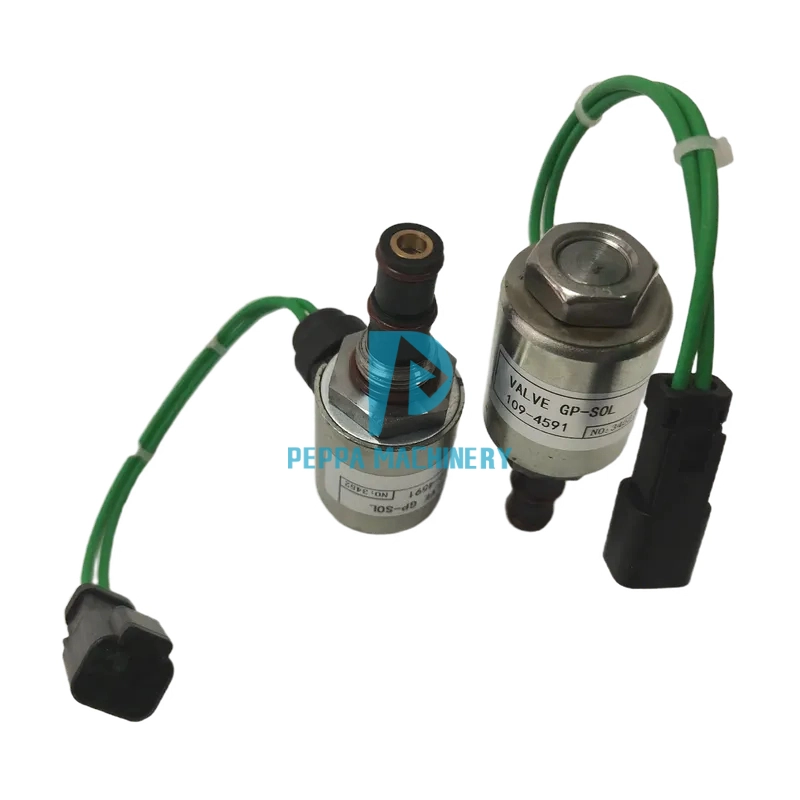
109-4591 1094591 Stop Solenoid for Caterpillar CAT D5M D6M D6R D7R
Peppa Machinery offers the Stop Solenoid VOE4576774 for CAT D5M D6M D6R D7R. Compatible with engines, it ensures optimal performance and durability for your heavy machinery needs.

3939019 SA-4889-24 Stop Solenoid FOR R300-9 R320-7 R330-9
Peppa Machinery 3939019 SA-4889-24 stop solenoid for R300-9, R320-7, R330-9. High-performance OEM replacement, durable and precise control for engine shutoff. Easy fitment, reliable operation. Order genuine 3939019 SA-4889-24 now.

Isuzu SP 4JG1 4JG2 4JG3 Cylinder Liner 1876182070 1-87618207-0 1876182080 1-87618208-0 1876182100 1-87618210-0
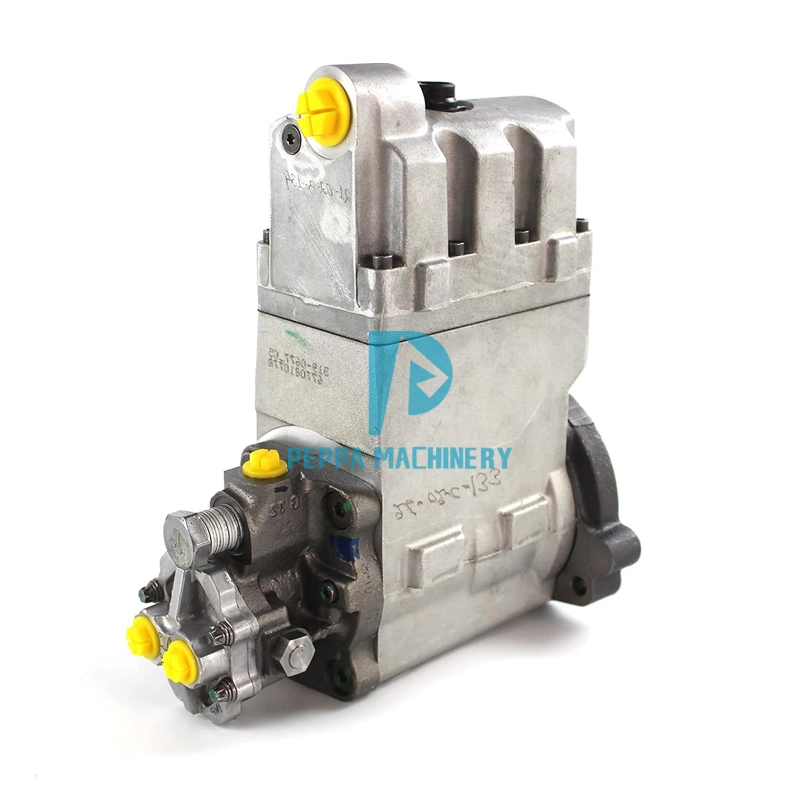
Fuel Feed / Transfer Pump Assembly for Caterpillar C7 & C9 Engines | Direct Replacement for OEM Parts #319-0678, 254-4358, 304-0678, 295-4778, 228-589

Reliable Source for Quality Excavator Components.
Follow Us
Our Partners


Our Payment Methods


 High Quality
 7/24 Service
 Guaranteed Warranty
 Scan QR Code
Facebook
TikTok
YouTube
Pinterest
Twitter